
If traditional fantasy football is eating your Sundays, draining your wallet, or making you anxious every time a running back gets hurt, quitting or scaling back is a reasonable call. The most common reasons players walk away: too much time, rising costs, mental-health strain, commissioner burnout, social friction, and format creep that turns a hobby into a second job.
Signs you should act now:
- You've missed work deadlines, family events, or sleep because of lineup decisions
- You've spent more than you budgeted and felt guilty about it
- You're playing out of obligation, not enjoyment
- Your anxiety spikes on game days regardless of your record
One action you can take in the next 15 minutes: Turn off all fantasy app notifications and text your league group chat that you need to discuss your availability for next season. That single step buys you breathing room without burning anything down.
Pro Tip: Before you quit entirely, mute your league's chat for 48 hours. The relief you feel (or don't feel) tells you almost everything you need to know.
Key Takeaways
Traditional fantasy football is worth quitting when the time, money, or mental-health costs consistently outweigh the enjoyment, and lower-commitment formats can preserve the social fun without the weekly grind.
| Point | Details |
|---|---|
| Time and money add up fast | Competitive redraft seasons cost $175–$350 and 3–6 hours per week; high-stakes play reaches $500–$2,500+. |
| Mental health is a real factor | Higher engagement and financial involvement correlate with more mental-health concerns, per a 2024 study of 635 players. |
| Commissioner burnout is legitimate | Administrative duties (payments, disputes, rules) often replace enjoyment for the league organizer. |
| Scale back before you quit entirely | Best ball, pick'em, and team-draft pools offer the same social competition with far less weekly commitment. |
| Draftwins removes the grind | Team-draft pools with automated scoring and private pool tools let you compete without managing weekly lineups. |
Table of Contents
- 1. The time drain is bigger than you think
- 2. The costs add up faster than most players realize
- 3. The mental-health toll is real and research-backed
- 4. Social friction and league drama wear you down
- 5. Commissioner burnout is a legitimate reason to step back
- 6. Dynasty and keeper formats turn a season into a year-round obligation
- 7. The Esquire essay problem: when it stops being a game
- Is it time to quit, or just scale back?
- How to quit or take a break without burning bridges
- Low-effort alternatives that keep the social fun without the grind
- What research and experienced commissioners say about burnout and cost
- Draftwins makes the social side easy without the weekly grind
- Sources
- FAQ
1. The time drain is bigger than you think
Traditional fantasy football isn't a 30-minute-a-week hobby for most players. Between drafting, waiver wire decisions, trade negotiations, injury tracking, and lineup swaps, weekly lineups alone can consume several hours. A survey of roughly 2,000 fantasy owners found that by Week 6, 16% of managers had already dropped out, which suggests the time load hits harder than people expect when they sign up in August.
Signs this is your reason:
- You're checking injury reports during work meetings
- Sunday afternoons feel like a chore, not a game
- You've started skipping social plans to manage your roster
2. The costs add up faster than most players realize
Fantasy football costs range from nearly free for casual play to $500–$2,500+ for high-stakes seasons. Typical home-league buy-ins fall in the $20–$150 range, and competitive redraft seasons often land around $175–$350. That's before you add a subscription to a premium analysis tool, a draft-party spread, and a trophy you'll ship to the winner in December.
The total season cost is frequently underestimated. Small recurring charges — a $10/month stats subscription, a $30 draft party contribution, a $15 shipping fee for the league trophy — push casual budgets higher than players expect when they first commit.
Signs this is your reason:
- You've played multiple seasons without finishing in the money
- You're carrying entry fees on a credit card
- You can't name your total annual spend without doing math
3. The mental-health toll is real and research-backed
A 2024 questionnaire study of 635 fantasy football players found that higher engagement, more social comparisons, and greater financial involvement were all associated with more mental-health concerns, including depression, anxiety, and problematic behavior. The same study found that less experienced players reported more anxiety than veterans, meaning the early years of playing can be the hardest on your wellbeing.
More engagement brought both more positive mood and more problematic behavior in some players. That's a mixed signal worth taking seriously, especially if you're newer to the game or playing in multiple leagues at once.
Signs this is your reason:
- You feel genuine distress after a bad week, not just mild disappointment
- You're comparing your roster obsessively to others in the league
- Fantasy outcomes are affecting your mood at work or with family
4. Social friction and league drama wear you down
Fantasy leagues run on relationships, and relationships get complicated. Trade disputes, accusations of collusion, trash talk that crosses a line, and the annual argument over scoring settings can turn a group of friends into a group of people who resent each other by November. Fantasy football complexity tends to compound social friction: the more rules, the more disputes.
Signs this is your reason:
- You dread the group chat more than you enjoy it
- A trade dispute has spilled into a real-world friendship
- You've considered quitting specifically to avoid one person in the league
5. Commissioner burnout is a legitimate reason to step back
Running a league is unpaid administrative work. Chasing entry fees, resolving disputes, setting and enforcing rules, managing the draft, and handling mid-season complaints can consume more time than actually playing. Local reporting and commissioner accounts consistently note that the administrative load often replaces the original social fun for the person running the league.
Signs this is your reason:
- You spend more time managing the league than playing in it
- You've had to mediate a dispute between two other members
- You feel responsible for everyone else's experience
6. Dynasty and keeper formats turn a season into a year-round obligation
Redraft leagues end in January. Dynasty and keeper leagues never really do. You're monitoring rookie drafts in April, trading futures in June, and tracking training camp reports in July. Format creep is how a casual hobby becomes a year-round commitment you didn't explicitly sign up for.
Signs this is your reason:
- You're actively managing your roster in the offseason
- You feel locked in because of a multi-year trade or keeper contract
- The format has changed significantly since you first joined
7. The Esquire essay problem: when it stops being a game
A first-person Esquire essay documents how running multiple leagues and staying constantly engaged can feed compulsive behavior and real financial harm. The author describes a pattern that looks less like a hobby and more like an addiction: escalating involvement, financial losses, and an inability to step back even when the costs are clear.
That's an extreme case, but the pattern it describes starts small. If you recognize any part of it, the right move is to step back before the costs compound.
Signs this is your reason:
- You've increased your stakes to chase losses
- You feel unable to quit even when you want to
- Fantasy spending is affecting your ability to cover regular expenses
If compulsive spending or gambling-like behavior is a concern, the National Council on Problem Gambling offers a confidential helpline at 1-800-522-4700.
Is it time to quit, or just scale back?
Answer these questions honestly and count your "yes" responses.
- Have you missed work, sleep, or social plans because of fantasy football in the past month?
- Are you spending more per season than you budgeted or can comfortably afford?
- Do you feel anxious or distressed about weekly lineup decisions?
- Has fantasy football caused friction in a friendship, relationship, or family dynamic?
- Are you playing out of obligation rather than enjoyment?
- Do you feel unable to step away even when you want to?
- Has your role as commissioner made the hobby feel like a second job?
Scoring:
- 0–2 yes answers: Keep playing. Consider small adjustments like dropping one league or switching to a free platform.
- 3 yes answers: Pause or scale back. Take one season off, drop to a single low-stakes league, or switch formats.
- 4+ yes answers: Strong signal to quit or take a full season off. If compulsive behavior is involved, consider reaching out to a support resource.
Resources if you need them:
- National Council on Problem Gambling: 1-800-522-4700 or Ncpgambling
- Gamblers Anonymous: Gamblersanonymous
How to quit or take a break without burning bridges
A clean exit takes about a week if you follow these steps.
- Decide your timeline. Are you leaving after this season, mid-season, or immediately? Mid-season exits are the messiest; end-of-season is cleanest.
- Message the league early. Give people time to find a replacement. Two to four weeks' notice is standard courtesy.
- Settle any outstanding payments. Confirm your entry fee status and any prize obligations in writing before you go.
- Hand off commissioner duties if applicable. Identify a willing replacement, document the league settings and passwords, and make the transfer official in the platform.
- Set a boundary and hold it. If you're done, be clear. "I'm stepping away for the season" invites negotiation. "I'm not playing next year" does not.
Template A — Pausing for a season:
Template B — Leaving permanently and transferring commissioner duties:
Pro Tip: Before leaving any paid league, request written confirmation (a screenshot of the group chat works) of the payout schedule and your entry fee status. This prevents disputes after you're gone.
Low-effort alternatives that keep the social fun without the grind
Quitting traditional fantasy doesn't mean quitting sports competition with your friends. Several low-maintenance formats deliver the same social energy at a fraction of the weekly time cost.
Best ball leagues
- No weekly lineup decisions; your best-scoring players count automatically
- Same draft experience, zero in-season management
- Downside: less engagement mid-season if you enjoy the weekly strategy
Weekly pick'em pools
- Pick game winners each week; takes 5–10 minutes
- Free or very low cost; easy to run with any group
- Downside: no player-level connection, less personal investment
One-and-done contests
- Pick one team per week; can't reuse a team for the rest of the season
- Low time commitment, high stakes feeling without the roster management
- Downside: a few bad early picks can kill your season quickly
Team-draft pools (Draftwins-style)
- Draft NFL or college football teams instead of individual players
- Automated scoring, no weekly lineup swaps, no injury-tracking anxiety
- Downside: less granular control for players who love the player-management side
- Why football pools beat fantasy leagues for casual drafters is worth reading if this format appeals to you
Single-event sweepstakes
- One draft or pick for a single event (Super Bowl, bowl games, World Cup)
- Zero ongoing commitment; perfect for groups that want one shared moment
- Downside: no sustained engagement across a season
Pro Tip: Try one lower-commitment format for a single season before deciding to quit sports competition entirely. Most players who switch formats find they enjoy the social side just as much with far less stress.
What research and experienced commissioners say about burnout and cost
The financial scale of fantasy football is larger than most casual players realize. LeagueSafe reported processing more than $31.5 million in entry fees from over 56,000 private leagues in a recent season, with average league fees around $55. That's one payment platform, covering private leagues only.
The 2024 University of West London study of 635 players adds a useful nuance: more experienced players reported less anxiety than newer ones. If you're in your first or second season and already feeling the strain, it doesn't necessarily get easier on its own.
| Play Style | Typical Season Cost | Estimated Weekly Time |
|---|---|---|
| Casual (free platform, low buy-in) | $0–$60 | 1–3 hours |
| Competitive redraft | $175–$350 | 3–6 hours |
| High-stakes / multi-league | $500–$2,500+ | 6–15+ hours |
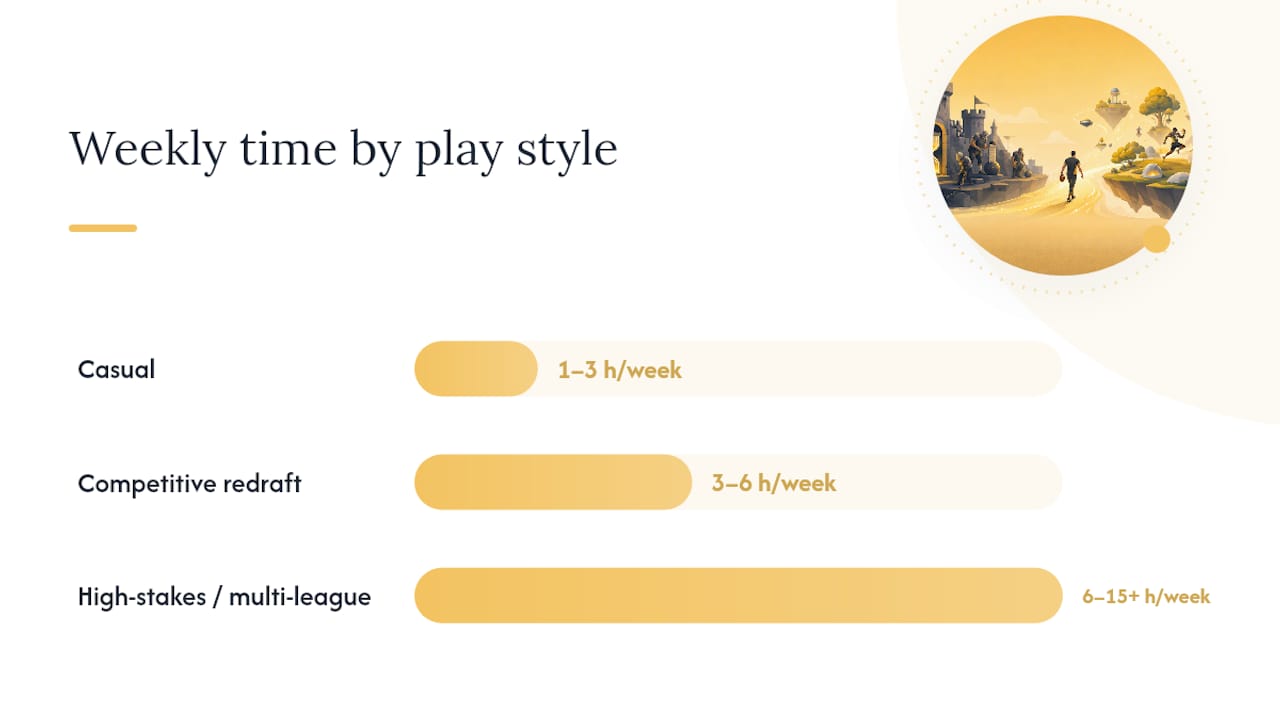
Cost data sourced from thepricer.org. Time estimates reflect typical player-reported ranges for each tier.
The Fantasy Sports & Gaming Association tracks continued participation growth, which partly explains why the format options have multiplied. More formats means more ways to stay involved at a lower commitment level, which is good news for anyone who wants to scale back rather than quit entirely.
Draftwins makes the social side easy without the weekly grind
If what you actually want is the draft-day excitement and the group competition without the Sunday roster panic, Draftwins is built for exactly that. Instead of drafting individual players and managing weekly lineups, you draft NFL or college football teams. Scoring is automated, leaderboards update live, and there's no waiver wire to check at 11 PM on a Tuesday.
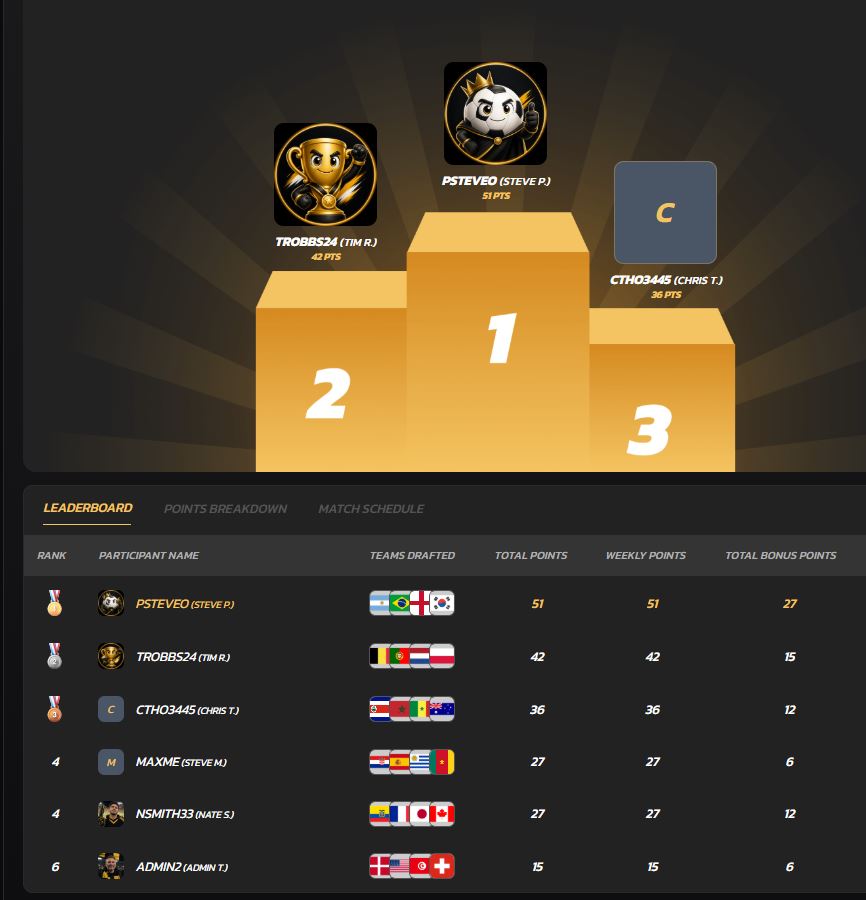
For commissioners specifically, Draftwins removes the administrative weight that makes running a league feel like a second job. You set up a private pool, customize the scoring and rules, and the platform handles the rest. No chasing payments for prize pools (Draftwins charges a one-time hosting fee and doesn't hold entry fees or pay out winnings), no dispute resolution over individual player stats, no mid-week lineup drama.
- Team drafts, not player drafts: draft NFL or college football teams; no injury anxiety
- Automated scoring and live leaderboards: track standings without manual updates
- Private pools with custom rules: commissioners control the format
- Web-based, no app required: works on any device
- World Cup, NFL, and College Football pools available at launch
If you've been looking for a reason to stay connected to the game without the grind, explore Draftwins pools and set one up before your next season starts.
Sources
- Exploring Fantasy Football Involvement and Mental Health through Player Experience, Engagement Levels, Social Comparisons, and Financial Incentives - UWL Repository
- How Much Does Fantasy Football Cost?
- Take 5: Being a fantasy commissioner is work
FAQ
How do you quit fantasy football without upsetting your league?
Give two to four weeks' notice, settle any outstanding fees in writing, and offer to help find a replacement. A short, direct message to the group chat is enough — you don't owe a lengthy explanation.
How do you stop obsessing over fantasy football?
Turn off all app notifications first, then set a hard limit on how many times per day you check your roster. If the obsessive checking continues after a few weeks, that's a signal the issue goes beyond habit and may be worth discussing with a professional.
What are the biggest reasons people quit traditional fantasy football?
Time drain, rising costs, mental-health strain, social friction, and commissioner burnout are the most common reasons, with many players citing a combination of all five rather than a single cause.
Is there a lower-commitment alternative to traditional fantasy leagues?
Yes. Best ball leagues, pick'em pools, one-and-done contests, and team-draft pools like those on Draftwins all offer competitive group play with far less weekly time investment than a standard redraft league.
When should I seek help instead of just quitting?
If you're increasing stakes to chase losses, feel unable to stop despite wanting to, or fantasy spending is affecting your ability to cover regular expenses, contact the National Council on Problem Gambling at 1-800-522-4700 or visit ncpgambling.org.