
Fantasy football complexity is defined by the layered interaction of scoring formats, roster rules, and weekly decision-making that casual players rarely anticipate before joining a league. Most newcomers expect a simple game where you pick players and watch scores add up. What they find instead is a system with PPR scoring debates, waiver wire bidding wars, and lineup decisions that can feel like a part-time job. Understanding why fantasy football gets complicated is the first step toward actually enjoying it. The good news: most of the complexity is optional, and much of it can be avoided with the right setup.
Why does fantasy football get so complicated?
Fantasy football complexity comes from three sources: scoring rules, league settings, and the ongoing management demands of a 17-week NFL season. Each layer adds decisions. Each decision adds stress. Together, they create a game that feels far more demanding than it needs to be for casual players.
The biggest source of confusion is scoring. Most players assume touchdowns and yards are all that matter. In reality, scoring formats vary widely, and the format your league uses changes which players are worth drafting entirely. A wide receiver who catches 10 passes for 80 yards is worth very different amounts depending on whether your league awards points per reception.

Fantasy football also requires you to track the entire NFL, not just your favorite team. Tracking usage trends across all 32 teams, monitoring depth charts, and studying weekly matchups is a real shift for fans who previously only cared about one team. That shift catches many beginners off guard.
How PPR scoring increases fantasy football complexity
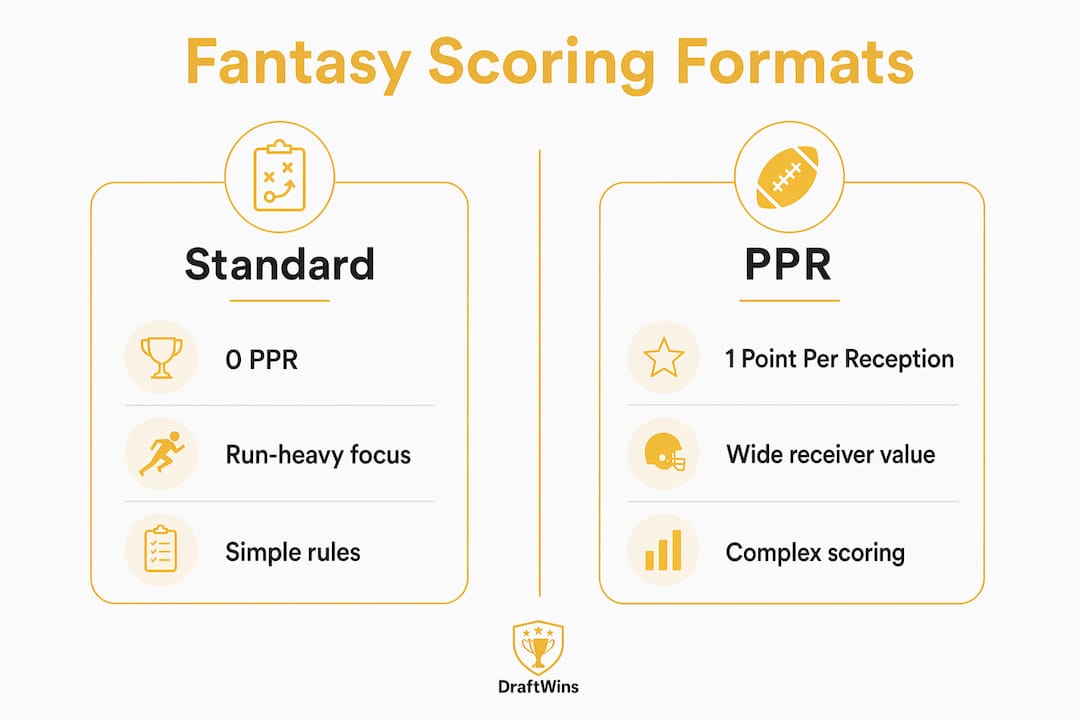
PPR stands for "points per reception," and it is the most common scoring format in fantasy football today. About 86% of leagues use either full PPR or half-PPR scoring, while standard zero-PPR leagues account for only 13.4%. That dominance means most leagues you join will use PPR, so understanding it matters.
In a standard scoring league, a running back who rushes for 100 yards and one touchdown scores roughly 16 points. In a full PPR league, a wide receiver who catches 8 passes for 60 yards scores 14 points. That changes which positions you prioritize in your draft and which players you target on the waiver wire. Running backs lose relative value in PPR formats. Pass-catching backs and slot receivers gain it.
The fantasy football challenges multiply when leagues add hyper-specific scoring rules on top of PPR. Fractional scoring like 0.23 points per completion makes it nearly impossible to mentally track your score while watching a game. Experts recommend sticking to clean decimal-based formats like half-PPR or full-PPR. When you cannot calculate your own score in your head, the game stops being fun.
Scoring formats at a glance
| Format | Points per reception | Best for |
|---|---|---|
| Standard | 0 | Simple leagues, run-heavy strategies |
| Half-PPR | 0.5 | Balanced player values, most common entry point |
| Full PPR | 1.0 | Pass-catching players, wide receiver depth |
Pro Tip: If you are joining your first league, choose half-PPR. It balances running back and wide receiver values better than either extreme, and the math stays clean enough to follow during games.
How league settings complicate managing a fantasy team
Scoring is only part of the picture. League settings add another full layer of fantasy football complexities that trip up new players constantly.
A standard 12-team league with basic roster spots is manageable. The typical setup includes a quarterback, two running backs, two wide receivers, a tight end, a flex spot, a kicker, and a team defense. That is already 9 starting decisions per week. Deeper leagues add superflex positions (a second quarterback slot), individual defensive player (IDP) spots, and larger benches. Each addition multiplies the number of decisions you face every single week.
Waiver wire rules create another major friction point. Two systems dominate:
- Waiver priority: Teams with worse records get first access to available players. Simple to understand, but it punishes good teams and rewards bad ones.
- FAAB (Free Agent Acquisition Budget): Every owner gets a fixed budget to bid on players throughout the season. FAAB rewards strategic resource management and reduces randomness, but it adds a bidding layer that confuses beginners.
FAAB is widely considered the better system for competitive leagues. For casual players, though, it introduces a new set of decisions: how much to bid, when to save budget, and how to value players relative to your remaining funds. That is a lot to process on top of everything else.
Weekly lineup management also demands consistent attention. Injuries, bye weeks, and matchup changes mean the roster you drafted in august looks nothing like the one you need to start in november. The management burden is real, and it compounds over a long season.
Is fantasy football more luck or skill?
Fantasy football is a skill game with a significant luck component. That combination is exactly what makes it feel complicated and sometimes unfair. Many beginners assume the complexity comes from luck, when the real difficulty is learning to manage risk well.
Fantasy complexity is less about inherent difficulty and more about how much a player chooses to engage with detailed strategy and roster moves. You can play casually and still compete. But you need to understand the difference between floor players (consistent, lower upside) and ceiling players (boom-or-bust, high upside) to make good lineup decisions week to week.
The most common fantasy football mistakes involve emotional decision-making. The sunk cost fallacy is a prime example. Managers who keep underperforming players because of emotional attachment to a high draft pick sacrifice roster spots that could go to better options. A first-round pick who gets injured in week 3 is just a roster problem. Cutting him and moving on is the right call, even if it hurts.
Active roster management separates good managers from great ones. Championship-winning teams often have no original draft picks left by the end of the season. The draft is a starting point, not a finished product.
Pro Tip: Treat your roster like a living document. Check the waiver wire every Tuesday and Thursday. Small, consistent moves beat one big trade that never happens.
How to simplify fantasy football without losing the fun
The tricky fantasy football strategies and complex settings are optional. You can build a fun, competitive league without any of them. Here is how casual players cut through the noise:
-
Choose a standard format. Half-PPR in a 12-team league with basic roster spots is the sweet spot. It is common enough that advice is easy to find, and simple enough that new players are not immediately lost.
-
Write down your league rules before the season starts. League constitutions that resemble tax codes kill engagement. A one-page document covering scoring, trades, waivers, and playoffs is enough. Clear rules prevent disputes and reduce confusion all season.
-
Build a weekly routine. Managing a fantasy team competitively takes about 15 minutes per week when you have a system. Check injury reports on Wednesday, set your lineup by Saturday, and make one waiver move on Tuesday. That is it.
-
Ignore the noise. Fantasy football content is a massive industry. Podcasts, rankings, and hot takes compete for your attention every week. Pick one or two trusted sources and ignore the rest. More information does not always mean better decisions.
-
Consider simplified draft formats. Some leagues use snake drafts where you draft teams or use auction formats that spread decision-making more evenly. Simplified draft formats reduce the pressure of the draft day itself and make the season more enjoyable for casual players.
The goal is a league where everyone stays engaged through week 17. Complexity that drives people to quit by week 6 serves no one.
Pro Tip: Avoid complex player management systems in your first season. Master the basics before adding IDP, superflex, or keeper rules.
Key Takeaways
Fantasy football gets complicated primarily because of PPR scoring formats, layered league settings, and the ongoing skill of active roster management throughout the season.
| Point | Details |
|---|---|
| PPR scoring dominates | About 86% of leagues use PPR or half-PPR, which changes how you value every player. |
| League settings multiply decisions | Waiver systems, flex spots, and roster depth each add a new layer of weekly choices. |
| Skill beats luck over time | Managing risk, cutting underperformers, and working the waiver wire matter more than draft position. |
| Simple rules keep leagues fun | Half-PPR in a 12-team league with clear written rules reduces confusion for everyone. |
| 15 minutes a week is enough | A consistent weekly routine keeps your team competitive without a major time commitment. |
A simpler way to enjoy group sports contests
Fantasy football's complexity is real, but it does not have to define your experience with group sports contests. Draftwins offers a different approach: instead of managing individual players week after week, you draft entire teams and let automated scoring handle the rest.
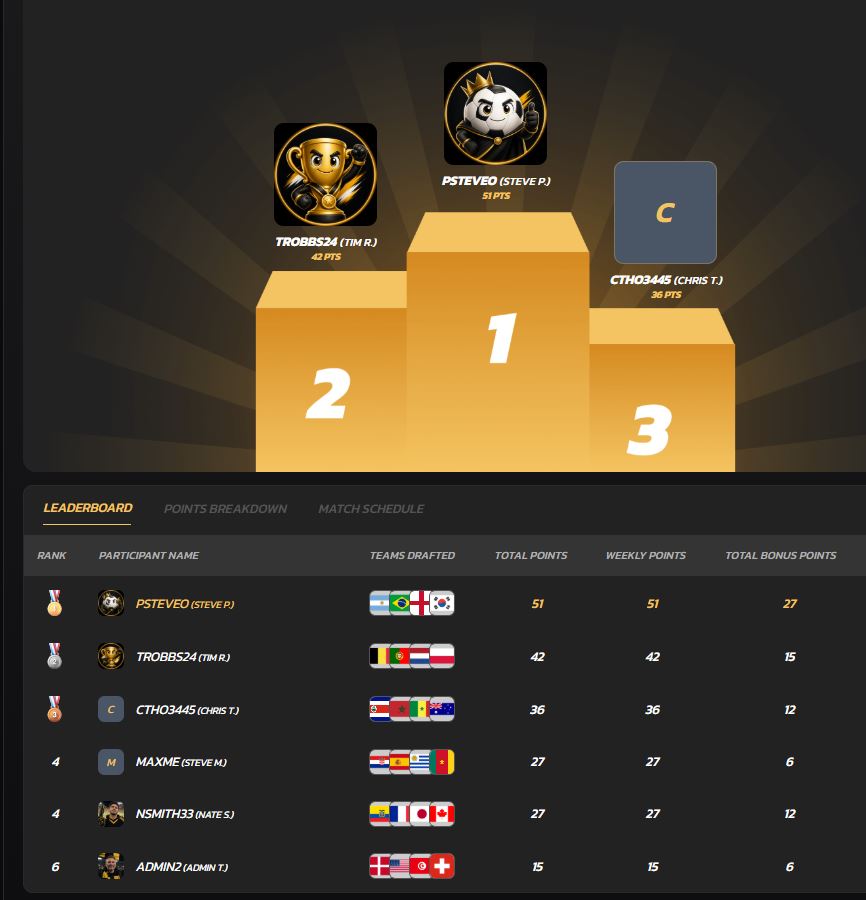
With live leaderboards and no lineup decisions to stress over, Draftwins removes the parts of fantasy sports that frustrate casual players most. Commissioners can set up private pools with their own rules in minutes. There is no waiver wire to monitor, no injury reports to track, and no sunk cost drama over a struggling running back. Visit Draftwins to see how group sports pools can be fun from week one, without the learning curve.
FAQ
What makes fantasy football hard for beginners?
Fantasy football requires tracking players across all 32 NFL teams, understanding scoring formats like PPR, and making weekly roster decisions based on injuries and matchups. The combination of those demands catches most beginners off guard.
What is PPR scoring in fantasy football?
PPR stands for points per reception, and it awards extra points each time a player catches a pass. About 86% of leagues use full or half-PPR, making it the standard format most new players will encounter.
How much time does fantasy football take each week?
A competitive fantasy team can be managed in roughly 15 minutes per week with a consistent routine. Checking injury reports, setting a lineup, and making one waiver move covers the basics without a major time investment.
What is the biggest mistake new fantasy managers make?
Keeping underperforming players because of emotional attachment to a high draft pick is one of the most common errors. Cutting a struggling player and replacing them from the waiver wire is almost always the better move.
Can you play fantasy football without learning complex rules?
Yes. Choosing a standard half-PPR format in a 12-team league with simple written rules removes most of the complexity. Casual players can compete effectively without ever learning FAAB bidding, IDP scoring, or superflex formats.