
Fantasy football simplified formats are defined by three core choices: league type, scoring system, and draft style. For casual players and friend groups, the best combination is a redraft league with half-PPR scoring and a snake draft. This setup requires the least preparation, the fewest weekly decisions, and the most fun per hour invested. The sections below break down each element so your group can get a league running without a spreadsheet, a rulebook, or a weekend of research.
1. What are the main fantasy football formats and why redraft wins for casual players?
Fantasy football leagues fall into three main types: redraft, keeper, and dynasty. Understanding the difference is the fastest way to pick the right one for your group.
Redraft leagues start fresh each year with zero roster carryover. Every player in the league drafts a new team before the season, competes through the playoffs, and then the slate is wiped clean. That annual reset is the single biggest advantage for casual groups. Nobody carries baggage from last year's injuries or bad trades into the new season.

Keeper leagues let each manager retain one to three players from the previous year. This adds a layer of strategy that rewards long-term planning, but it also means you need to stay engaged in the offseason. For a group of friends who only want to care about football during football season, keeper formats create unnecessary homework.
Dynasty leagues require full roster retention year over year, including college draft picks. The commitment level resembles running a real NFL franchise. That depth is genuinely rewarding for hardcore fans, but it is the opposite of simplified fantasy football.
Here is why redraft is the right call for casual groups:
- No offseason obligations. Once the season ends, you are done until next August.
- Equal footing every year. New players join without inheriting a weak roster from a previous owner.
- Lower stakes on individual decisions. A bad trade or missed waiver pickup does not haunt you for three seasons.
- Easy to add or remove players from your group. Because rosters reset, the league adapts naturally to whoever wants to play each year.
The minimal commitment of redraft leagues makes them the default recommendation for anyone new to understanding fantasy leagues or organizing a casual pool with friends.
2. How scoring formats like half-PPR simplify gameplay
Scoring is how your players earn points, and the format you choose changes which NFL players are valuable in your league. Three formats dominate fantasy football: standard, half-PPR, and full-PPR.
| Scoring format | Points per reception | Effect on player value |
|---|---|---|
| Standard | 0 | Running backs with high rush volume dominate |
| Half-PPR | 0.5 | Balanced value across positions |
| Full-PPR | 1.0 | Pass-catching players and slot receivers dominate |
Half-PPR awards 0.5 points per reception, sitting exactly between standard and full-PPR. That balance prevents any single position from warping the entire league's player rankings. A workhorse running back and a reliable wide receiver both hold real value, which makes draft decisions feel fair rather than formulaic.
Standard scoring rewards bulk rushing yards and touchdowns, which sounds simple but actually narrows the pool of useful players significantly. Full-PPR inflates the value of pass-catching backs and slot receivers to a degree that confuses new players who expect traditional stars to perform well. Half-PPR avoids both extremes.
Pro Tip: If your group cannot agree on a scoring format, default to half-PPR. It is the format most likely to keep everyone competitive regardless of draft position or player knowledge.
Casual leagues perform best with standard roster setups and no superflex positions. A superflex spot allows a second quarterback to start, which dramatically inflates QB values and makes the draft feel like a different game entirely. Stick with one QB, two wide receivers, one running back, one tight end, and one flex spot. That lineup is intuitive, mirrors how casual fans already think about football, and keeps the weekly decisions manageable.
3. Why snake drafts are the right choice for simplified fantasy football
The draft is the most exciting part of fantasy football for most casual players, and the snake format makes it accessible without sacrificing the fun of competition.
In a snake draft, each manager picks one player per round. After round one ends, the order reverses for round two. The manager who picked last in round one picks first in round two. This reversal continues through every round, which means pick order smooths out positional advantages over time. Nobody is stuck with the worst picks in every round.
Snake drafts take one to three hours for a 12-team league, which is a realistic commitment for a group of friends on a Saturday afternoon. The pick order is fixed and intuitive. You know when your turn is coming, you make your pick, and you move on.
Auction drafts work differently. Every manager starts with a $200 budget and bids on players in real time. Auction formats demand budget management and significantly more preparation time. For experienced players who enjoy the strategic depth, auctions are genuinely thrilling. For a casual group running their first or second league, they create friction that kills momentum before the season even starts.
A few tips for first-time snake drafters:
- Draft a running back early. Elite RBs are scarce and their value drops sharply after the top 15 picks.
- Do not overthink the middle rounds. Wide receiver depth is the most forgiving position to build through rounds four through eight.
- Use the autopick feature if you miss your slot. Most platforms handle this gracefully, and one missed pick will not ruin your team.
- Avoid reaching for a quarterback in the first three rounds. QB value in standard formats is deep enough that waiting until round five or six costs you almost nothing.
The snake draft's reversing order is the reason it dominates simplified fantasy football. It requires no budget math, no bidding strategy, and no prior experience to participate confidently.
4. How to choose the right format for your casual group
Picking the right setup comes down to four factors: how many people are playing, how much time everyone wants to spend, whether your group includes total beginners, and how long you want the league to run.
The table below compares the main format combinations for casual friendliness:
| Format combination | Time commitment | Best for |
|---|---|---|
| Redraft + snake + half-PPR | Low | First-time leagues, mixed experience groups |
| Redraft + snake + standard | Low | Groups who prefer traditional football scoring |
| Keeper + snake + half-PPR | Medium | Groups returning for a second or third season |
| Redraft + auction + half-PPR | Medium-high | Experienced casual players wanting more draft drama |
| Dynasty + any scoring | High | Dedicated fans only |
For most friend groups, the redraft snake with half-PPR combination is the clear starting point. The most accessible format for friends new to fantasy football is exactly this combination because it minimizes overwhelm and maximizes enjoyment from week one.
One underrated factor is the platform you use. Platforms that offer autopick drafting, automated scoring, and live leaderboards remove the administrative burden from whoever is running the league. Simplified leagues succeed when participants can use autopick or slow-draft options to avoid decision paralysis, keeping engagement consistent across the full season.
Pro Tip: Start your group in a free or low-stakes league for the first season. Free leagues reduce pressure and let everyone learn the rules, scoring, and roster decisions without financial stress. You can add stakes in year two once everyone knows what they are doing.
League size also matters. Ten to twelve teams is the standard for redraft leagues. Fewer than eight teams makes the player pool too shallow, which means even casual managers can field dominant rosters without much effort. More than fourteen teams creates scarcity that rewards obsessive waiver wire management, which is the opposite of what a casual group wants.
One more thing worth knowing: weekly management matters more than draft day performance in determining who wins a fantasy league. Many beginners believe the draft decides everything. It does not. Picking up the right player off waivers in week four or starting the right flex option in week nine is where leagues are actually won. Simplified formats with autopick and easy waiver tools make that weekly engagement feel like a quick check-in rather than a second job.
Key takeaways
The best fantasy football format for casual players is a redraft snake league with half-PPR scoring because it delivers maximum fun with minimum management overhead.
| Point | Details |
|---|---|
| Redraft is the simplest league type | Zero roster carryover means a fresh start every year with no offseason obligations. |
| Half-PPR balances player value | Awarding 0.5 points per reception keeps all positions competitive without distorting rankings. |
| Snake drafts are beginner-friendly | Fixed reversing pick order takes one to three hours and requires no budget strategy. |
| Avoid superflex and complex rosters | Standard lineup settings keep player valuation intuitive for casual groups. |
| Weekly management decides winners | Draft day matters, but waiver pickups and lineup decisions throughout the season determine most outcomes. |
Try simplified fantasy football pools with Draftwins
Draftwins is built for exactly the kind of casual, low-management experience this article describes. Instead of tracking individual player stats across a full roster, Draftwins lets you draft entire teams, which removes the lineup anxiety that drives casual players away from traditional fantasy formats.
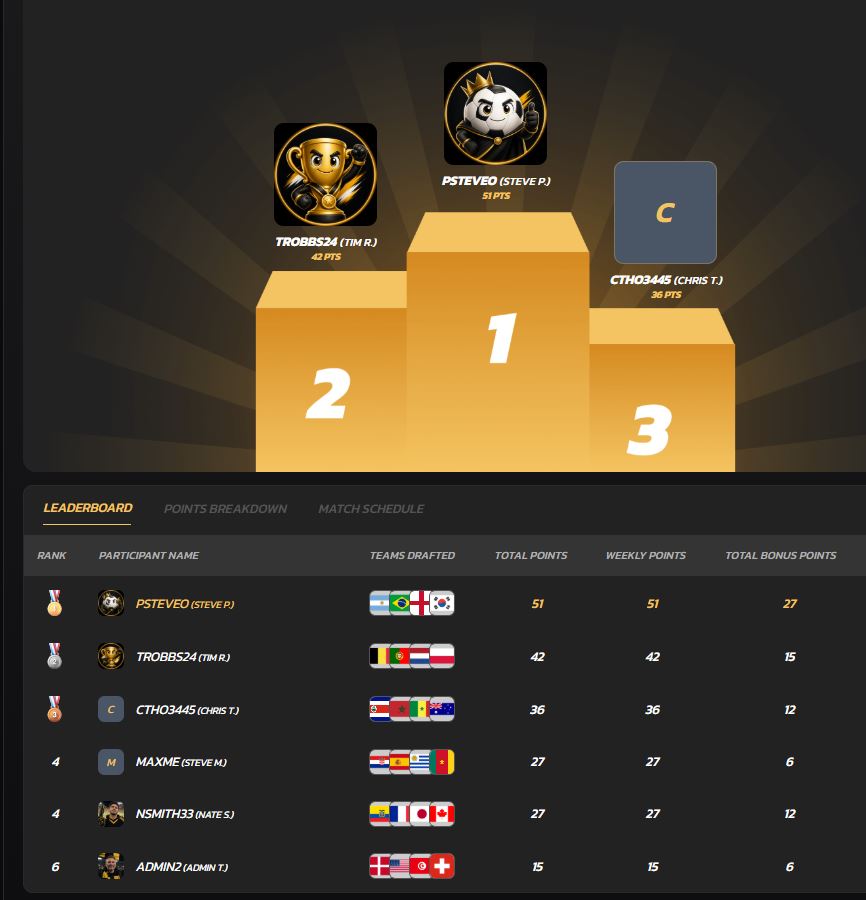
With automated scoring and live leaderboards, Draftwins handles the administrative side so your group can focus on the competition. Commissioners can set up private pools with custom rules in minutes, and there is no need to manage waivers, injuries, or weekly lineup swaps. Draftwins is launching NFL and College Football pools after its World Cup debut, making it the right time to get your group set up before the season starts. Visit Draftwins to create your first pool and see how much easier group fantasy competition can be.
FAQ
What is the easiest fantasy football format for beginners?
Redraft leagues with snake drafts and half-PPR scoring are the easiest format for beginners. They require no offseason commitment, take one to three hours to draft, and use balanced scoring that keeps all positions competitive.
What does half-PPR mean in fantasy football?
Half-PPR means each player earns 0.5 points for every reception they make during a game. This format sits between standard scoring (zero points per reception) and full-PPR (one point per reception), creating balanced player values across positions.
How long does a snake draft take?
A snake draft for a 12-team league typically takes one to three hours. The fixed reversing pick order makes it faster and more intuitive than auction drafts, which require active bidding and budget management throughout.
Should casual players avoid keeper and dynasty leagues?
Yes, casual players should start with redraft leagues rather than keeper or dynasty formats. Keeper and dynasty leagues require offseason engagement and long-term roster planning that adds complexity most casual groups do not want.
Does the draft determine who wins a fantasy league?
The draft is important but not the deciding factor. Weekly decisions like waiver pickups and lineup choices throughout the season determine most fantasy league outcomes, which is why simplified formats with easy management tools keep casual players competitive.