
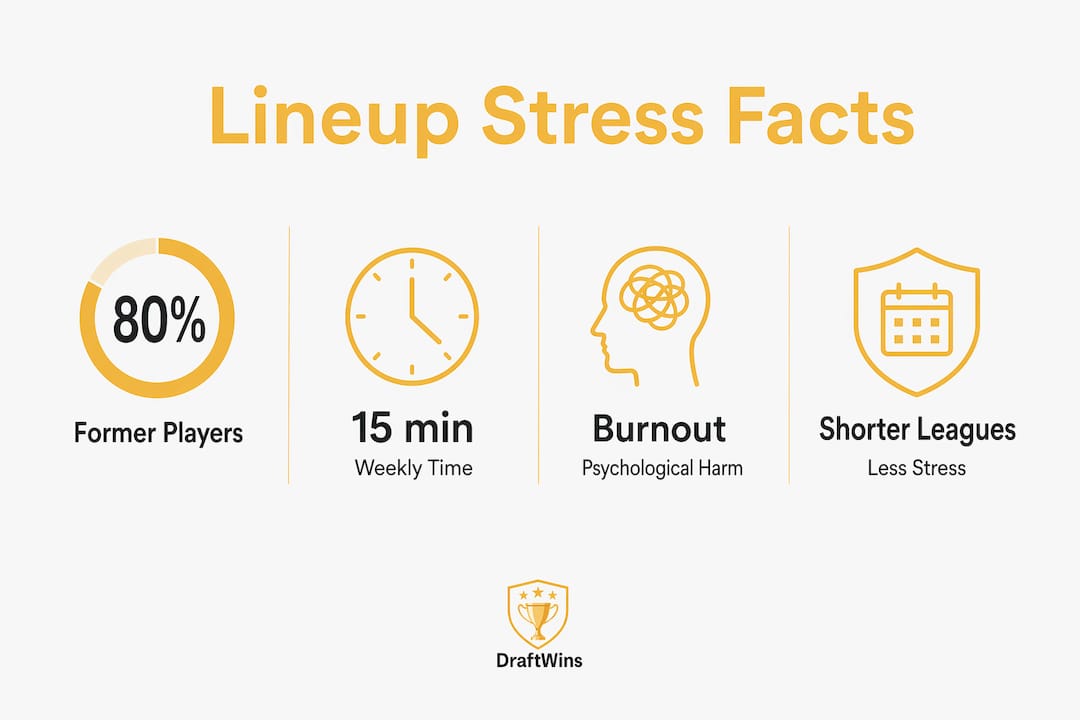
Weekly lineup management is the leading source of stress and burnout in fantasy sports, with 80% of former players citing a specific lineup stress incident as the primary reason they quit. That statistic reframes the entire hobby. What starts as a fun competition between friends quietly becomes a recurring obligation that demands research, gut calls, and emotional investment every single week. Understanding how weekly lineups burden players, and why that burden compounds over time, is the first step toward fixing it.
How weekly lineups burden players with time and decision fatigue
The time cost of weekly lineup management is real and measurable. Industry experts recommend a structured 15-minute routine spread across three days each week as the minimum to stay competitive in a seasonal fantasy league. That sounds manageable until you multiply it across a 17-week NFL season and add waiver wire decisions, trade negotiations, and injury monitoring on top.
Decision fatigue sets in fast for veteran players. The cycle of checking injury reports Monday morning, scanning waiver wire options Tuesday, finalizing a lineup Thursday night, and then second-guessing every pick Sunday morning is mentally exhausting. Veteran players report that this cycle in long-format leagues spanning 2–3 months leads directly to mid-season abandonment. The research is not describing casual disinterest. It describes genuine cognitive overload.

The problem compounds because each decision carries perceived stakes. Sitting a healthy starter who then scores 40 points feels like a personal failure, even when the logic behind the decision was sound. That emotional feedback loop trains players to spend more time researching, not less, which deepens the burden rather than relieving it.
Pro Tip: Set three fixed windows each week for lineup tasks: Monday for waiver wire review, Wednesday for injury updates, and Saturday for final lineup locks. Capping each session at 15 minutes prevents research from bleeding into the rest of your day.
Here is a simple weekly routine that keeps things manageable:
- Monday: Review last week's results and check waiver wire priority.
- Wednesday: Scan injury reports and identify potential lineup swaps.
- Saturday: Lock your final lineup and stop second-guessing.
- Sunday: Watch the games. Do not refresh scoring apps every five minutes.
- Post-week: Note one thing you would do differently, then move on.
What makes bye weeks and injuries so hard to manage?
Bye weeks and injuries are the two variables that turn lineup management from a fun puzzle into a genuine headache. Bye week stacking, where multiple starters share the same off week, creates a lineup hole that the waiver wire often cannot fill in time. The fix requires planning weeks in advance, which adds another layer of cognitive work to an already demanding routine.
The "Thursday night trap" makes this worse. When a key player's bye week falls on a Thursday game, you effectively lose that roster spot before the main Sunday slate even begins. That irreversible loss of weekly win probability is not something you can research your way out of after the fact. It requires proactive roster auditing and waiver additions before the conflict week arrives.
Last-minute injuries create a separate category of stress. A player listed as "questionable" on Friday morning forces a decision with incomplete information. Waiting for a Saturday injury report feels responsible, but late waiver wire adds are often already claimed. The window for a good decision is narrow, and the consequences of a wrong call feel outsized.
| Lineup challenge | Why it is hard | Mitigation approach |
|---|---|---|
| Bye week stacking | Multiple starters unavailable simultaneously | Audit roster depth in preseason; add depth at key positions early |
| Last-minute injuries | Incomplete information close to kickoff | Monitor beat reporters, not just official reports |
| Matchup uncertainty | Opponent game plans shift weekly | Weight recent form over season averages |
| Thursday night trap | Bye or injury locks in before Sunday slate | Never rely on a Thursday player as your only option at a position |
Pro Tip: During your draft, flag every player's bye week and check for conflicts at your starting positions. Fixing a bye week problem in August costs nothing. Fixing it in week 9 costs a waiver priority and sometimes the game.
Matchup analysis adds a third layer. A wide receiver facing a strong cornerback in a dome game against a weak defense presents a genuinely complex decision. Optimal lineup tools often misalign with casual players' league settings and handle injury uncertainty poorly, which means the tools meant to reduce burden sometimes increase it by producing recommendations that do not fit the actual situation.
Does weekly lineup stress cause real psychological harm?
Weekly lineup stress causes measurable psychological harm, including anxiety, mood swings, and a shift in how players relate to the game itself. Research confirms that players experience frustration and mood changes directly tied to their team's weekly performance. When your Monday morning mood depends on whether a running back scored in garbage time Sunday night, the hobby has crossed into something less healthy.
The shift from fun to obligation is the clearest warning sign. Players who once looked forward to Sunday games start dreading the lineup decisions that precede them. The game stops being entertainment and starts feeling like an unpaid part-time job. That framing is not an exaggeration. It is how players themselves describe the experience once the burden peaks.
"The moment you start tracking stats because you feel like you have to, not because you want to, is the moment the game stops being fun. Weekly lineup pressure trains players to optimize rather than enjoy, and optimization without enjoyment is just work."
Burnout follows a predictable pattern. Players who feel eliminated from playoff contention mid-season often ghost their teams entirely, even when the official standings have not ruled them out. Mid-season disengagement is psychological before it is statistical. The perceived lack of control over outcomes, driven by luck-heavy weekly results, accelerates that disengagement faster than actual losing records do.
Setting firm boundaries is the most effective countermeasure. Scheduling specific research windows, as described earlier, prevents the game from occupying mental space outside those windows. Mindful detachment, meaning accepting that some outcomes are genuinely outside your control, reduces the emotional cost of bad weeks without reducing your engagement with the parts of the game you actually enjoy.
Why do long-format leagues burn players out faster?
Long-format leagues, typically spanning a full NFL or college football season, demand sustained engagement across 15–17 weeks of active roster management. That duration creates a compounding burden. Early-season enthusiasm fades by week 6 or 7, and players who fall behind in the standings face a difficult choice between grinding through or quietly disengaging.
Veteran players in long-format leagues report decision fatigue as the primary driver of mid-season abandonment. The constant engagement demands of a marathon-length league wear down even experienced players. The problem is structural, not personal. Long formats require too many consecutive high-stakes decisions for most casual players to sustain enjoyment.
Micro-leagues solve this structurally. Shorter competition cycles with frequent restarts give players sharper, quicker feedback and a natural reset point when things go wrong. A bad week in a micro-league is a minor setback. A bad week in a 17-week league can feel like a season-ending disaster.
| Feature | Long-format leagues | Micro-leagues |
|---|---|---|
| Season length | 15–17 weeks | 1–4 weeks |
| Decision cycles | Weekly for entire season | Weekly for short burst |
| Burnout risk | High by mid-season | Low, frequent resets |
| Casual player fit | Moderate to low | High |
| Recovery from bad start | Difficult | Built into format |
The fantasy football formats available to casual players have expanded significantly. Shorter formats now offer the same competitive thrill without the sustained cognitive load that drives burnout in traditional leagues. For players who have quit long-format leagues before, a micro-league is often the re-entry point that works.
Practical ways to reduce the weekly lineup burden
Reducing lineup burden starts with changing how you structure your engagement, not how much you know about football. The goal is to protect the parts of the game that are fun while cutting the parts that create stress without adding value.
- Set a firm research cap. Decide in advance how many minutes per week you will spend on lineup decisions. Stick to it. More research rarely produces better outcomes once you have covered the basics.
- Shift your reward focus. Players who compete for social bragging rights and pride report higher sustained enjoyment than those focused primarily on prize money. Reframing what winning means reduces the emotional cost of losing.
- Use lineup tools carefully. Optimal lineup tools work best when your league settings match their assumptions. Verify that any tool you use accounts for your specific scoring format before trusting its recommendations.
- Build weekly goals beyond standings. Leagues that reward effort through badges, streaks, and weekly milestones keep players engaged even when their playoff odds drop. Ask your commissioner to add these features.
- Consider drafting teams instead of players. Formats where you draft entire teams rather than individual players eliminate most of the weekly lineup complexity that drives burnout.
- Protect your injury awareness. Injury concerns are a leading source of weekly stress. Knowing which positions carry the highest injury risk lets you build roster depth where it matters most.
The perceived lack of control over outcomes is the deepest driver of disengagement. Structured engagement windows and effort-based rewards directly counter that feeling by giving players visible proof that their decisions matter, regardless of the final score.
Draftwins takes the burden out of weekly competition
Draftwins was built for players who want the thrill of group competition without the weekly grind of individual player management. Instead of setting lineups player by player each week, Draftwins lets you draft entire teams, which removes the injury monitoring, bye week math, and last-minute swap anxiety that burn out traditional fantasy players.
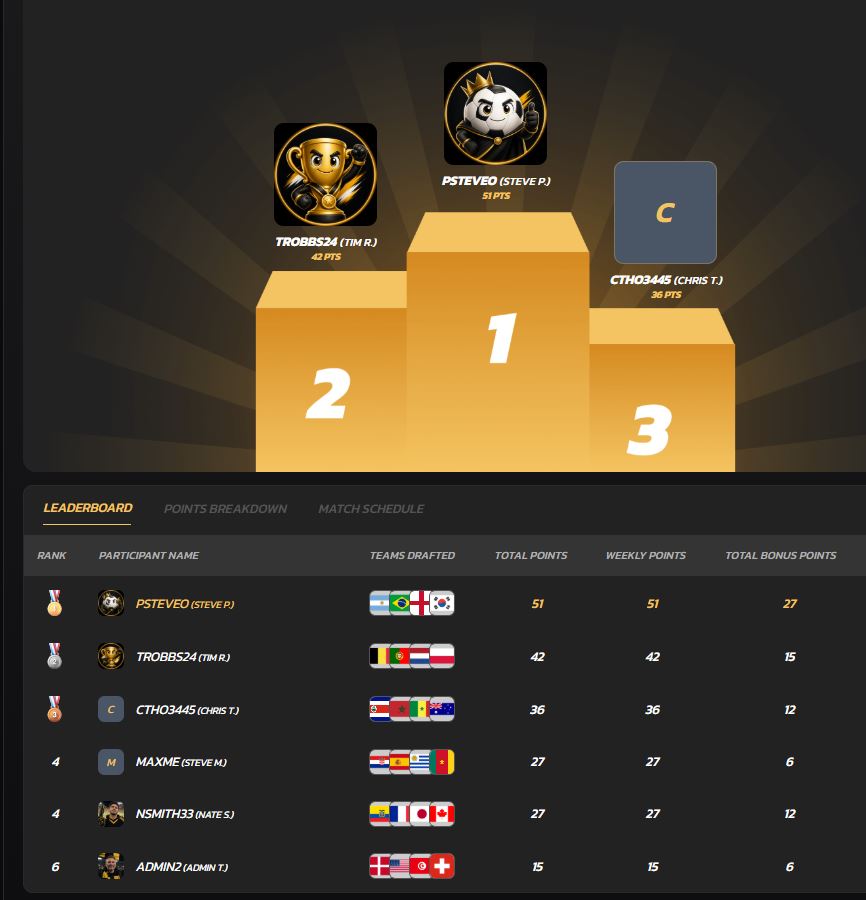
Automated scoring and live leaderboards mean you spend your Sunday watching games, not refreshing stat trackers. Commissioners can create private pools with custom scoring and rules, so the experience fits your group's style. Draftwins charges a platform hosting fee and does not collect entry fees, hold prize pools, or pay out winnings, keeping the focus on competition and fun. If weekly lineup stress has made fantasy sports feel like work, Draftwins offers a format designed to bring the fun back.
Key takeaways
Weekly lineup management burdens players most when decision fatigue, injury uncertainty, and long-format structures combine to turn a hobby into a recurring obligation.
| Point | Details |
|---|---|
| Time burden is real | A minimum 15-minute weekly routine across three days is needed just to stay competitive. |
| Bye weeks require planning | Bye week stacking creates lineup holes that cannot be fixed at the last minute. |
| Psychological harm is documented | 80% of former players cited lineup stress as the primary reason they quit. |
| Long formats compound burnout | Marathon-length leagues demand sustained engagement that most casual players cannot maintain. |
| Micro-leagues and team drafts help | Shorter cycles and team-based formats reduce weekly decision load and sustain enjoyment. |
FAQ
Why do weekly lineups cause so much stress?
Weekly lineups require repeated high-stakes decisions under uncertainty, including injury risks, bye weeks, and matchup variables. That cycle of research and second-guessing creates decision fatigue that compounds over a full season.
How much time does weekly lineup management actually take?
Industry experts recommend at least 15 minutes spread across three days each week to stay competitive. Many players spend significantly more, which increases the burden without proportionally improving results.
What is the main reason fantasy players quit mid-season?
Research shows that 80% of former fantasy players cited a specific lineup stress incident as their primary reason for quitting. Perceived lack of control over outcomes accelerates mid-season disengagement even before standings make quitting logical.
Do lineup tools actually reduce the burden?
Lineup tools help in some situations but misalign with many casual players' league settings and handle injury uncertainty poorly. Verify that any tool matches your specific scoring format before relying on its recommendations.
What format works best for players who find weekly lineups too demanding?
Micro-leagues with shorter competition cycles and team-based draft formats reduce weekly decision load significantly. Draftwins uses a team-drafting model that eliminates most of the individual player management that drives traditional fantasy burnout.