
Team games are defined by shared objectives, role interdependence, and collective outcomes that individual player formats simply cannot replicate. If you have ever felt the buzz of a group win or the pull of a shared comeback, you already know the difference. Research confirms what that feeling suggests: team formats produce stronger social bonds, lower anxiety, and higher motivation than solo play. The gap between team and player games is not a matter of preference. It is measurable, consistent, and backed by psychology. Understanding why team games beat player games helps you choose formats that keep your group engaged, connected, and coming back.
Why team games beat player games: the psychological edge
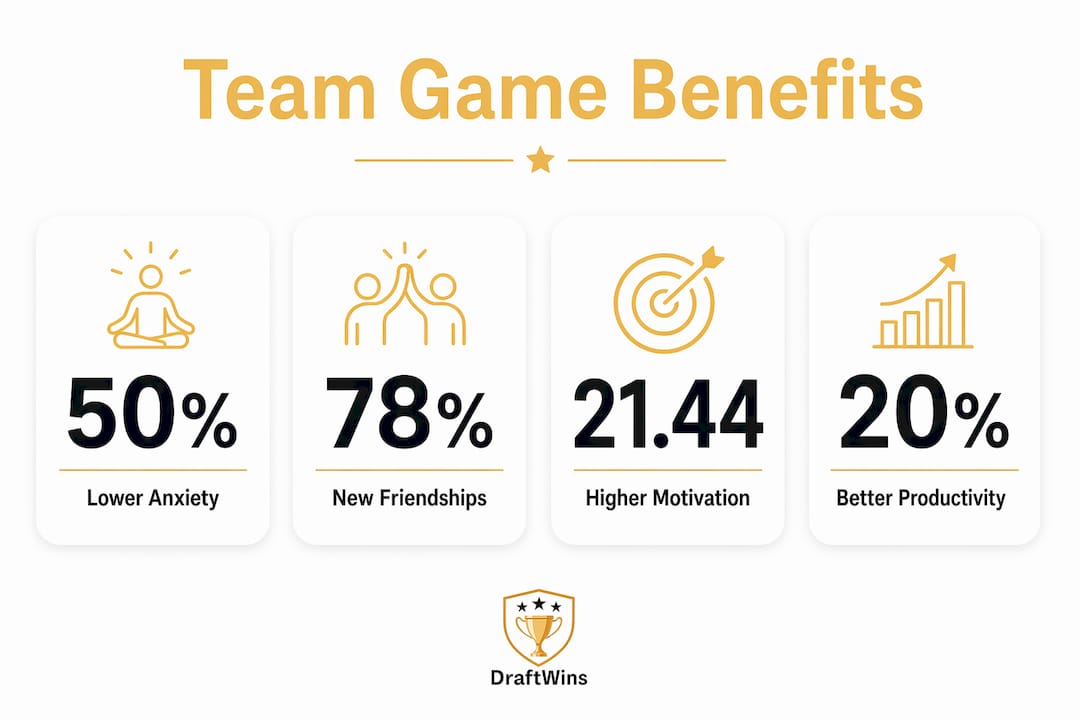
Team games produce measurably better mental health outcomes than solo player formats. Participants in team games show a 7% anxiety and depression rate, compared to 13% among solo players. That is nearly a 50% reduction in mental health risk, which means the format you choose directly affects how players feel, not just how they perform.
The psychological mechanism behind this advantage is well documented. Team games create what researchers call a "magic circle," a bounded space where authentic collaboration and risk-taking happen naturally because shared responsibility lowers the personal cost of failure. When you know a teammate has your back, you try bolder moves. You communicate more. You stay in the game longer.
Motivation scores back this up. A study of competitive participants aged 18–24 found that team game players scored 21.44 on sports achievement motivation, compared to 17.32 for individual players. Higher motivation means deeper engagement, more consistent participation, and less dropout. For anyone organizing group play, that gap matters enormously.

Effective team games also use escalating challenge and role specialization to maintain flow states, the mental zone where a task feels just hard enough to be absorbing. Flow is driven by autonomy, competence, and relatedness. Team formats deliver all three at once. Solo formats typically deliver only the first two.
Pro Tip: If your group keeps losing interest mid-season, switch to a team-based format. The shared stakes and role accountability keep players invested far longer than individual scoring alone.
How do team games build social connection better than player games?
Social connection is the single biggest advantage team formats hold over individual play. A striking 78% of gamers report meeting new people through team-based multiplayer games. Another 49% use team games specifically to maintain relationships with friends and family. Those numbers describe a social infrastructure, not just a pastime.
The mechanics behind this connection are specific. Team games create:
- Shared objectives that give every player a reason to communicate and coordinate
- Role interdependence, where your success depends on someone else doing their job well
- Team loyalty, a group identity that persists beyond any single session
- Voice and text interaction, with 90% of multiplayer players using voice chat during sessions, turning gameplay into real conversation
Each of these mechanics reinforces the others. When your role matters to the team, you show up. When you show up consistently, relationships form. When relationships form, wins feel more meaningful and losses feel worth recovering from.
"Team games create a safe space for players to experiment with leadership and bold behaviors. Shared responsibility and role safety nets lower the personal cost of trying something new, which is exactly why team formats produce stronger social bonds than solo play."
Player stickiness in team formats is driven by social identity. When you belong to a team, you are not just playing a game. You are part of a group with a shared history. That identity keeps players returning at rates that solo formats cannot match. Drafting teams instead of players amplifies this effect by tying your investment to a collective outcome rather than a single athlete's performance.
What game design features make team formats more engaging?
The advantages of team games do not happen by accident. Specific design features create the conditions for engagement, and understanding them helps you pick formats that work for your group.
Asymmetric roles and interdependence
Asymmetric team roles are the engine of team game engagement. When each player holds a distinct role, the team needs everyone to function. Role specialization drives clear communication and turns casual social play into genuine collaboration without feeling like a work meeting. A defender needs the attacker. A strategist needs the executor. That mutual need creates accountability that solo formats never generate.
Cooperative-competitive balance
A common concern about team games is that internal competition will damage group cohesion. Research shows the opposite. Intra-team competition combined with cooperative goals enhances enjoyment and strengthens social identity without harming team bonds. The key is balance. When competition serves the shared goal, it energizes the group. When it replaces the shared goal, it fractures it.
Low friction and quick launch
Team formats designed for low maintenance remove the biggest barrier to group play: setup complexity. Formats that use automated scoring, live leaderboards, and pre-set rules let groups focus on the competition rather than the administration. Group draft games built around team selection rather than individual player management eliminate the weekly lineup stress that drives casual players away from traditional fantasy formats.
Pro Tip: Choose a team format with automated scoring and a fixed draft structure. Your group will spend its energy on trash talk and strategy, not spreadsheets.
Typical multiplayer sessions running 45–50 minutes hit the ideal length for rhythm building, strategy adaptation, and leadership development. That window is long enough to build momentum and short enough to fit a busy schedule. It is one reason team formats retain casual players better than longer, more demanding individual formats.
How do team games translate into real-world skills?
Team games are not just entertainment. They are a rehearsal space for the skills that matter outside the game. The psychological fidelity of team play, where emotional pressure drives authentic behavior, means the habits you build in a game session carry over to real situations.
Here are four specific skills team games develop that individual formats do not:
- Communication under pressure. Team games require players to share information quickly and clearly when stakes are high. That practice transfers directly to workplace and social settings where clear, fast communication determines outcomes.
- Leadership emergence. Team sessions naturally surface leaders. Someone calls the strategy, organizes the group, and motivates after a loss. Team games create a safe space for players to try leadership without the full weight of real-world consequences.
- Role adaptation. Players in team formats regularly shift roles based on what the team needs. That flexibility builds the kind of situational awareness that makes people effective collaborators in professional settings.
- Productive debriefing. After a team session, players naturally analyze what went wrong and what worked. That debrief habit, repeated across sessions, reinforces positive patterns and accelerates improvement.
The productivity data makes the transfer concrete. Teams that play video games together are 20% more productive than those who do not. That figure reflects the real-world value of the communication, trust, and coordination skills that team game formats build. Solo player formats produce none of these outcomes because there is no team to coordinate with.
The competitive edge in team-based drafts comes precisely from this dynamic. When your group drafts teams rather than managing individual players, the focus shifts from micromanagement to collective strategy. That shift mirrors how effective real-world teams operate.
Key Takeaways
Team games beat player games because they deliver measurable mental health benefits, stronger social bonds, and higher motivation through shared objectives and role interdependence.
| Point | Details |
|---|---|
| Mental health advantage | Team game participants show nearly half the anxiety and depression rate of solo players. |
| Social connection | 78% of team game players meet new people, and 49% use team formats to maintain existing relationships. |
| Higher motivation | Team game players score significantly higher on achievement motivation than individual format players. |
| Real-world skill transfer | Teams that play together are 20% more productive, reflecting communication and coordination gains. |
| Low-maintenance design | Automated scoring and fixed team roles reduce setup friction and keep casual players engaged longer. |
Draftwins brings team-based group gaming to sports fans
Draftwins is built around the core advantage of team formats: you draft teams, not individual players. That single design choice removes the lineup stress and injury anxiety that push casual players away from traditional fantasy formats.
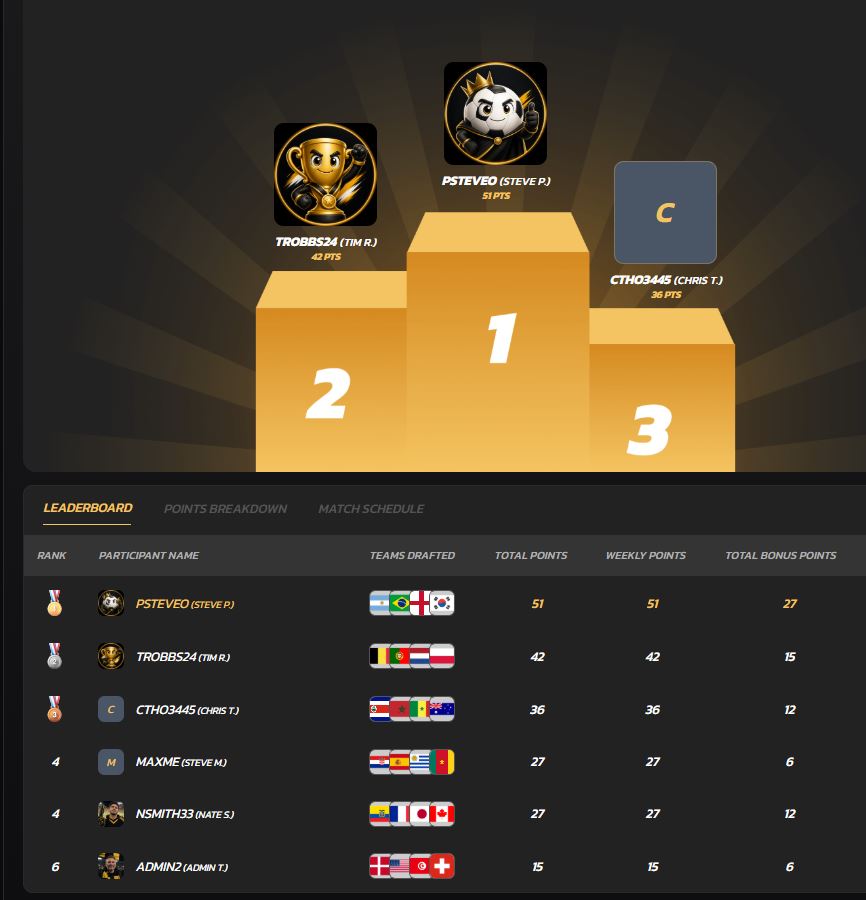
With automated scoring, live leaderboards, and private pool creation, Draftwins lets commissioners set up a group contest in minutes. Players track their teams' performance without managing weekly rosters. The focus stays on competition and the social experience of watching sports with people who have skin in the game. Draftwins launches with World Cup pools, followed by NFL and College Football pools. Join Draftwins and experience the difference a team-based format makes for your group.
FAQ
Why do team games reduce anxiety compared to solo games?
Team games distribute responsibility across multiple players, which lowers the personal pressure on any individual. Research shows team game participants experience a 7% anxiety and depression rate versus 13% for solo players.
Do team games help you make friends?
Yes. 78% of team game players report meeting new people through multiplayer formats, and 49% use team games to maintain existing friendships.
Does competition within a team hurt group cohesion?
No. Healthy intra-team competition combined with cooperative goals increases enjoyment and strengthens social identity without damaging team bonds.
What makes team formats better for casual players?
Team formats with automated scoring and fixed roles remove the weekly management burden that drives casual players away. Team draft formats let players focus on the competition rather than the administration.
Can team games improve real-world skills?
Yes. Teams that play games together are 20% more productive than those that do not, reflecting gains in communication, leadership, and coordination that transfer directly to professional and social settings.