
A competitive edge team-based draft is a structured selection process where participants pick entire teams instead of individual players, prioritizing group synergy and shared goals over personal stats. This format is the recognized industry term for what casual sports fans and gamers call "pool drafting" or "team pool contests." Team-based drafts reduce drafting complexity by 50–70% compared to traditional fantasy leagues, removing the need for weekly lineup management entirely. That single shift makes the experience accessible to anyone who loves sports but dreads spreadsheets, injury reports, and waiver wire decisions. Draftwins was built around exactly this format, and this guide walks you through every stage.
What gives you a competitive edge in team-based drafts?
The core advantage in any team-based draft comes from understanding that you are building a composition, not a roster of stars. Expert drafters prioritize team archetypes over collecting top individual performers, focusing instead on functional roles like engage, peel, and damage. That principle applies whether you are drafting World Cup squads, NFL franchises, or college football programs. A group of individually strong picks with no shared identity will consistently lose to a balanced, role-defined team.
Successful teams draft deliberately with a clear win condition, discarding strong options that do not fit the strategy. Individual talent cannot compensate for poor team composition or fractured synergy. This is the single most important insight in competitive team building, and most casual drafters skip it entirely.

What are the essential preparations for a team-based draft?
Good preparation separates a fun, competitive session from a chaotic one. Before anyone makes a single pick, your group needs to agree on three things: the format, the roles, and the rules.
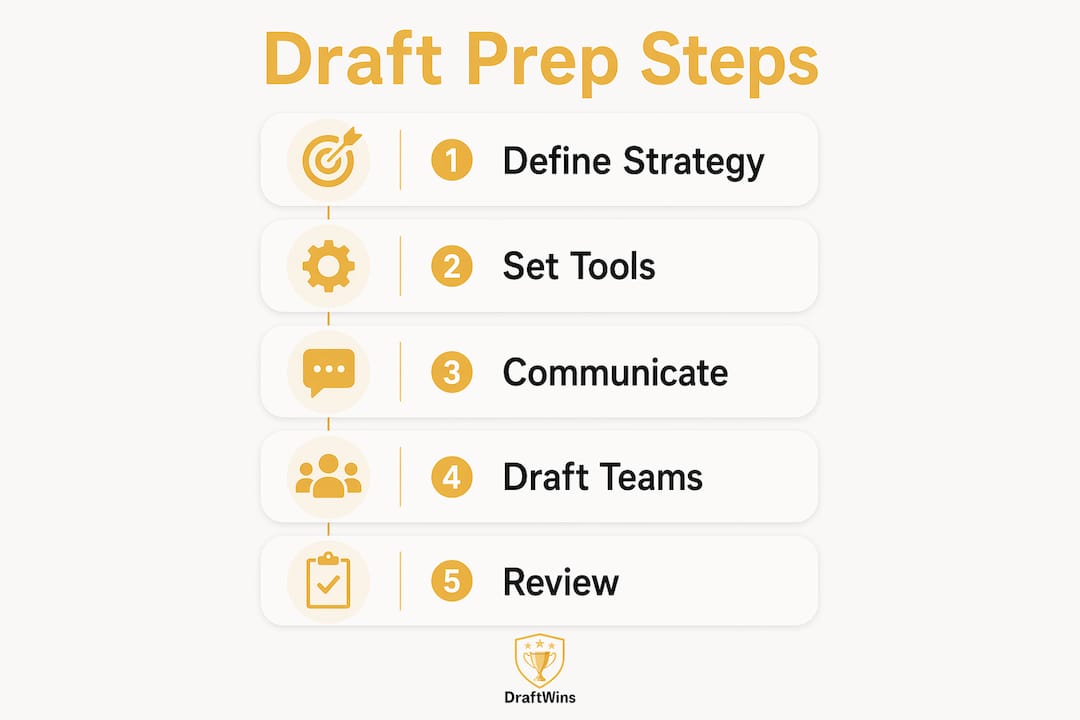
Define your strategy archetype first
Every strong draft starts with a declared archetype. An aggressive archetype targets high-scoring, high-variance teams. A defensive archetype favors consistent performers with lower ceilings but fewer collapses. Picking without an archetype leads to a disjointed roster that wins nothing and confuses everyone. Write your archetype down before the draft begins.
Set up your tools and communication channels
A physical or digital draft board keeps the session organized and visible to all participants. Set a pick timer, typically 60–90 seconds per selection, to maintain pace and prevent analysis paralysis. Use a group chat or shared screen so every participant sees the same information at the same time. Team-based drafts simplify event management and increase engagement precisely because the logistics stay light.
Draft preparation checklist:
- Confirm the number of participants and draft order before the session starts
- Agree on the scoring system and tiebreaker rules in writing
- Assign roles or position categories each team must fill
- Set a pick clock and stick to it throughout the draft
- Designate a commissioner to manage disputes and track selections
Pro Tip: Match the draft's competitive intensity to your group's experience level. A group drafting together for the first time benefits from a relaxed, low-stakes format. Highly physical or hyper-competitive activities often fail with diverse groups, and the same logic applies to draft formats that overwhelm newcomers.
| Preparation step | Why it matters |
|---|---|
| Define strategy archetype | Gives every pick a clear purpose and direction |
| Set pick timer | Keeps the session moving and prevents overthinking |
| Agree on scoring rules | Removes disputes after the draft ends |
| Assign role categories | Forces balanced team building across all positions |
| Designate a commissioner | Creates a single point of authority for decisions |
How to execute a winning team-based draft: step by step
Draft day execution is where preparation pays off. Follow these steps to build a balanced, synergistic team with every pick.
-
Confirm your archetype before pick one. Review the strategy you defined in preparation. Every pick you make should serve that archetype. If it does not, pass on it regardless of how attractive it looks in isolation.
-
Draft by role, not by ranking. Fill your most critical role categories first. Drafting based on positional scarcity and turn control is the key to securing high-value selections at the right moment. If a specific role runs thin early, prioritize it before the pool dries up.
-
Use your pick order strategically. Back-to-back picks at the turn of a snake draft are among the most valuable assets in the session. Using pick order strategically, including securing back-to-back picks, improves team balance and overall power. Plan two picks ahead, not just one.
-
Weaponize your draft assets. Trading down from a top spot to collect multiple mid-round picks is a proven tactic. Teams that trade down from top spots to gather more mid-round selections increase their odds of landing multiple high-value performers at controlled cost. Depth beats a single elite pick in most formats.
-
Evaluate your roster at the midpoint. After filling half your slots, pause and check for gaps. If your archetype called for balance and you have three offensive powerhouses with no defensive anchor, correct it now. Waiting until the final rounds leaves you with no good options.
-
Make your final picks for upside, not safety. Late rounds are the right time to take calculated risks on high-ceiling teams that other participants overlooked. Safe, predictable late picks rarely change outcomes.
Pro Tip: Write your win condition on a piece of paper before the draft starts. Something like "I win if I have the highest-scoring offensive team with at least one defensive anchor." Check every pick against that condition. Deliberate drafting with a clear destination consistently outperforms reactive drafting.
Common mistakes that kill your draft results
Most casual drafters make the same errors. Recognizing them before your session is the fastest way to gain an edge.
-
Chasing the best available player instead of the best available fit. A high-profile team that does not match your archetype weakens your roster, not strengthens it. Fit beats prestige every time.
-
Ignoring positional scarcity until it is too late. Ignoring positional scarcity and turn control leads to suboptimal drafts. Watch the board and draft ahead of the run, not after it.
-
Skipping the post-draft debrief. Skipping the debrief is the top cause of weak group dynamics continuing into the competition. A five-minute review of who got what and why sets the tone for the entire season.
-
Overcomplicating role assignments for a casual group. Three to four role categories are enough for most friendly competitions. Adding eight categories to a group of first-time drafters creates confusion and slows the session to a crawl.
-
Letting the draft become too competitive for the room. The draft activity should maximize psychological safety and communication over posturing. A draft that alienates quieter participants destroys the social experience that makes team contests worth running.
-
Failing to account for draft order when setting strategy. Picking first gives you the best single selection. Picking last gives you two consecutive picks at the turn. Neither position is inherently better. Your archetype should reflect your slot.
How to sustain team performance after the draft
The draft is the beginning, not the end. What happens after the picks are made determines whether your group stays engaged through the full competition.
Post-draft debriefs using the ORCA framework add more value than gameplay alone. ORCA stands for Observe, Reflect, Conceptualize, and Act. It turns a casual post-draft conversation into a structured review that actually changes behavior. Structured reflection transforms observations into real improvements, not just complaints.
"The debrief is where the real team building happens. The draft is just the setup." This principle from structured team-building practice applies directly to competitive pool formats.
Sustaining performance after the draft comes down to four practices:
-
Schedule brief monthly check-ins. A 10-minute group message or call keeps everyone aligned as the competition progresses. Participants who feel informed stay engaged longer.
-
Adjust strategy based on results. If your archetype is underperforming by week three, identify why. Did you miss a role? Did the scoring system reward something you did not prioritize? Adapt early rather than late.
-
Encourage open communication about team performance. Groups that talk openly about standings and results maintain higher engagement. Silence breeds disengagement, not suspense.
-
Use live leaderboards to drive ongoing interest. Visible standings create natural conversation and friendly rivalry. Platforms like Draftwins provide automated scoring and live leaderboards that keep the competition alive between matchdays without any manual tracking.
How Draftwins supports your team-based draft
Draftwins is a sports pool platform built specifically for the team-based draft format. Participants draft entire teams instead of individual players, which removes lineup management, injury tracking, and weekly roster decisions entirely.
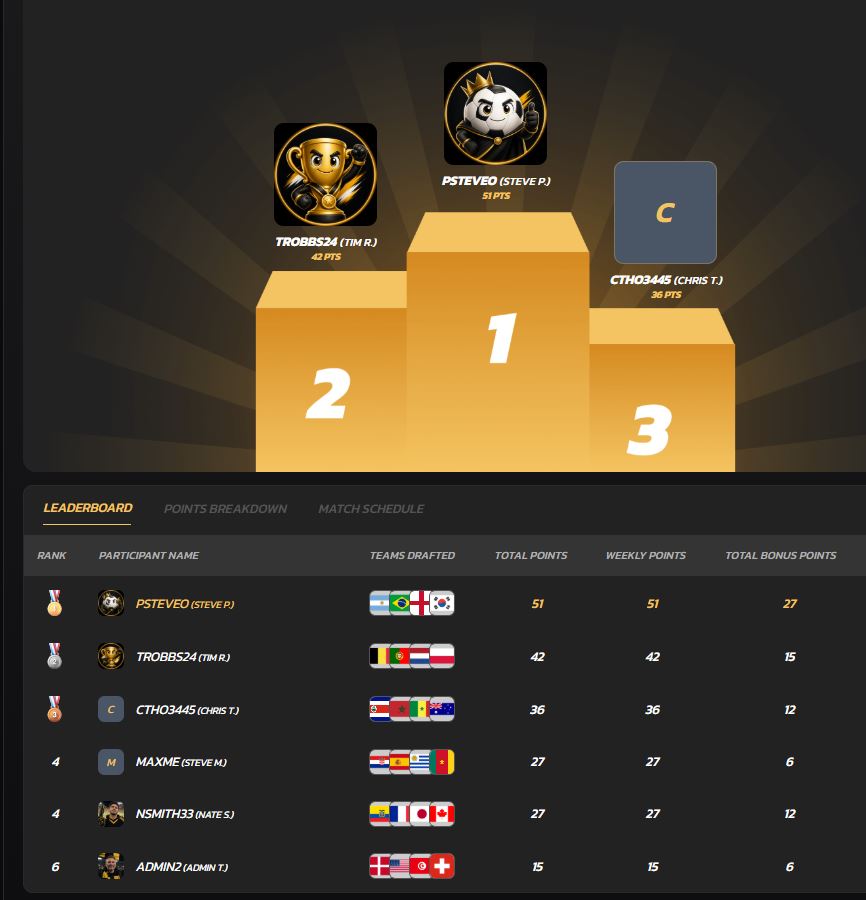
Commissioners create private pools with custom scoring and rules in minutes. Automated scoring and live leaderboards handle all tracking, so your group focuses on the competition rather than the administration. Draftwins launches with World Cup pools, followed by NFL and College Football pools. The platform charges a hosting fee and does not collect entry fees, hold prize pools, or accept wagers. If you want a fun, low-complexity draft experience for your friend group or office pool, Draftwins is the direct answer.
FAQ
What is a team-based draft format?
A team-based draft is a selection format where participants pick entire sports teams instead of individual players. It removes weekly lineup management and focuses competition on team performance and overall results.
How does a team-based draft reduce complexity?
Team-based drafts cut drafting complexity by 50–70% by eliminating the need for weekly roster decisions, injury monitoring, and waiver wire management. Participants draft once and follow their teams through the competition.
What is the most common mistake in a team-based draft?
The most common mistake is picking the highest-ranked team available instead of the best fit for your strategy archetype. Poor team composition consistently outweighs individual talent in pool-based formats.
How do I maintain engagement after the draft ends?
Schedule brief monthly check-ins, use live leaderboards for visibility, and run a short post-draft debrief. Structured debriefs using frameworks like ORCA transform one-time events into lasting group engagement.
Is a team-based draft good for casual sports fans?
Yes. The format is designed for casual fans who want competitive fun without the complexity of individual player management. Platforms like Draftwins make the setup process fast and the ongoing experience low-maintenance.
Key Takeaways
A competitive edge in team-based drafts comes from drafting by role and synergy, not by individual prestige, and sustaining engagement through structured post-draft communication.
| Point | Details |
|---|---|
| Draft by archetype, not by ranking | Define your strategy before pick one and filter every selection through it. |
| Use positional scarcity to your advantage | Identify scarce roles early and draft ahead of the run to avoid being shut out. |
| Weaponize mid-round picks | Trading down for multiple mid-round selections builds depth that single elite picks cannot match. |
| Run a post-draft debrief | A structured review using ORCA turns a one-time event into lasting team improvement. |
| Keep the format simple for casual groups | Three to four role categories and a pick timer are enough to run a competitive, enjoyable draft. |