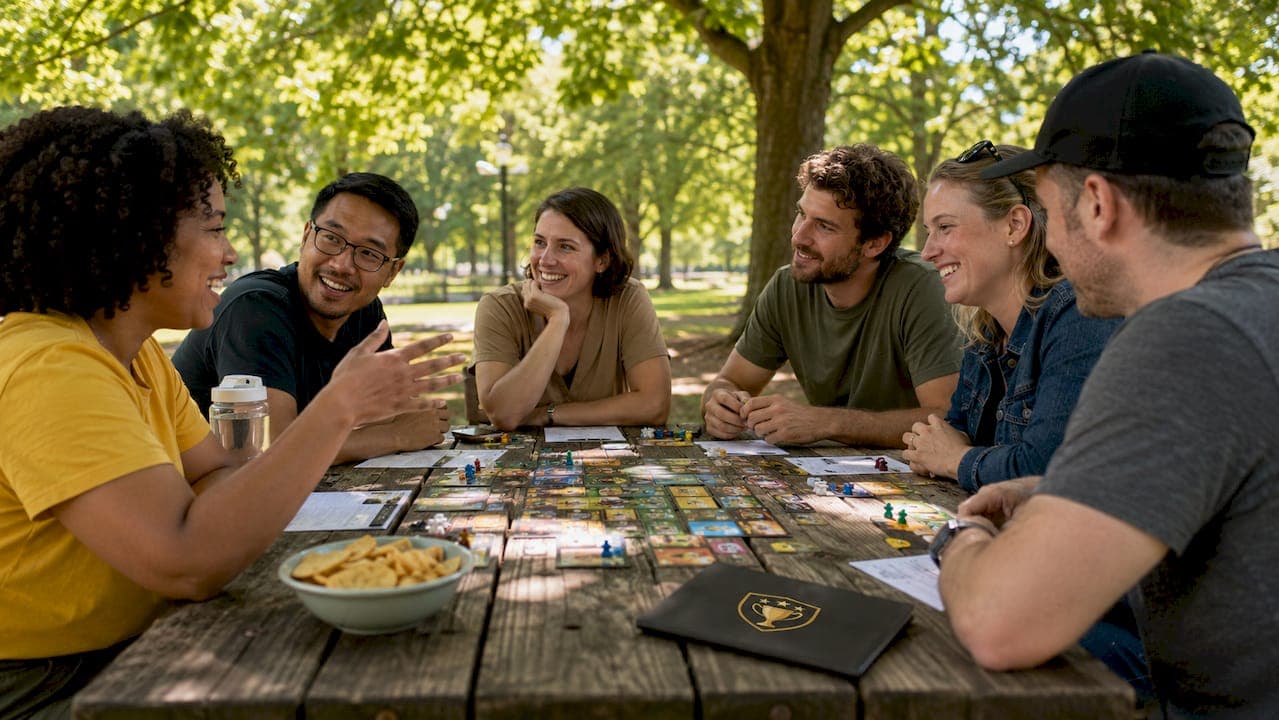
Group draft games are a superior alternative to traditional trivia for groups seeking real engagement, fair competition, and lasting social connection. While trivia nights remain a default choice for team events, only 30% of employees feel genuinely engaged by them. That number tells you everything about why group draft games beat trivia when the goal is actual fun and team cohesion. Research on cooperative-competitive gamification confirms that draft formats build stronger social bonds and higher enjoyment than standard competitive games. Draftwins is one platform built around exactly this insight, letting groups draft teams instead of managing individual players.
Why group draft games beat trivia for social connection
Group draft games give every player a defined role from the first pick. That structure creates immediate investment. Trivia, by contrast, puts one person at the microphone while others wait. The result is passive participation, not real teamwork.
A study with 119 participants over four weeks found that cooperative-competitive drafting formats improve social identity and enjoyment more than individual or standard competitive formats. Social identity is the sense of belonging to a group. When drafting builds that feeling, players leave the session feeling closer to their teammates, not just smarter than the other table.
The psychology behind this is straightforward. Drafting requires players to discuss options, weigh tradeoffs, and commit to shared decisions. Trivia rewards whoever already knows the answer. One format builds the group. The other tests it.
"Competitive pressure in trivia prioritizes winning over connection. Collaborating in drafts enhances mental health and enjoyment for all participants, regardless of their knowledge base."
The benefits of group draft games go beyond fun. Defined player roles in drafts foster deeper bonds than trivia's passive question-and-answer format. When you have a stake in every pick, you stay present. When you are waiting for a question you might not know, you check your phone.
- Every player picks, so every player stays engaged throughout the session.
- Drafting decisions are visible to the group, which creates shared moments and reactions.
- Team strategy discussions happen naturally during the draft, not just at the end.
- Players with less knowledge still contribute meaningfully through preference and instinct.
Pro Tip: Assign a "draft captain" for each round to rotate leadership and keep quieter group members involved in the decision-making process.
How draft game mechanics keep groups more engaged
Trivia has a pacing problem. One team answers, everyone else waits. Scores get tallied. The next question arrives. For large groups, this cycle creates long stretches of dead time that kill momentum.
Draft game speed is determined by group flow, not by a host reading questions and waiting for buzzers. All players act within the same window, which means the game moves as fast as the group does. There is no bottleneck caused by one slow team holding up the rest.
Optimal group size and session length
Team draft games optimized for 6–10 players run 15–30 minutes and deliver better engagement density than trivia formats, which work best with 4–6 players per team. Trivia struggles to scale. Draft games handle larger groups without losing the feeling that every person matters.
| Format | Optimal group size | Typical session length | Engagement style |
|---|---|---|---|
| Group draft game | 6–10 players | 15–30 minutes | Simultaneous, active |
| Traditional trivia | 4–6 players | 45–90 minutes | Turn-based, passive |
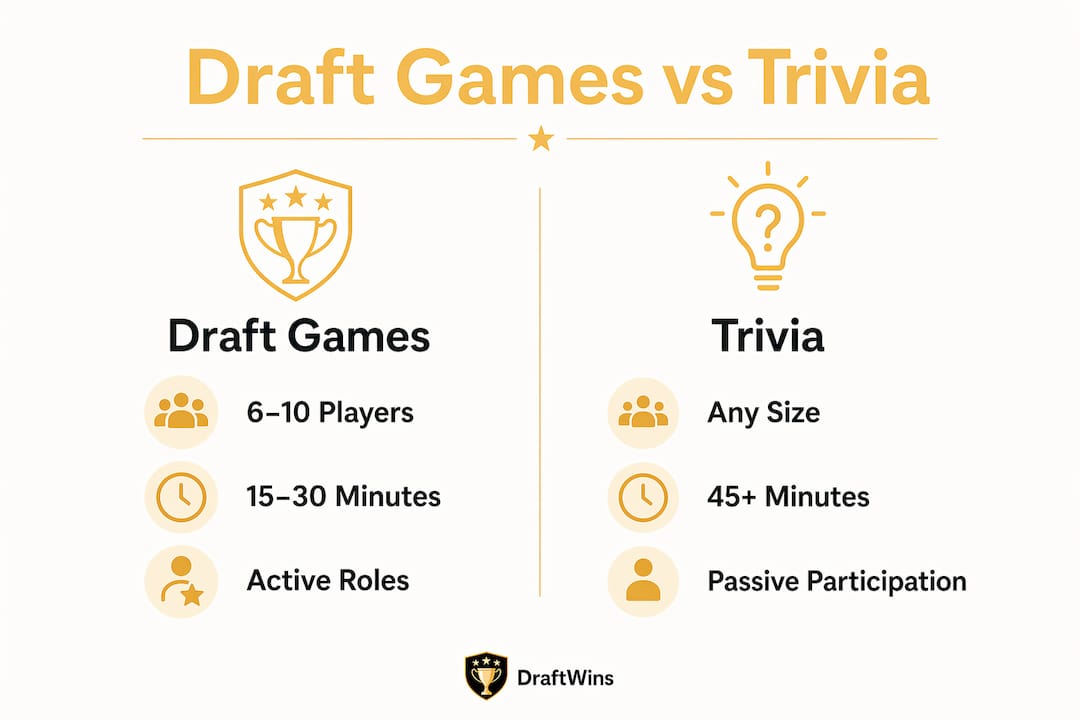
The table above reflects a real structural difference. Trivia sessions run long because scoring, question delivery, and team deliberation all happen in sequence. Draft games compress that timeline because decisions happen in parallel.
Drafting's collective pacing also avoids the long waits typical in trivia. That matters most in social settings where attention is already competing with conversation, food, and phones.
Pro Tip: Cap your draft sessions at 30 minutes for first-time groups. Shorter sessions build appetite for the next round rather than fatigue.
Long-term engagement through recurring narratives
Trivia nights are episodic. You play, you win or lose, and the slate resets. Draft games build something different. Team synergies and league play create recurring narratives that give groups a reason to come back. Your draft choices carry meaning across sessions. That continuity is one of the clearest advantages of draft games over trivia.
How draft games create fairer, more inclusive competition
Trivia has a knowledge dominance problem. One player who happens to know obscure capital cities or 1980s film trivia can carry an entire team. That creates resentment, not camaraderie. Players who feel outmatched disengage fast.
Poorly designed competitive systems create envy and resentment. Draft games succeed by focusing on fair, collective success metrics instead of individual knowledge. When the whole team's draft performs well, the whole team wins. No single player can dominate through trivia recall alone.
Draft games also reduce what game designers call "analysis paralysis." Drafting's visible decisions reduce cognitive load and keep all players active simultaneously. In trivia, a player who does not know the answer has nothing to do. In a draft, every player always has a choice to make.
The advantages of draft games for inclusivity come down to three structural features:
- Scoring reflects collective team performance, not individual recall.
- Draft pools give every player equal access to the same options at the same time.
- Different skill levels contribute differently but equally. Sports knowledge, gut instinct, and strategic thinking all have value in a draft.
Trivia often divides teams into silos and stresses less knowledgeable players. That stress is the opposite of what a group game should produce. Draft formats remove that pressure by shifting the focus from "what do you know?" to "what do you choose?"
Practical tips for organizing a group draft game event
Running a great draft event does not require much setup. The format does most of the work. What you need is a clear structure, the right group size, and a few ground rules before the first pick.
- Set your group size first. Aim for 6–10 players per draft pool. Below six, the draft feels thin. Above ten, decisions slow down and the social energy fragments.
- Define the scoring system before you start. Every player should know how points are earned before the draft begins. Ambiguity after the fact creates friction.
- Limit each pick to 60–90 seconds. A time limit keeps the pace up and prevents overthinking. It also makes the draft feel like a live event, not a committee meeting.
- Use a live leaderboard. Real-time scoring keeps players invested between rounds. Seeing your team climb the standings is a different feeling than waiting for a host to read final scores.
- Plan for a second session. The best draft events end with players already asking when the next one is. Build that expectation by announcing a follow-up date before everyone leaves.
Pro Tip: For sports draft events, tie your draft to a real tournament or season. The World Cup, NFL playoffs, and college football bowls all give your draft stakes that extend beyond the room.
Group gaming experiences built around drafting also benefit from a short debrief after the session. Ask players which pick they are most proud of and which one they regret. That conversation extends the social value of the game well past the final whistle.
Draftwins makes group draft competitions easy to run
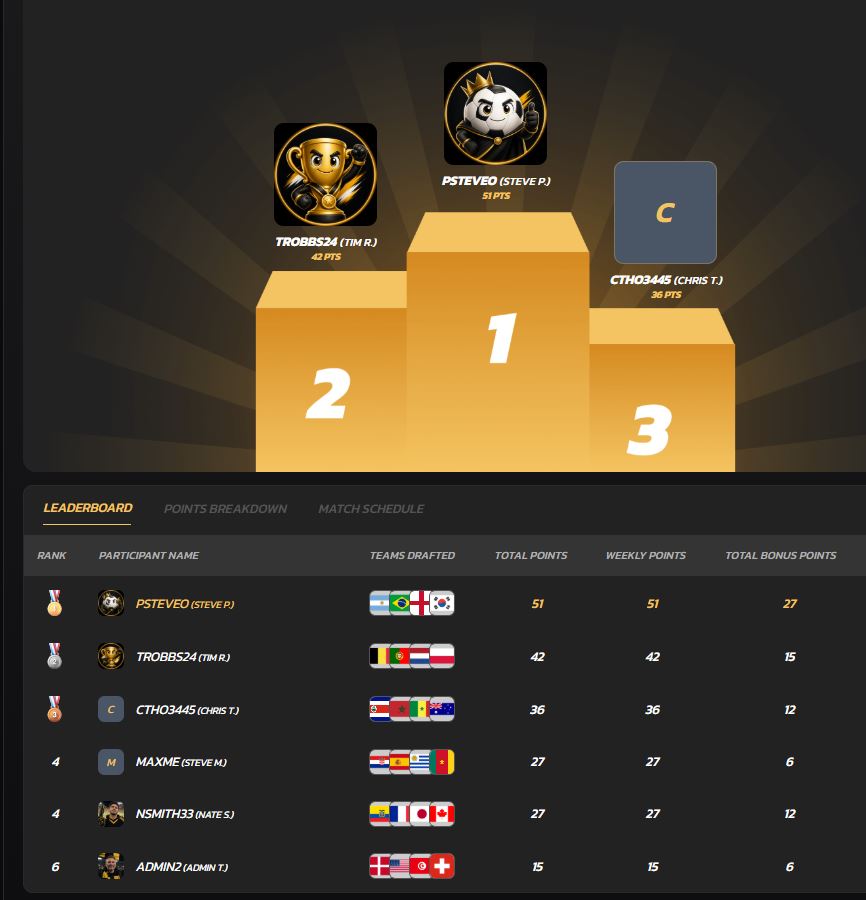
Draftwins is built for groups who want the engagement of a draft competition without the complexity of traditional fantasy leagues. The platform lets commissioners create private pools, set their own scoring rules, and track results through automated scoring and live leaderboards. There is no lineup management, no injury stress, and no complicated setup.
Groups draft entire teams rather than individual players, which keeps the focus on competition and team performance. Draftwins launches with World Cup pools, followed by NFL and College Football pools. The platform charges a hosting fee and does not collect entry fees or hold prize pools, keeping the experience clean and social. If your group is ready to move past trivia nights, Draftwins gives you a format that actually brings people together.
Key Takeaways
Group draft games beat trivia because they deliver simultaneous participation, fair collective scoring, and stronger social bonds from the first pick to the final leaderboard.
| Point | Details |
|---|---|
| Engagement gap is real | Only 30% of employees feel engaged by trivia; draft games close that gap through active participation. |
| Drafts build social bonds | Cooperative-competitive drafting improves social identity and enjoyment more than standard trivia formats. |
| Better pacing for larger groups | Draft games run 15–30 minutes for 6–10 players, outperforming trivia's slower, turn-based structure. |
| Fairer for all skill levels | Draft scoring rewards collective team performance, not individual knowledge dominance. |
| Long-term investment | Draft narratives carry across sessions, giving groups a reason to return that trivia nights rarely create. |
FAQ
Why do group draft games beat trivia for team building?
Draft games require every player to make active decisions, which builds stronger social bonds than trivia's passive question-and-answer format. Research shows that cooperative-competitive drafting improves social identity and enjoyment more than standard competitive formats.
What is the ideal group size for a draft game?
The optimal size for a group draft competition is 6–10 players. That range keeps decisions fast and every player meaningfully involved throughout the session.
How long does a typical group draft game take?
Most draft games for groups of 6–10 players run 15–30 minutes. That is significantly shorter than a standard trivia night, which typically runs 45–90 minutes.
Are draft games fair for players who are not sports experts?
Draft games favor strategy and instinct over specialized knowledge, which makes them more inclusive than trivia. Collective scoring means no single player's knowledge gap hurts the whole team.
How does Draftwins differ from a traditional fantasy league?
Draftwins lets groups draft whole teams rather than individual players, removing the lineup management and injury tracking that make traditional fantasy leagues complicated. The platform handles scoring automatically so groups can focus on competition.