
Team draft games are defined by a single roster-building event, while player management games spread strategic decisions across an entire season. That core difference shapes everything: how much time you spend, how often you log in, and how much stress you carry between matchdays. For casual gamers and sports fans weighing team draft games vs player management games, the choice comes down to one question: do you want your big decisions front-loaded at draft time, or do you want to stay engaged week after week? This guide breaks down both formats so you can pick the one that actually fits your life.
1. team draft games vs player management games: the core difference
The critical difference between these two formats is where the strategic tension lives. In draft-focused games, all your key decisions happen at one concentrated moment. In management games, those decisions stretch across weeks or months.
Draft games treat the roster selection event as the main attraction. Once your draft is done, the game largely plays out on its own. Management games treat the draft as just the opening move in a much longer chess match.

This distinction matters because it determines your daily commitment. Draft games are low maintenance after day one. Management games reward players who check in regularly, adjust rosters, and react to injuries or trades.
2. how team draft games work
Team draft formats concentrate all player decisions into a single draft phase, with snake and auction formats being the two most common structures. Snake drafts use a serpentine pick order to balance early and late selections. Auction drafts give every manager a bidding budget to spend on any player they want.
Daily fantasy sports (DFS) take this concept even further. DFS lineup construction compresses roster building into one slate under a salary cap, with no long-term roster obligations. You pick your lineup for that day's games, and the contest is settled by the next morning.
Key features of team draft games include:
- Single draft event sets your roster for the season or contest
- Salary cap constraints in DFS and some season-long formats add a layer of draft strategy
- Automated scoring handles results without requiring you to manage lineups daily
- Low ongoing commitment after the draft is complete
Pro Tip: If you are new to draft strategy games, try an auction format at least once. Controlling your own budget forces you to think about player value in a way that snake drafts simply do not.
Even draft-centric games carry some post-draft responsibility. Waivers, injuries, and eligibility can shift your roster validity after draft day, so having a contingency plan is smart. That said, the workload is far lighter than what management games demand.
3. how player management games work
Player management simulators put you in the General Manager seat for an entire season. Football Franchise, for example, models a full 24-week regular season with playoffs, plus offseason activities like rookie drafts and contract extensions. That scope is what separates management games from draft games at a fundamental level.
The ongoing decision layers in these games include:
- Roster moves: signing free agents, cutting underperformers, and managing depth charts
- Salary cap management: balancing short-term wins against long-term financial flexibility
- Trades: negotiating with other managers or AI teams throughout the season
- Injury responses: adjusting lineups when key players go down
- Playoff strategy: peaking at the right time by managing player fatigue and matchups
Games like Teamfight Manager 2 add another layer by using auto-resolve match engines. Matches play out automatically, but your upstream decisions on roster composition, tactics presets, and per-player item categories heavily influence results. You never click through the action in real time. You win or lose based on the preparation you did before kickoff.
Pro Tip: In player management simulators, your best move is often the one you make in the offseason. Locking in strong contracts before the season starts beats scrambling for free agents mid-campaign every time.
Player management sims reward patience and long-term strategy. They appeal to fans who want to feel the full arc of a season, not just a single draft moment.
4. side-by-side comparison: draft games vs management games
The workload difference between these two formats is most visible when you compare specific gameplay factors head to head.
| Feature | Team Draft Games | Player Management Games |
|---|---|---|
| Main decision point | Single draft event | Ongoing throughout the season |
| Roster changes | Minimal after draft | Frequent trades, waivers, signings |
| Time commitment | Low after draft day | High, weekly or more |
| In-season management | Mostly automated | Active lineup and cap decisions |
| Skill expression | Draft preparation and pick order | Season-long strategy and adaptation |
| Best for | Casual, time-limited players | Dedicated, strategy-focused fans |
The tradeoff is clear. Draft games give you a concentrated burst of excitement followed by a mostly hands-off experience. Management games give you a richer, longer story but demand consistent attention.
Casual players often hit a wall with management games around week four or five of a season. The novelty wears off, and the weekly decisions start to feel like homework. Draft games sidestep that problem entirely by front-loading the fun.
5. which format fits your style?
Casual gamers reduce stress by choosing formats that match the time and attention they can reliably give. The honest question to ask yourself is not which format sounds more fun in theory. It is which one you will still be engaged with in week eight.
Consider these scenarios:
- You have one free evening per week: A season-long draft game or a DFS slate fits perfectly. You draft once or pick a lineup for the week, then check scores passively.
- You love sports strategy and check scores daily: A player management sim gives you a richer experience. The depth of GM-style decisions pays off when you have the bandwidth for it.
- You want to play with friends casually: Draft games with automated scoring and live leaderboards keep everyone engaged without requiring anyone to become an expert.
On the draft format question specifically, live drafts reward adaptation to real-time changes, while autodraft executes a pre-set priority queue. If you cannot attend a live draft, setting a strong priority list before the event protects your roster quality without requiring you to be present.
Pro Tip: For group competitions with mixed experience levels, choose a draft format where teams are drafted instead of individual players. It levels the playing field and keeps casual fans competitive without requiring deep player knowledge. Draftwins is built exactly for this use case.
The best player management games reward players who enjoy incremental depth. But if you want to jump in, have fun, and not stress about waiver wire pickups at midnight, a draft-centric format wins every time.
6. hybrid formats that blend both worlds
A newer category of fantasy team games blends draft-centric roster building with automated match resolution and some management depth. These hybrid formats are worth knowing about because they expand your options significantly.
Teamfight Manager 2 is the clearest example. Per-player configuration options like item-category slot locking drive skill and outcomes more than moment-to-moment match control. You draft your roster, set your tactics, and watch the match auto-resolve. The skill lies entirely in preparation, not execution during the game.
Other hybrid features appearing in newer formats include:
- Scaled-back cap management: Some draft leagues add a light salary cap without requiring full GM-level financial planning
- Asynchronous drafts: Slow drafts spread picks over 24-hour windows, removing the pressure of a live event while keeping the draft format intact
- Auto-lineup tools: Management games increasingly offer automated lineup suggestions that reduce the weekly decision burden
- Team-based drafting: Drafting whole teams instead of individual players eliminates injury and lineup concerns entirely, which is the model Draftwins uses
These hybrids are growing in popularity because they solve the core problem with both pure formats. Draft-only games can feel too passive after the draft. Management games can feel too demanding mid-season. Hybrids give you the excitement of drafting with just enough ongoing engagement to stay interesting.
Key takeaways
Team draft games suit casual players best because they concentrate all major decisions into one event, while player management games reward dedicated fans who want season-long strategic depth.
| Point | Details |
|---|---|
| Draft games front-load decisions | All key roster choices happen at draft time, keeping ongoing commitment low. |
| Management games demand consistency | Season-long roster, cap, and trade decisions require regular weekly attention. |
| Format choice depends on time | Match the format to how many hours per week you can realistically give. |
| Hybrid formats offer a middle ground | Auto-resolve sims and team-based drafts blend excitement with reduced management load. |
| Casual players favor draft formats | Automated scoring and single-event drafts keep the experience fun without becoming a second job. |
Try Draftwins for stress-free draft competition
Draftwins is built for sports fans who want the thrill of competition without the grind of weekly roster management. On Draftwins, you draft entire teams instead of individual players, which means injuries and lineup decisions never derail your season. Automated scoring and live leaderboards handle the results, so you can focus on bragging rights instead of spreadsheets.
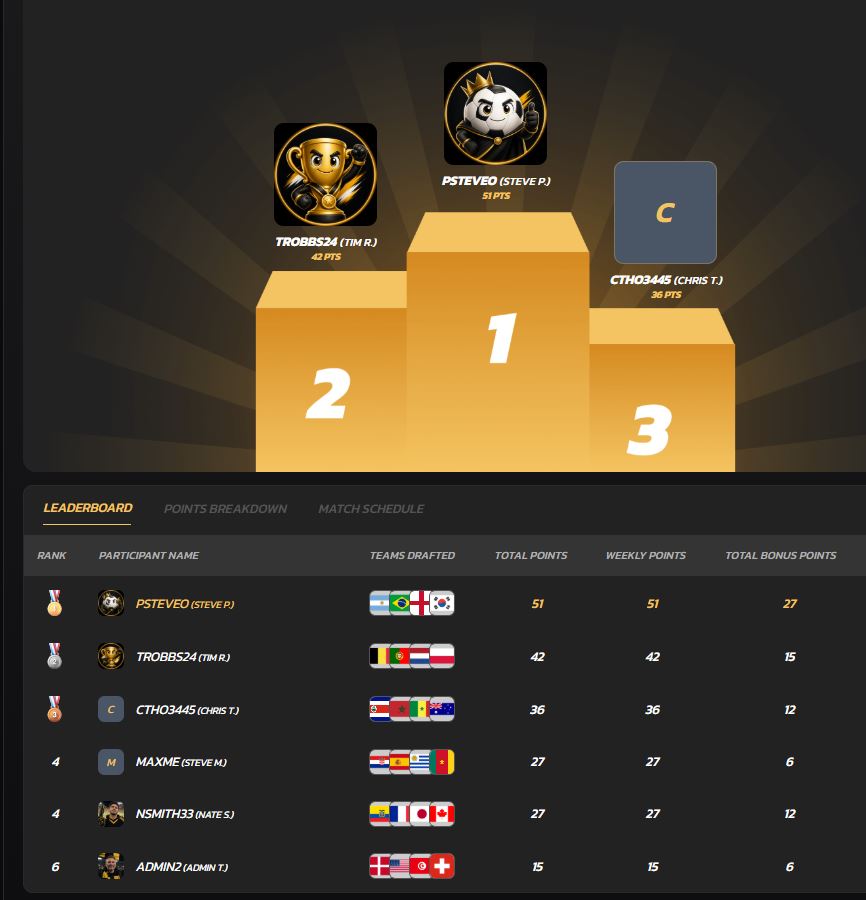
Commissioners can create private pools with custom scoring rules in minutes. Draftwins launches with World Cup pools, with NFL and College Football pools coming next. If you want a casual draft format that your whole friend group can enjoy without a learning curve, Draftwins is the place to start. Draftwins charges a platform hosting fee and does not collect entry fees, hold prize pools, or pay out winnings.
FAQ
What is the main difference between draft and management games?
Team draft games concentrate all roster decisions into a single draft event, while player management games spread decisions across an entire season through trades, signings, and lineup changes.
Are team draft games better for beginners?
Yes. Draft-focused formats require less ongoing attention and are easier to learn, making them the better starting point for casual players and sports fans new to fantasy competitions.
What is a snake draft in fantasy sports?
A snake draft uses a serpentine pick order where the manager who picks last in one round picks first in the next, balancing the advantage of early selections across all participants.
Can you play player management games casually?
You can, but most player management simulators reward consistent engagement. Hybrid formats with auto-resolve match engines and automated lineup tools reduce the workload while keeping the strategic depth intact.
How does Draftwins differ from traditional fantasy leagues?
Draftwins lets you draft whole sports teams instead of individual players, removing the stress of tracking injuries and managing weekly lineups. The platform handles scoring automatically, making it far simpler than traditional fantasy league formats.