
Player management fantasy is defined as any fantasy sports format that requires you to draft, start, bench, and swap individual athletes each week. For casual players, this is exactly why avoid player management fantasy has become a real conversation. The time demands, psychological traps, and competitive imbalances built into traditional player-centered leagues push casual fans away from fun and toward frustration. Team-based and prediction formats exist specifically to fix these problems, and platforms like Draftwins are built around that simpler model.
What are the disadvantages of player management in fantasy sports?
Traditional player management fantasy drains time faster than most casual fans expect. Serious managers commit multiple hours daily during the season tracking injuries, researching matchups, and adjusting lineups. That level of commitment works for dedicated players. For casual fans who want to enjoy sports without a second job, it is a dealbreaker.
The complexity goes beyond time. Most traditional leagues use salary caps, multi-positional eligibility rules, and waiver wire priority systems. Each rule adds a layer of decision-making that rewards specialists and punishes newcomers. Casual players face a steep learning curve before they even make their first lineup.

The psychological toll is real too. Fantasy platforms incorporate gambling-like variable reward mechanics including dopamine-driven captain picks and status feedback that fuel obsessive behavior. What starts as a fun hobby can become compulsive checking and second-guessing every roster move.
One of the most common traps is the sunk cost fallacy. Fantasy players hold underperforming players hoping for value recovery instead of adapting to what is actually happening on the field. You drafted a star running back in round two, he gets hurt in week three, and you keep starting him for four more weeks hoping he bounces back. That is not strategy. That is emotional attachment costing you points.
The competitive imbalance problem makes all of this worse. Up to 40% of top managers use similar statistically optimal lineups generated by automated tools. Casual players competing against that wall of data-driven decision-making rarely win. The game stops feeling fair and starts feeling rigged.
- Time sink: Weekly research, injury tracking, and lineup decisions consume hours most casual fans do not have.
- Rule overload: Salary caps, positional quotas, and waiver systems overwhelm players who just want to watch the game.
- Emotional burnout: Constant tweaking and roster anxiety replace the enjoyment of following your favorite teams.
- Competitive gap: Pros and data tools dominate leaderboards, leaving casual players with little realistic chance of winning.
- Psychological traps: Sunk cost fallacy and loss chasing turn a hobby into a stressor.
Pro Tip: If you spend more time managing your fantasy roster than actually watching games, that is a clear sign the format is working against you, not for you.
How do team-based and prediction formats simplify the experience?
Team-based and prediction fantasy formats remove the biggest friction points from the casual player's experience. Instead of managing a roster of 15 individual athletes, you draft entire teams or make match-by-match predictions. The decisions are fewer, cleaner, and faster.
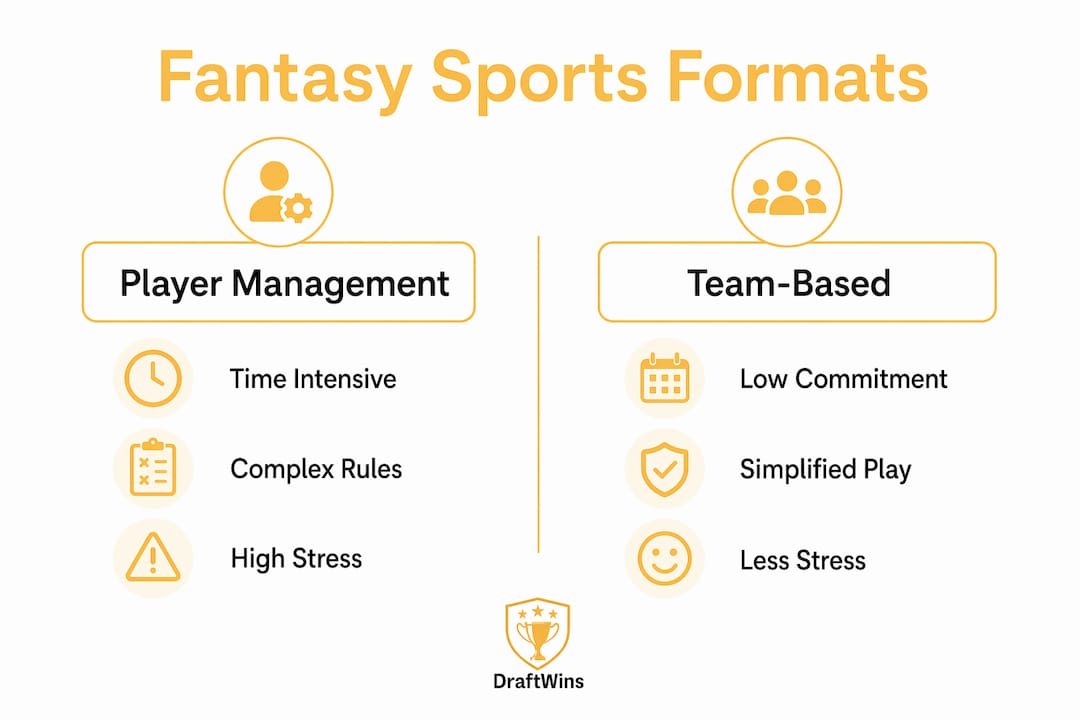
Simplified formats focusing on match-day impact rather than granular stats lower the barrier for newcomers. You do not need to know a wide receiver's target share or a midfielder's expected goals per 90 minutes. You just need to know which team you think will perform well this weekend.
Here is how the formats compare in practical terms:
- Team draft pools: You draft franchises or national teams instead of individual players. Once the draft is done, your roster is set. No weekly lineup changes, no injury scrambles, no waiver wire.
- Prediction games: You pick match winners, scorelines, or tournament outcomes before games begin. The whole process takes minutes, not hours.
- Swipe-to-draft formats: Setup takes roughly 2 minutes compared to hours in traditional formats. These formats strip the draft process down to its most basic choices.
- Automated scoring: Points calculate automatically based on team results. You watch the game instead of tracking individual stat lines.
- Live leaderboards: Social competition stays alive through real-time standings without requiring any management decisions mid-week.
| Feature | Player management formats | Team-based formats |
|---|---|---|
| Weekly time required | Multiple hours | Under 10 minutes |
| Injury monitoring | Required constantly | Not needed |
| Rule complexity | High (salary caps, positions) | Low (pick teams, done) |
| Competitive fairness | Skewed toward data-heavy pros | More level playing field |
| Social enjoyment | Often replaced by stress | Central to the experience |
Casual fans switch to prediction games specifically for low weekly time demands and straightforward competition. The format matches how casual fans actually consume sports: they care about the game, not the spreadsheet behind it.
Why does fairness improve when you skip player management?
Traditional player management fantasy has a structural fairness problem. Top leaderboard spots are dominated by high-volume pros, with the vast majority of casual players seeing little return on their time or entry fees. The format rewards bankroll size and data access more than genuine sports knowledge.
"The real problem with traditional player management fantasy is not that casual players lack skill. It is that the format was never designed with casual players in mind. Pros enter dozens of lineups with slight variations, covering every statistical outcome. A casual player enters one lineup and hopes for the best. That is not a fair fight."
Formats that cap entries and limit field sizes change this equation. Micro-jackpot formats pay 20–25% of participants and cap entries to prevent syndicate-style advantages. Winning becomes about picking the right teams, not about having the biggest data operation.
The psychological shift matters just as much as the structural one. When you are not obsessing over individual player stats, you stop feeling intimidated by the players who clearly know more than you. Team-based formats put everyone on roughly equal footing because the decisions are simpler and more intuitive.
Modern fantasy apps have become more complex with AI-driven suggestions that alienate casual fans rather than help them. Stripping that complexity away does not make the game less interesting. It makes it more enjoyable for the people who play for fun.
Pro Tip: When choosing a fantasy format, look for ones with entry limits and flat-field scoring. Those two features alone dramatically improve your odds of having a competitive experience.
Practical steps to move from player management to team-based fantasy
Switching formats is easier than most casual players expect. The first step is recognizing the signs that player management is no longer working for you.
- You dread the weekly lineup deadline instead of looking forward to it.
- You spend more time on injury reports than on watching actual games.
- You feel frustrated after losses in a way that ruins your enjoyment of the sport.
- You have held onto a clearly underperforming player for weeks because you drafted him early.
- You feel outmatched by other managers who clearly use data tools you do not have access to.
If any of those sound familiar, the format is the problem, not your sports knowledge.
The next step is choosing the right replacement format. Team draft formats simplify fantasy participation by replacing individual player decisions with team-level choices. You still get the competitive thrill of a draft. You just do not have to manage the roster afterward.
For players who want even less commitment, prediction-based pools let you make picks before the week starts and then step away. Low-commitment toolkits for casual players focus on pre-week rankings and straightforward decisions, reducing management time to under 20 minutes weekly. That is the ceiling, not the floor, for how much time you need to invest.
The social element survives the format switch completely. Private pools with friends, live leaderboards, and group chats around game day keep the community feel alive. You lose the roster stress. You keep everything that made fantasy sports fun in the first place.
Pro Tip: Start with a World Cup or tournament-style pool before committing to a full season format. Tournament pools have a natural end date, lower stakes, and zero mid-season management. They are the perfect entry point for casual players testing a new format.
A simpler way to play: Draftwins
Draftwins is built for exactly the kind of player this article describes. You draft teams, not individual athletes. Automated scoring handles the math. Live leaderboards keep the competition social and visible without requiring any mid-week decisions.
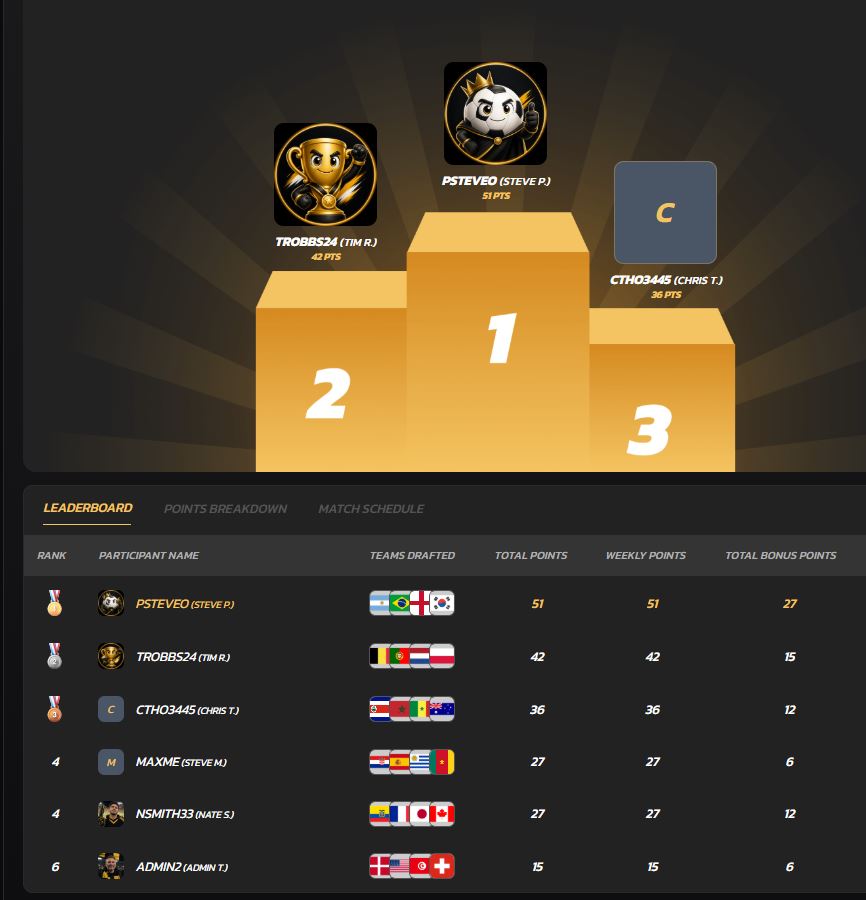
Commissioners can create private pools with custom scoring and rules, so your group plays the way you want. Draftwins charges a platform hosting fee and does not collect entry fees, hold prize pools, or accept wagers. The focus is entirely on the fun of team-based competition without the baggage of traditional player management. Draftwins is launching with World Cup pools, with NFL and College Football pools to follow. If you are ready to enjoy fantasy sports again, visit Draftwins and see how simple it can be.
FAQ
Why should casual players avoid player management fantasy?
Player management fantasy requires hours of weekly research, injury tracking, and lineup decisions that casual players rarely have time for. The format also favors data-heavy pros, making it hard for casual fans to compete fairly.
What is the main disadvantage of managing individual players in fantasy?
The biggest disadvantage is time commitment combined with competitive imbalance. Serious managers use automated tools and multi-entry strategies that casual players cannot realistically match.
How do team-based fantasy formats reduce stress?
Team-based formats eliminate weekly roster decisions entirely. You draft teams once, automated scoring tracks results, and you watch the games without managing a lineup.
What psychological traps does player management fantasy create?
The sunk cost fallacy is the most common trap, where players hold underperforming athletes hoping for recovery instead of making better current choices. Fantasy platforms also use variable reward mechanics that encourage obsessive checking and loss chasing.
How does Draftwins differ from traditional fantasy leagues?
Draftwins lets you draft teams instead of individual players, removing all roster management after the draft. There are no salary caps, no waiver wires, and no weekly lineup stress, just team-level competition with automated scoring and live leaderboards.
Key Takeaways
Avoiding player management fantasy is the right call for casual players because the format's time demands, competitive imbalances, and psychological traps consistently outweigh its entertainment value.
| Point | Details |
|---|---|
| Time is the core problem | Serious managers commit multiple hours daily; casual players rarely have that bandwidth. |
| Competitive fairness is broken | Pros dominate leaderboards using automated tools, leaving casual players with little realistic chance. |
| Psychological traps are real | Sunk cost fallacy and loss chasing turn a hobby into a source of stress rather than enjoyment. |
| Team-based formats fix the core issues | Drafting teams instead of players removes weekly management and levels the playing field. |
| Simpler formats keep the fun intact | Prediction games and team pools preserve social competition without requiring deep statistical knowledge. |