
A season-long draft pool is a fantasy sports competition where participants draft a roster before the season starts and manage that same team every week until the final game. Unlike daily fantasy sports, where you build a new lineup for each contest, a season-long pool locks you into your drafted players and rewards you for managing them well over months. The format is built around cumulative weekly scoring, meaning every decision you make compounds across the entire season. Draftwins brings this format to casual fans by letting groups draft teams instead of individual players, removing much of the complexity that turns newcomers away.
What is a season-long draft pool and how does it work?
A season-long draft pool is a group competition where every participant selects their roster in a single pre-season draft, then competes week after week using that same team. The industry term for this format is "season-long redraft league," and both terms describe the same core structure. You draft once, manage continuously, and your cumulative points at season's end determine the winner.
The format stands apart from daily fantasy sports in one critical way. DFS resets lineups daily with different players each contest, delivering instant results but no ongoing story. A season-long pool builds over months, creating rivalries, comeback narratives, and sustained excitement that a single-day contest simply cannot replicate.

Most season-long pools follow an NFL schedule of 17 regular-season weeks, though the format applies equally to soccer tournaments, college football, and other multi-week competitions. Your roster earns points each week based on real player or team performance. Those points stack up across the season, so a strong week in week 3 still matters when week 14 arrives.
How does the draft process work?
The draft is the single most important event in a season-long pool. Get it right, and you start the season with a structural advantage that carries forward for months.
Most season-long pools use the snake draft format, which works like this:
- Determine draft order. Participants are assigned a random pick position before the draft begins.
- Round 1 picks go in order. If you have pick 4 in a 10-person league, you select fourth.
- Round 2 reverses the order. The participant who picked last in round 1 picks first in round 2. This is the "snake" mechanic.
- Rounds continue alternating until every roster spot is filled.
- Live drafts set pick time limits of 30 to 120 seconds per selection, keeping the event moving.
- Slow drafts extend pick windows from minutes to hours, letting participants draft on their own schedule over several days.
The snake format exists for one reason: fairness. Reversing pick order each round prevents any single participant from always accessing the best available players. The person with pick 1 gets the top overall talent, but the person with pick 10 gets two consecutive picks at the turn of rounds 1 and 2, which balances the advantage.
Pro Tip: Schedule your live draft at least two weeks before the season opener. That window gives you time to study depth charts, track injury reports, and make informed picks rather than guessing.
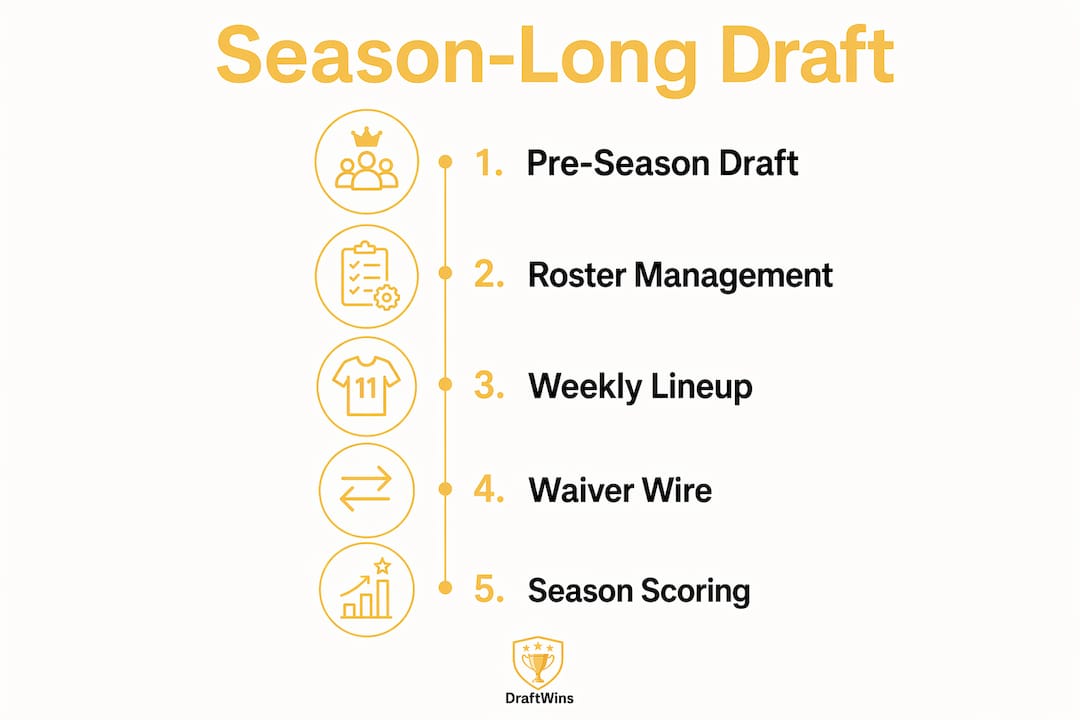
After the draft, roster management becomes your weekly job. Setting your lineup, claiming players off the waiver wire, and negotiating trades are the three core tasks. Season-long leagues demand roughly 1–3 hours of weekly commitment for lineup decisions and waiver activity. That time investment is what separates engaged managers from those who fall behind.
What are the strategic benefits of season-long draft pools?
Season-long draft pools offer a depth of strategy that short-term formats cannot match. The competition runs long enough for skill to consistently beat luck, which is why experienced players prefer this format.
The core benefits that draw sports fans and casual gamers to season-long pools include:
- Community and rivalry. Playing against the same group for months builds genuine competition. Trash talk, grudge matches, and comeback stories create a social layer that daily contests lack.
- Strategic depth over time. Managing injuries, bye weeks, and performance trends requires real decision-making. Injuries and waiver wire management are ongoing challenges that reward attentive managers.
- Lower financial commitment per week. Season-long leagues typically involve a single upfront entry, spreading the cost across the entire season rather than paying per contest.
- Cumulative satisfaction. Every week builds on the last. A great draft decision in august pays off in december, creating a sense of progress that instant-result formats cannot deliver.
- Accessible for casual fans. You do not need to be an expert to enjoy the format. A well-run pool with clear rules gives casual players a real shot at winning.
"Season-long draft pools are favored for their community-driven engagement, creating cumulative excitement over months instead of instant gratification. Success depends on sustained attention and smart roster management, not just picking the right player on a single day."
The strategic contrast with daily fantasy is worth understanding clearly. Daily fantasy rewards players who can identify single-day value and build optimal lineups under salary constraints. Season-long pools reward players who build rosters with a consistent floor rather than chasing boom-or-bust upside. That distinction changes how you approach every draft pick and every waiver wire decision.
Sports drafts build engagement precisely because they give fans ownership. When you draft a player or team, you follow their performance differently than a casual viewer would. That emotional investment is the engine behind season-long pool popularity.
How to set up and participate in a season-long draft pool
Setting up a pool is straightforward when you follow a clear sequence. The decisions you make at setup determine how smooth the season runs for everyone involved.
Before the draft:
- Choose your format. Decide whether participants draft individual players or entire teams. Team-based formats are simpler for casual groups and reduce the burden of weekly lineup management.
- Set your scoring rules. Standard scoring assigns points for touchdowns, yards, and other statistical categories. Agree on the rules before the draft so everyone competes on equal terms.
- Decide on private or public. Private pools keep competition within your friend group or office. Public pools open the competition to strangers, which increases the field size but reduces the personal stakes.
- Pick your draft type. Live drafts create a shared event that builds excitement. Slow drafts work better for groups spread across time zones.
- Schedule the draft date. Most season-long pools open drafts in late july or early august, shortly before the season begins. That timing gives managers access to current injury reports and depth chart information.
During the season:
Staying active is the difference between winning and fading. Set your lineup before each week's games begin. Check the waiver wire after every game day to claim players whose situations have improved. Engage in trades when you spot mismatches in value between your roster and a competitor's.
Pro Tip: Do not draft and disappear. The managers who check in twice a week consistently outperform those who set their lineup once and forget it. Waiver wire pickups often decide close leagues.
For first-time participants, the team-based NFL pool format is the easiest entry point. Drafting teams instead of individual players removes the complexity of tracking dozens of athletes and lets you focus on the competition itself.
What common draft pool strategies help participants succeed?
Strategy in a season-long pool starts at the draft and continues every week. The following approaches give you the best chance of finishing at the top of your league.
- Prioritize floor over ceiling. A player who scores 12 points every week beats a player who scores 30 one week and 2 the next. Variance compounds over many weeks, so reliability wins more often than upside.
- Adapt to your draft position. Early picks give you access to elite, proven performers. Late picks reward you with back-to-back selections at the turn of rounds, so target high-volume players who may be undervalued. Understanding draft position advantage is one of the most underrated skills in pool competition.
- Address positional scarcity early. Some roster positions have a steep drop-off in quality after the top few options. Identify those positions before the draft and target them before competitors do.
- Stack players from the same team. When two players on the same team both perform well in a game, you capture both scoring events. This stacking strategy amplifies your upside in high-scoring matchups.
- Use trades to fix weaknesses. If your roster has a surplus at one position and a gap at another, find a trade partner with the opposite problem. Trades are one of the few tools that let you reshape your team after the draft.
- Stay active on waivers. The waiver wire is where leagues are won in the middle of the season. Players emerge due to injuries, depth chart changes, and breakout performances. Claiming them early gives you a real edge.
Draft pick strategy is a skill you build over multiple seasons. New players often make the mistake of chasing name recognition rather than current value. Focus on production, not reputation.
Draftwins makes season-long pool competition simple
Season-long draft pools deliver months of competition, strategy, and shared excitement. Draftwins is built for exactly this kind of group contest, letting you draft teams instead of tracking individual player stats every week.
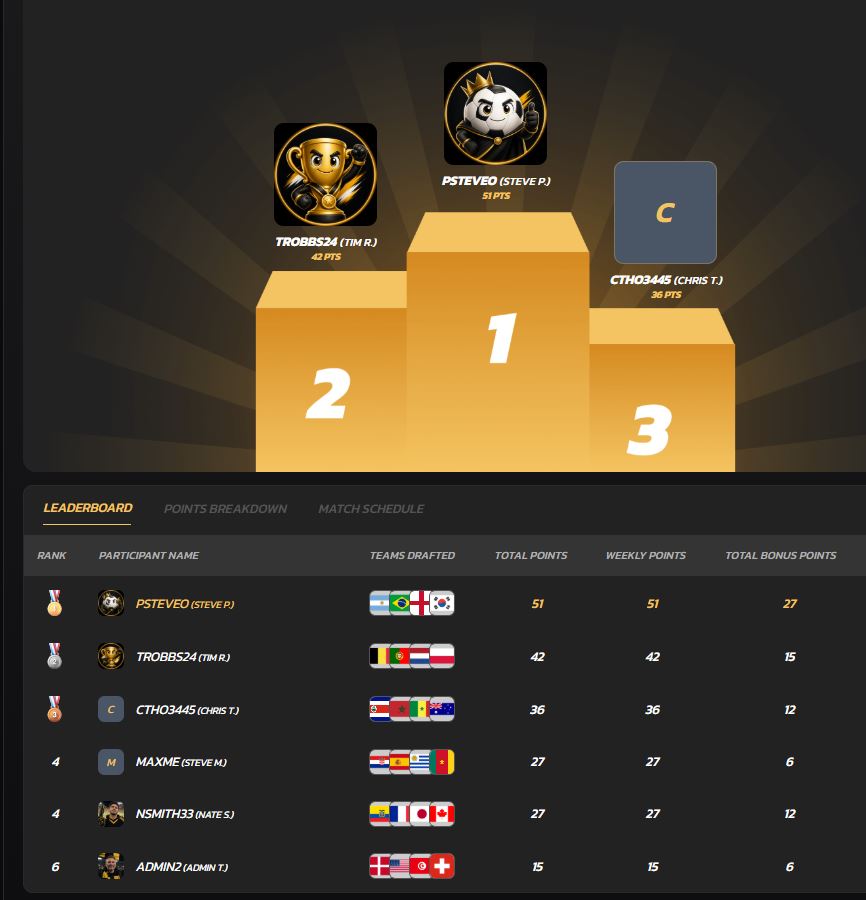
Draftwins handles automated scoring and live leaderboards so you spend your time competing, not calculating. Commissioners can create private pools with custom scoring rules in minutes, and the platform charges a hosting fee rather than collecting entry fees or prize money. Draftwins is launching with World Cup pools, with NFL and College Football pools to follow. If your group wants a season-long pool platform that is easy to set up and genuinely fun to play, Draftwins is the place to start.
Key takeaways
A season-long draft pool rewards consistent roster management and smart drafting far more than any single lucky pick.
| Point | Details |
|---|---|
| Single pre-season draft | You draft your full roster once before the season and manage it every week from there. |
| Snake draft ensures fairness | Pick order reverses each round so no participant has a permanent advantage over others. |
| Floor beats ceiling | Reliable weekly scorers outperform boom-or-bust players over a full season of cumulative points. |
| Draft timing matters | Scheduling your draft in late july or early august gives you the most current injury and depth chart data. |
| Active management wins | Checking waivers and setting lineups twice a week consistently outperforms a set-and-forget approach. |
FAQ
What is a draft pool in fantasy sports?
A draft pool is a group competition where participants select players or teams in a pre-season draft and compete using those selections throughout the season. Points accumulate weekly based on real-world performance.
How is a season-long draft pool different from daily fantasy sports?
Season-long pools use the same drafted roster for the entire season, while daily fantasy sports reset lineups for each individual contest. Season-long formats build sustained engagement and community over months rather than delivering instant results.
What is a snake draft and why do season-long pools use it?
A snake draft reverses the pick order after each round, so the last pick in round 1 becomes the first pick in round 2. This method balances the competitive advantage across all participants regardless of their starting draft position.
When should I schedule a season-long draft?
Schedule your draft in late july or early august for NFL and college football pools. Drafting close to the season start gives you access to current depth charts and injury reports, which directly improves your roster decisions.
Do I need fantasy sports experience to join a season-long pool?
No prior experience is required. Team-based pool formats are especially accessible for new players because they eliminate the need to track individual player statistics and simplify weekly decisions to team-level performance.