Sports drafts are defined events where teams or players select from a shared pool of athletes, and the uncertainty of each pick turns passive viewers into active participants. The reason why sports drafts create engagement comes down to three forces working together: real-time suspense, social debate, and a personal stake in the outcome. The NFL Draft averaged 13.6 million viewers in its 2026 first round and generated over 500 million views on league social channels during draft week. The WNBA and NBA drafts follow the same pattern, pulling fans into a shared moment that extends well beyond the broadcast. Whether you follow sports casually or obsessively, drafts give you something to argue about, predict, and care about.
Why sports drafts create engagement through uncertainty and social participation
Drafts generate fan engagement because they are built on unresolved outcomes. Nobody knows who gets picked next, which team makes a surprise move, or whether a prospect falls unexpectedly. That uncertainty is the engine. Draft nights use manufactured scarcity and timed content bursts to create urgency, turning audience participation into a collective forecasting game. Fans do not just watch. They predict, react, and share in real time.
The social layer amplifies everything. 85% of sports fans use a second screen during live events primarily for group messaging and informal prediction rather than passive viewing. That behavior creates a participation layer where fans debate picks and anticipate what comes next. The draft becomes a group experience, not a solo one.
Modern leagues know this and design for it. The NFL ran a live content command center during the 2026 draft, publishing roughly 33 social posts per hour on official channels during event days. That volume keeps fans engaged between picks, feeding the conversation rather than letting it cool. Short-form video, meme reactions, and influencer commentary all extend the event's reach far beyond the TV audience.
- Fans argue picks in real time on platforms like X, Reddit, and YouTube Live
- Mock draft content and big-board rankings sustain interest for weeks before the event
- Social buzz from draft night feeds newsletter sign-ups, app downloads, and merchandise browsing
- Prediction games and polls give casual fans a direct way to participate without deep sports knowledge
Pro Tip: If you want to get more out of watching a draft, join a live prediction thread on Reddit or Discord before the event starts. The conversation makes every pick feel personal.
How drafts build community and friendly competition
Sports drafts act as social currency among fans, where the process of debate and emotional investment sustains interest for months before and after draft day. A single pick can spark a week of conversation in a group chat. That ongoing back-and-forth is what builds community. Fans who disagree about a pick are still talking, still invested, still showing up.
Fantasy sports drafts take that community dynamic and formalize it into competition. When you draft a team, you are not just picking players. You are committing to a season-long rivalry with your friends. Every real-world game result becomes personal because your drafted team is on the line. Mock drafts, big-board rankings, and rumor cycles sustain engagement for months, making the draft a durable asset rather than a single-night spike.
The community effect works across skill levels. Casual fans can participate in a group draft pool without knowing every prospect's combine stats. Hardcore fans can go deep on draft position strategy and trade analysis. Both groups end up in the same conversation, which is exactly what makes drafts so effective at building mixed communities.
Here are four ways drafts build lasting community bonds:
- Shared anticipation. Fans count down to draft day together, sharing predictions and rumors in the weeks leading up to the event.
- Friendly rivalry. Disagreements over picks create ongoing debates that keep groups talking long after the draft ends.
- Collective memory. A surprising pick or a team reaching for a player becomes a shared story that fans reference for years.
- Inclusive entry points. Draft pools and fantasy leagues let casual fans compete alongside experienced ones without needing expert-level knowledge.
Pro Tip: Host a draft watch party with a prediction sheet. Give everyone five picks to call before the event starts. The person who gets the most right wins bragging rights. It costs nothing and makes every pick matter.
How drafts connect with digital platforms and fantasy sports
The draft bundles multiple fan journeys into one event. Fantasy sports, betting interest, and prospect forecasting all converge on draft night, making it a powerful content engine for leagues and platforms alike. That convergence is why digital engagement spikes so sharply around draft events. Fans are not just watching. They are managing fantasy rosters, tracking waiver wire implications, and debating value in real time.
Fantasy drafts deepen the connection between fans and real-world outcomes. When you draft a team or a player, you follow their performance differently. A running back's injury is no longer just news. It directly affects your standing in a league with your friends. That personal investment is what turns casual viewers into consistent, engaged fans throughout a season.
The demographic reach of draft content has also expanded. During the 2026 NFL Draft, 30% of the TikTok audience was female and 44% were aged 18–24. Those numbers show higher diversity than regular season viewership. Short-form content and social media have brought new audiences into the draft conversation who might not watch a full game.
| Platform type | How it drives engagement |
|---|---|
| Social media (TikTok, X, Instagram) | Real-time reactions, meme content, and influencer picks reach audiences outside traditional broadcasts |
| Fantasy sports apps | Personal investment in player performance sustains engagement across the full season |
| Second-screen apps and prediction games | Fans participate actively during the event rather than watching passively |
| League official channels | High-volume content publishing keeps fans engaged between picks |
One counterintuitive insight worth knowing: trading up in the NFL Draft is often a bad idea. High draft capital does not guarantee proportional performance gains. Savvy fantasy participants focus on undervalued assets rather than chasing popular picks. That disconnect between perceived value and actual outcomes is itself a source of ongoing fan debate and engagement.
Draft format comparison: which type drives the most fan interest?
Different draft formats produce different kinds of engagement. The format shapes how much strategy is involved, how long the event lasts, and how accessible it feels to casual participants. Choosing the right format for your group directly affects how much fun everyone has.
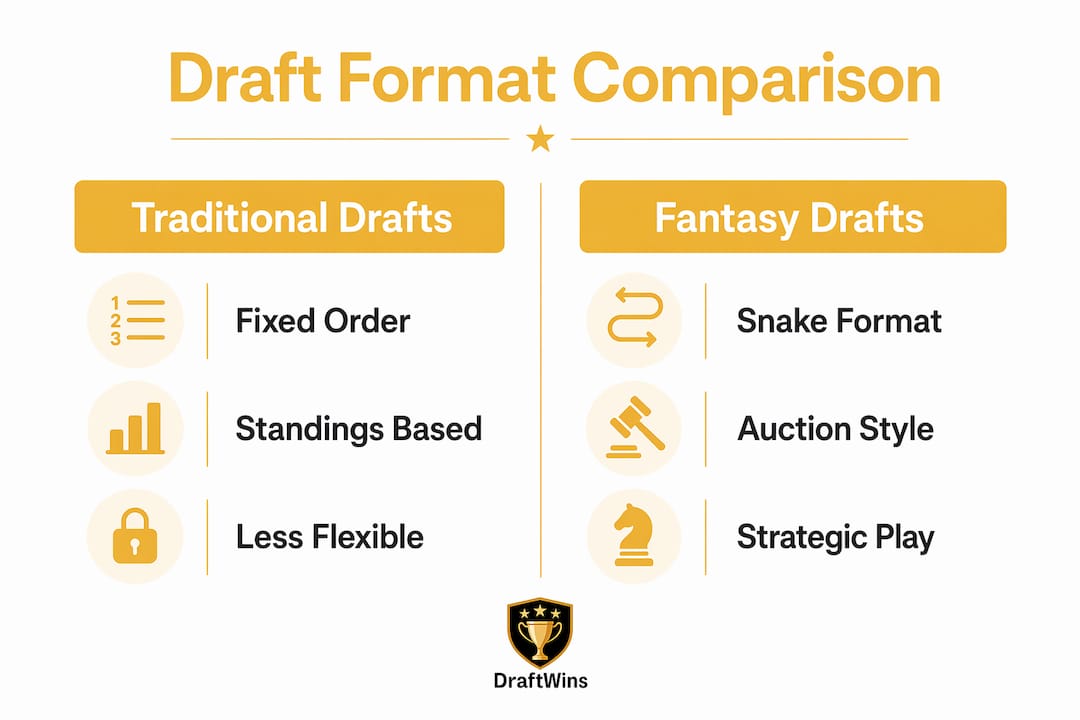
The snake draft is the most common format in fantasy sports. The pick order reverses each round, so the person who picks first in round one picks last in round two. This format is easy to learn and creates natural conversation about who got the best value. It works well for casual groups because the rules are simple and the strategy is approachable.
Auction drafts replace pick order with a budget. Every participant gets a set amount of currency to bid on players or teams. This format rewards research and creates more drama because anyone can bid on any player at any time. It tends to attract more experienced participants, but the bidding process itself is entertaining even for newcomers watching.
Traditional professional drafts, like the NFL Draft, use a fixed order based on the previous season's standings. The worst team picks first. This format creates its own engagement because fans debate whether teams are making the right call with each selection, and the stakes feel real.
| Draft format | Engagement style | Best for |
|---|---|---|
| Snake draft | Strategy debate, value hunting | Casual and mixed groups |
| Auction draft | Bidding drama, budget management | Experienced participants |
| Professional draft (NFL, WNBA, NBA) | Spectator debate, social media reaction | Broadcast audiences and fans |
| Team draft pool | Group competition, season-long investment | Friends and community groups |
Team draft pools, where participants draft full teams rather than individual players, reduce the complexity of lineup management. That lower barrier to entry makes them ideal for groups that want the competitive feeling without the weekly stress of traditional fantasy leagues.
Practical ways to get more out of draft events
The impact of sports drafts on fan engagement grows when you participate actively rather than just watch. Passive viewing is fine, but the real value comes from having skin in the game.
- Create a draft pool with friends. Even a simple group where everyone picks a team to win a tournament creates instant investment in every result.
- Use social media during the event. Follow official league accounts, join live threads, and post your own predictions. The conversation is half the experience.
- Run a mock draft before the real one. Mock drafts sharpen your knowledge and give you something to compare against the actual results.
- Avoid chasing the obvious pick. Research consistently shows that the most popular selections are often overvalued. Look for undervalued draft assets to gain an edge in fantasy leagues and pools.
- Keep the conversation going after draft day. Share your picks with your group, track results, and revisit your predictions as the season unfolds.
The biggest mistake most casual fans make is treating the draft as a one-night event. Modern fan engagement thrives on two-way interaction like sharing, voting, and predicting. The draft is a starting point, not a finish line. The groups that stay engaged longest are the ones that build rituals around the draft and carry the conversation forward.
Take your draft experience further with Draftwins
Sports drafts are most fun when you have something at stake with people you know. Draftwins is a sports pool platform built specifically for that experience. Instead of drafting individual players, you draft full teams, which removes the weekly lineup stress that makes traditional fantasy leagues feel like work.
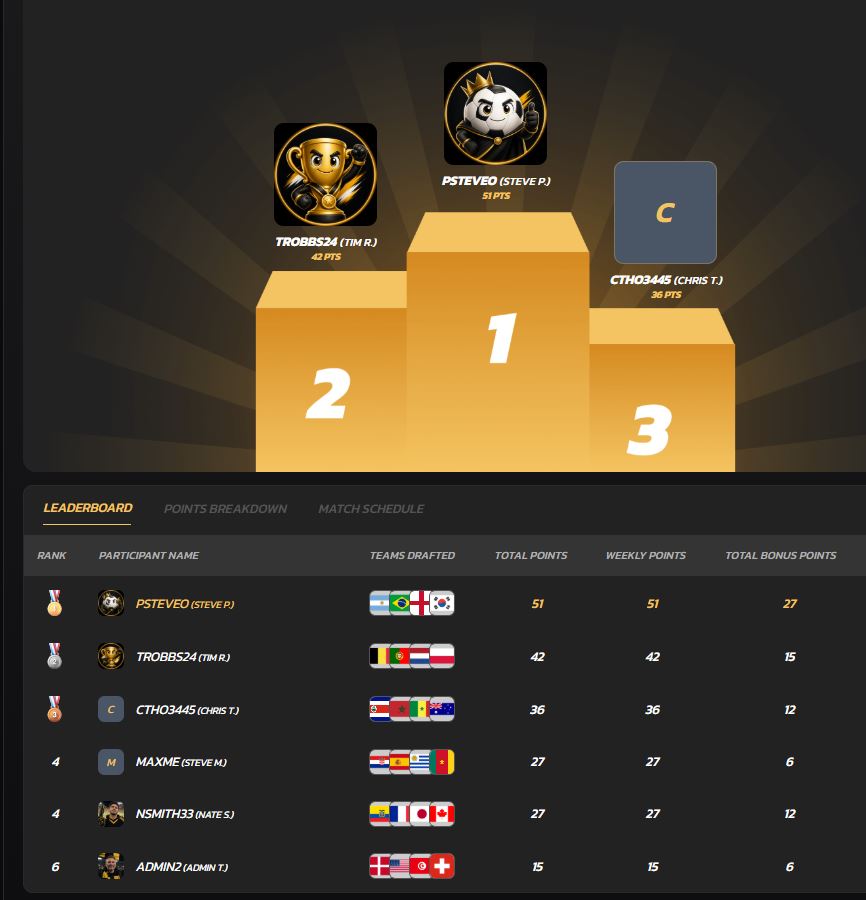
Draftwins handles automated scoring and live leaderboards so you can focus on the competition, not the administration. Commissioners can set up private pools with custom scoring rules in minutes. The platform launches with World Cup pools, with NFL and College Football pools to follow. Draftwins charges a platform hosting fee and does not collect entry fees or hold prize pools. If you want a group draft contest that is easy to run and genuinely fun to play, Draftwins is the place to start.
FAQ
Why do sports drafts generate more engagement than regular games?
Drafts combine real-time uncertainty with social debate and personal prediction, which turns viewers into active participants. Draft buzz also feeds fantasy interest, merchandise demand, and social media activity simultaneously, creating engagement across multiple channels at once.
What makes fantasy drafts different from watching a professional draft?
Fantasy drafts give participants a personal stake in player performance throughout the entire season, not just one night. That ongoing investment is what drives consistent fan engagement well beyond the draft event itself.
How do draft formats affect fan participation?
Snake drafts are the most accessible format for casual fans because the rules are simple and the strategy is easy to learn. Auction drafts create more drama but require more preparation, making them better suited to experienced groups.
Can casual fans enjoy drafts without deep sports knowledge?
Yes. Team draft pools and prediction-based formats let casual fans compete without needing expert knowledge of player stats or combine grades. The social experience of picking and debating is engaging on its own.
How long does draft engagement typically last?
Draft engagement extends well beyond a single night. Mock drafts and rumor cycles sustain fan interest for months before the event, and fantasy league competition carries that investment through an entire season.
Key takeaways
Sports drafts create engagement because they combine real-time uncertainty, social participation, and personal investment into a single event that extends across weeks, platforms, and communities.
| Point | Details |
|---|---|
| Uncertainty drives participation | Unresolved outcomes turn viewers into active predictors and debaters during every pick. |
| Social media multiplies reach | Official channels publish roughly 33 posts per hour during draft events, sustaining fan conversation between picks. |
| Fantasy drafts extend investment | Drafting a team or player creates season-long personal stakes that keep fans engaged past draft night. |
| Format shapes accessibility | Snake drafts and team pools lower the barrier for casual fans, while auction formats reward deeper strategy. |
| Community outlasts the event | Draft debates, rivalries, and shared memories keep groups talking and competing long after the picks are made. |