
A draft pick strategy for sports pools is the methodical process of selecting teams or players to maximize your scoring potential by balancing value, positional scarcity, and competitor behavior within your specific pool context. Most casual participants pick their favorites or follow the crowd. That approach loses to anyone who understands how pool size, scoring format, and roster construction interact. Whether you are entering a World Cup pool, an NFL survivor contest, or a March Madness bracket, the principles below apply directly.
What is a sports draft pool and how does draft pick strategy work?
A sports draft pool is a group contest where participants select teams or players before a competition begins, then earn points based on how those selections perform. The term "draft pick strategy" covers every decision you make before and during that selection process, from which positions to target first to how aggressively you differentiate from the field.
Pool structure shapes strategy more than any single player's talent. A 10-person office pool rewards consistency and safe picks because you only need to beat nine opponents. A 500-person public contest rewards differentiation because picking the same champion as 200 other entries produces no competitive advantage. Winning sports pools depends more on understanding opponents and pool structure than just picking the best players. That single insight separates recreational participants from consistent winners.

Sportsbook odds, public pick percentages, and tiered draft boards are the core tools of any serious sports pool strategy. Each one gives you a different angle on value, and combining them produces decisions that are both statistically grounded and tactically differentiated.
How does pool size influence your draft pick strategy?
Pool size is the single biggest variable in any draft pick strategy for a sports pool. It determines how much risk you should take, how unique your picks need to be, and whether a conservative or contrarian approach gives you the better expected return.
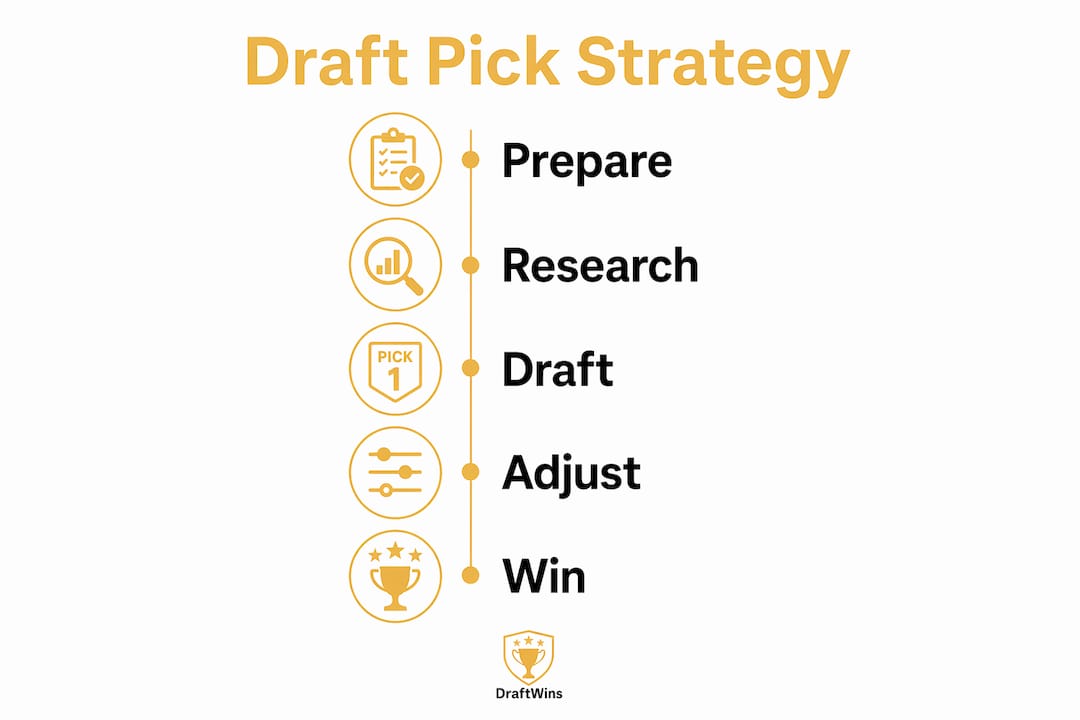
Small pools (under 20 entries) reward accuracy over creativity. When you only face a handful of opponents, picking a heavy favorite to win the championship is correct because the field is too small to punish chalk. Your goal is simply to be right more often than the other participants.
Large pools (50 or more entries) require a fundamentally different mindset. Large pools require leverage and lineup uniqueness because champion picks account for 30 to 40 percent of total pool points. If you pick the same champion as a third of the field, you split that scoring upside with dozens of competitors. Two entries picking the same champion split those gains, which means differentiation is not optional in large-field contests. It is mathematically required.
The practical framework for managing pool size looks like this:
- In pools under 20 entries, favor the top two or three favorites at each key position or bracket slot.
- In pools of 20 to 100 entries, mix one or two contrarian picks with a core of solid favorites to create separation without sacrificing your floor.
- In pools over 100 entries, identify teams or players where sportsbook odds significantly exceed public pick percentages. That gap is your leverage.
- Track public pick data from sources like ESPN or FantasyPros to spot where the crowd is overweighting popular names.
- Never duplicate your own entries in multi-entry pools. Identical lineups cancel each other out.
Pro Tip: In large-field pools, chalk picks mathematically tie you with hundreds of competitors. Find one or two spots where a team has a 45 to 55 percent advancement probability but only 25 to 30 percent public pick share. That gap is where pool equity is created.
What positional and roster construction principles should guide your drafting?
Roster construction is where most casual participants lose ground before the competition even starts. The order in which you allocate your draft capital, whether that is auction budget or snake draft picks, determines your team's ceiling and floor simultaneously.
The most reliable framework is tiered budget allocation. Auction draft strategy recommends dedicating 40 to 50 percent of your total budget to top skill positions, with roughly 15 to 20 percent reserved for quarterback, 10 to 15 percent for tight end, and the remainder distributed across flex spots and defense. This structure prevents you from overpaying for a single star and running out of resources at positions that still matter.
Positional scarcity is the concept most often ignored by casual drafters. Failure to secure reliable starters at scarce positions is one of the most common and costly drafting mistakes. When elite tight ends or top-tier quarterbacks disappear from the board in rounds two through four, anyone who waited is forced into risky streaming options all season.
Follow this sequence when building your roster:
- Identify the two or three positions with the steepest talent drop-off between tiers. These are your must-address positions early.
- Set a maximum price or round target for each position before the draft begins. Do not exceed it regardless of how the board falls.
- Draft your top skill positions first, then fill depth with value picks in later rounds or at lower auction prices.
- Secure at least one handcuff or backup at positions where injury risk is highest. Running back is the most obvious example in NFL pools.
- Avoid late-round gambles on injury-prone players regardless of their upside. A player who misses six games produces zero points, and zero points cannot be recovered.
Pro Tip: Late-round tight ends are often risky. Prioritizing a solid starter at tight end beats chasing upside at a position where the talent cliff is steep and reliable options disappear fast.
Which data and tools can sharpen your draft efficacy?
The difference between a guess and a calculated pick is the data behind it. Three categories of information consistently improve draft outcomes: sportsbook odds, public pick percentages, and live draft boards.
Sportsbook odds vs. public pick percentages
| Data Source | What It Tells You | Best Use Case |
|---|---|---|
| Sportsbook advancement odds | True probability of a team advancing or winning | Identifying undervalued teams the market respects |
| Public pick percentages | Where the crowd is concentrating picks | Finding leverage by going against the grain |
| ADP (Average Draft Position) | Consensus player value across mock drafts | Calibrating when to target specific players |
Building lineups around sportsbook odds is more accurate than relying on seed lines or intuition. A team with a 51 percent chance to advance but only 39 percent public pick share is undervalued by the pool field. That gap is the definition of a leverage pick.
Beyond odds, these tools give you a consistent edge:
- FantasyPros: Aggregates expert rankings and ADP data across multiple platforms, giving you a consensus baseline for player value.
- ESPN Draft Analyzer: Tracks live pick trends and grade your draft against historical performance data.
- Mock draft simulators: Available on platforms like Sleeper and FantasyPros, these let you practice positional targeting before your real draft.
- Sportsbook comparison sites: OddsShark and BetMGM both publish team advancement probabilities that translate directly into pool pick value.
The combination of sportsbook odds and public pick data is more powerful than either source alone. Odds tell you what is likely. Public percentages tell you where the crowd is wrong.
How to execute your draft pick strategy step by step
Preparation before the draft is worth more than any in-draft adjustment. Walk into your draft with a tiered board, a positional priority list, and a clear fallback plan for every target. The draft itself moves fast, and decisions made without preparation are almost always regrettable.
A position-organized live draft board helps you track runs and scarcity, allowing informed pivoting and better value capture at every tier. When a run on running backs starts in rounds three and four, your board tells you instantly whether to join the run or pivot to a position where value remains.
Follow this process during the draft itself:
- Set your board before you sit down. Organize players or teams by position and tier, not just overall rank. Know your top three options at each position before the first pick is made.
- Monitor the draft for positional runs. When three or four players at one position go in quick succession, the next tier at that position is about to disappear. Decide in advance whether you will react or stay patient.
- Apply best player available until your roster has gaps. Take the highest-value option on the board until a positional need becomes urgent. Then shift to positional targeting.
- In auction drafts, nominate players you do not want. Tactical nominations force opponents to spend budget on players you have no interest in, creating scarcity and late-round value for you.
- Execute your fallback plan without hesitation. If your top target is gone, move immediately to your pre-identified alternative. Hesitation leads to reaching, and reaching is the most common draft mistake at every level.
Common mistakes that cost casual drafters the most ground:
- Reaching two or more rounds above a player's consensus value because of name recognition.
- Ignoring positional scarcity until it is too late to address it without overpaying.
- Drafting for upside at every position instead of securing a reliable floor first.
- Failing to balance positional targeting with best player available, which is an interactive decision that depends on your league rules and roster needs.
How do scoring rules and pool format change your draft choices?
Scoring format is not a detail. It is the framework that determines which picks are worth more than their consensus ranking suggests and which popular picks are overpriced.
In standard scoring formats, running backs who catch passes are worth less than in points-per-reception (PPR) formats. In PPR, a running back with 80 receptions per season is worth a first-round pick. In standard scoring, that same player might be a second or third-round value. Knowing your format before the draft is not optional. It changes the value of every pick on your board.
Exponential scoring in bracket pools creates an even sharper effect. Champion picks may account for 30 to 40 percent of total pool points in exponential scoring systems. That concentration of value means your champion selection deserves more research time than any other single decision. Upset bonuses, by contrast, reward risk-taking in early rounds and shift value toward lower seeds with genuine upset potential.
Team-based pool formats, like those offered through Draftwins, remove individual player injury concerns entirely. You draft teams rather than players, which means a single injury does not collapse your lineup. This format suits casual participants who want competitive stakes without the weekly lineup management that traditional fantasy leagues require. Understanding how team pools are scored before you draft gives you a direct edge over participants who assume all formats work the same way.
Pro Tip: Before your draft, read your pool's specific scoring rules and identify the two or three decisions that carry the most point weight. In exponential formats, that is your champion pick. In upset-bonus formats, that is your early-round contrarian selections. Allocate your research time accordingly.
Key takeaways
The most effective draft pick strategy for any sports pool combines pool-size awareness, tiered roster construction, and scoring-format knowledge into a single pre-draft plan executed with discipline during the draft itself.
| Point | Details |
|---|---|
| Pool size drives risk tolerance | Small pools reward chalk picks; large pools require contrarian selections to create scoring separation. |
| Tiered budget allocation wins rosters | Dedicate 40 to 50 percent of draft capital to top skill positions before filling depth. |
| Sportsbook odds beat intuition | Use advancement probability gaps between odds and public pick percentages to find leverage picks. |
| Scoring format changes every value | Champion picks carry 30 to 40 percent of points in exponential formats; adjust your research priority accordingly. |
| Live draft boards prevent costly mistakes | A position-organized board lets you track runs, avoid reaching, and capture tier-end value in real time. |
Try Draftwins for your next sports pool
Draftwins is built for sports enthusiasts who want real competition without the complexity of traditional fantasy leagues. The platform lets you draft teams instead of individual players, which removes injury risk from your weekly calculus entirely. Automated scoring and live leaderboards mean you track your pool's progress without managing a roster every week.
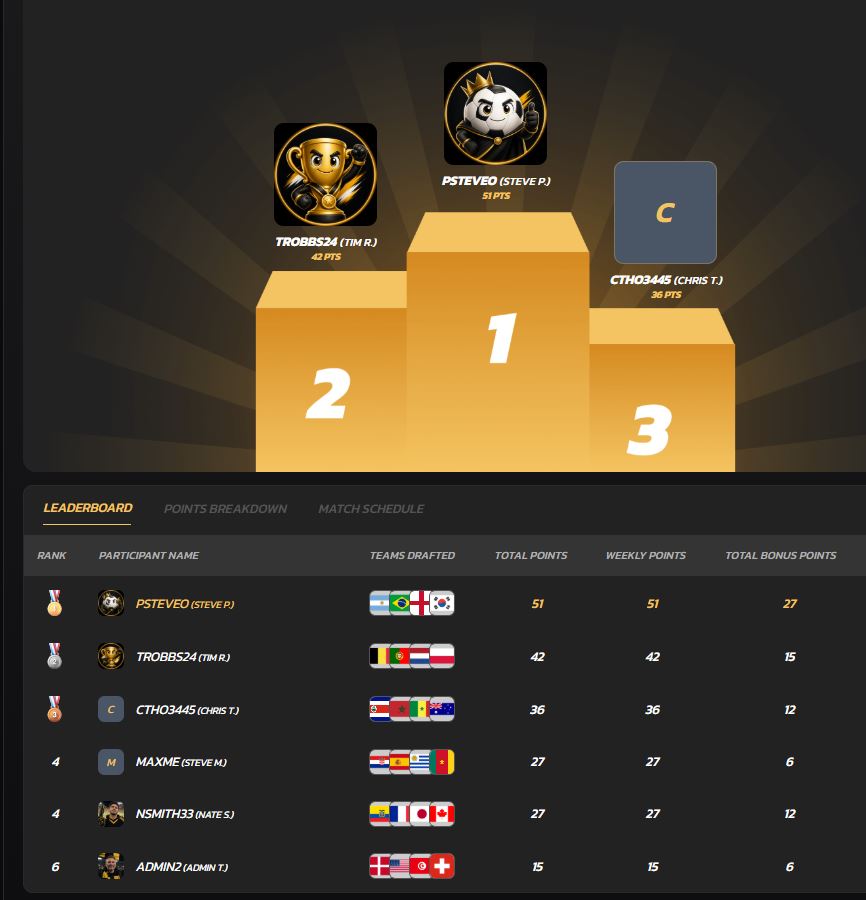
Commissioners can build private pools with custom scoring rules tailored to their group, whether that is a World Cup pool with friends or an NFL contest with your office. Draftwins charges a platform hosting fee and does not collect entry fees or hold prize money, keeping the focus on competition and fun. If you want a smarter way to draft without the overhead of a full fantasy league, Draftwins is where to start.
FAQ
What is a sports draft pool?
A sports draft pool is a group contest where participants select teams or players before a competition, then earn points based on how those selections perform throughout the event.
How does pool size affect draft pick strategy?
Small pools reward conservative, high-probability picks, while large pools require contrarian selections to create scoring separation from the field. Large-field pools mathematically reduce the upside of popular chalk picks because too many competitors share the same gains.
What data sources improve draft decisions?
Sportsbook advancement odds and public pick percentages are the two most valuable data sources. A team with higher odds than its public pick share represents an undervalued leverage opportunity in any pool format.
How do scoring rules change which players or teams to draft?
Scoring format directly changes player and team value. Exponential formats concentrate points on champion picks, making that single selection worth more research than any other. PPR formats in fantasy football elevate pass-catching running backs and slot receivers above their standard-scoring ranks.
Does drafting teams instead of players change the strategy?
Yes. Team-based pool formats like those on Draftwins eliminate individual player injury risk, shifting strategy toward team advancement probability and matchup analysis rather than individual player health and usage rates. You can learn more about team draft formats to understand how the approach differs from traditional fantasy drafting.