
A team-based NFL pool draft format is a group contest where participants draft entire NFL franchises rather than individual players, then compete based on how those teams perform each week. This approach cuts out the lineup juggling and injury tracking that makes traditional fantasy football exhausting for casual fans. Formats like Survivor, Pick'em, and Maxout each use simple team-based scoring with entry fees ranging from $0 to $1,000, making them accessible at any level. Platforms like Draftwins have built automated scoring directly into the experience, so you spend your energy on the competition, not the spreadsheet.
What is a team-based NFL pool draft format?
A team-based NFL pool draft format, sometimes called a team draft pool or group draft league, is the recognized structure for pools where you pick franchises instead of quarterbacks. The three most popular formats are Survivor, Pick'em, and Maxout. Each one works differently, and choosing the right one shapes how much strategy and engagement your group will get out of the season.
Survivor pools eliminate you the moment your chosen team loses. You pick one team per week, and no team can be picked twice by the same participant. The last person standing wins. This format creates genuine weekly tension because one bad pick ends your run.
Pick'em pools reward the total number of correct picks across a set of games. You predict winners for a slate of matchups each week, and your score builds over the season. Confidence-based and margin-based variants add depth by weighting picks or rewarding point margins, so a bold call on an upset pays off bigger than a safe pick.
Maxout pools use point-based scoring tied to each team you draft. Your total score accumulates as your drafted teams win games throughout the season. This format rewards smart draft strategy up front rather than weekly decision-making.
What platforms and tools do you need to run a team draft pool?
The right platform is the difference between a pool that runs itself and one that collapses under admin work. Automated scoring and easy setup are the two features that matter most for any group fantasy draft.
| Platform | Pool types supported | Automated scoring | Commissioner controls | Entry fee handling |
|---|---|---|---|---|
| Draftwins | Survivor, Pick'em, Maxout | Yes | Yes | Platform fee only |
| WagerLab | Seven pool types | Yes | Yes | Varies |
Beyond the platform itself, you need three supporting tools:
- A communication channel. A group chat in iMessage, WhatsApp, or Slack keeps participants informed about deadlines and standings without requiring everyone to log in daily.
- Clear written rules. Post the scoring system, tiebreaker method, and pick deadline in one shared document before the draft. Disputes almost always trace back to rules that were never written down.
- A payment method for entry fees. Venmo, PayPal, or Zelle work for collecting fees from participants. Draftwins charges a platform hosting fee and does not collect entry fees or hold prize pools, so the commissioner manages payouts directly.
Pro Tip: Set your pick deadline at least two hours before the first game of each week. Last-minute rule changes or system delays can cost someone their pick if the window is too tight.
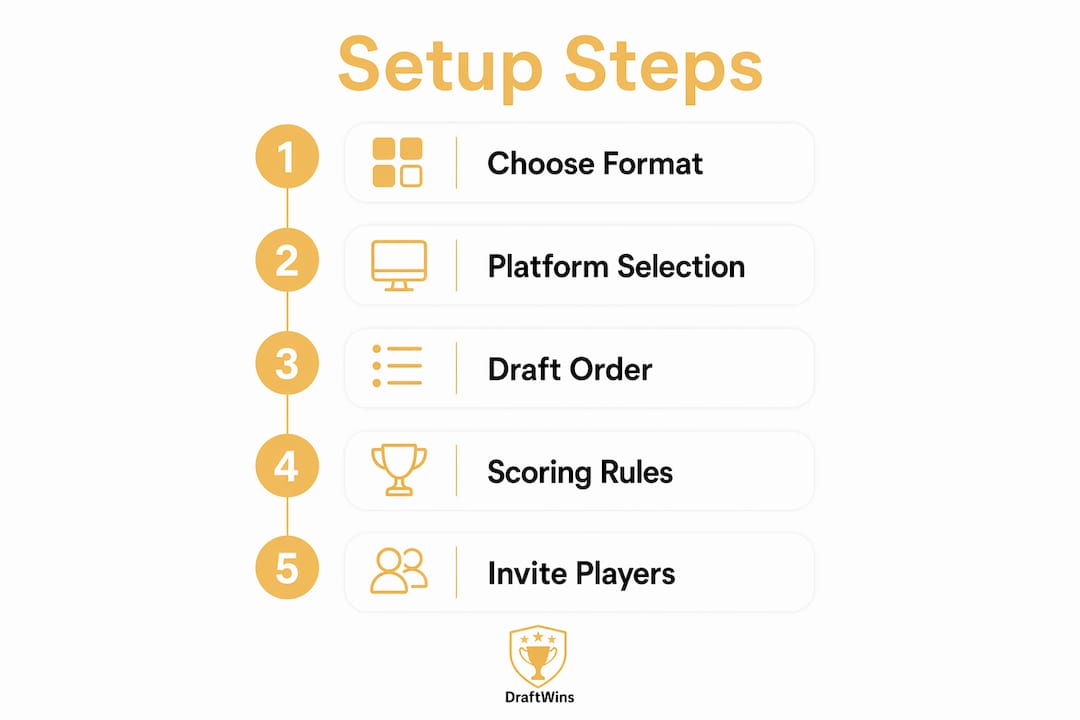
How do you set up a team-based NFL pool draft step by step?
A well-run draft league setup takes about 30 minutes if you follow a clear sequence. Rushing the setup creates problems that drag on all season.
-
Choose your format. Survivor works best for groups of 10 or more because eliminations keep the field competitive. Pick'em suits smaller groups or casual offices where everyone wants to stay in all season. Maxout rewards participants who enjoy draft strategy over weekly picks.
-
Set your group size and entry fee. Larger groups support bigger prize pools and more draft variety. Agree on the entry fee before sending invites so there are no surprises.
-
Decide your draft structure. Snake drafts alternate pick order each round, so the last pick in round one gets the first pick in round two. Randomized drafts assign order randomly to balance the field without favoring anyone who lobbied for a top spot. Snake drafts are the standard for most NFL fantasy draft formats because they self-correct for early-round advantages.
-
Assign teams. In Maxout and some Pick'em variants, each participant drafts a set of NFL teams they own for the season. In Survivor, participants pick fresh each week from the full pool of 32 teams. Clarify which model you are using before the draft starts.
-
Configure scoring rules. Decide whether wins alone count, or whether margin of victory adds points. Set your tiebreaker rule now. Common tiebreakers include total points scored in a designated game or cumulative season record.
-
Set up your platform. Create your pool on Draftwins or your chosen platform, enter the scoring rules, and invite participants. Automated scoring handles weekly updates so you are not manually tracking results.
-
Run the draft. Hold a live draft event if your group is local, or use the platform's online draft tool for remote groups. A live draft creates social energy that carries into the season.
-
Communicate standings weekly. Send a weekly update through your group chat with current standings, upcoming pick deadlines, and any rule reminders. Consistent communication keeps engagement high.
Pro Tip: Record the draft order and each participant's picks in a shared Google Sheet as a backup. Platform outages are rare but they happen, and a manual record prevents disputes.
What are the most common problems in team draft pools and how do you fix them?
Pool admins face predictable challenges including late picks, participant dropouts, ties, and score disputes. Knowing the fix before the problem appears keeps the pool running smoothly.
-
Late picks. Set an automatic default rule before the season starts. A common default assigns the highest-ranked available team by Vegas odds when a participant misses the deadline. Post this rule in your written rules document so no one is surprised.
-
Participant dropouts. Offer the spot to a waitlisted player if someone quits in the first two weeks. After week three, most groups freeze the roster and redistribute the entry fee at season end. Decide your policy before the draft, not after someone quits.
-
Score disputes. Automated scoring eliminates most disputes because the platform applies rules consistently. If a dispute arises, the written rules document is the final authority. Never resolve disputes verbally, because memories differ.
-
Ties. Tiebreakers must be defined before week one. Total points scored in the Monday Night Football game is a popular and easy tiebreaker for Pick'em pools. Survivor pools typically split the prize when two players survive to the same week with no remaining games.
Pro Tip: Send a reminder message 24 hours before each pick deadline. A single text or push notification cuts late picks by a significant margin and keeps participants feeling included rather than forgotten.
How does a team draft pool make NFL season more fun for your group?
Team-based pools lower complexity by focusing on team outcomes rather than individual player stats. That single change opens the format to fans who love football but have no interest in tracking a running back's snap count. The result is a bigger, more engaged group.
The social benefits are real and specific:
- Office pools create weekly conversation around the same set of games, which builds camaraderie even among coworkers who rarely interact.
- Friend groups use the pool as a reason to watch games together rather than separately.
- Newcomers to football can participate meaningfully because picking the Kansas City Chiefs to win is a decision anyone can make.
The contrast with traditional fantasy football is sharp. A standard fantasy league requires weekly lineup decisions, waiver wire management, and enough player knowledge to evaluate injuries. A team-based draft removes all of that. You draft your teams, set your scoring rules, and let the games decide the winner.
The scale of interest in these formats is growing. A $21 million Survivor pool launched in 2026 with a $1,000 entry fee, drawing national attention and demonstrating that team-based formats appeal far beyond casual office pools. That kind of prize pool is only possible because the format is simple enough to attract thousands of participants who would never join a traditional fantasy league.
"The best pool is the one everyone actually finishes. Team-based formats keep casual fans in the game all season because the rules never get in the way of the fun."
Low barrier formats like team draft pools attract more participants and maintain engagement throughout the season. More participants means a better prize pool, more weekly conversation, and a group experience that people want to repeat next year.
Key Takeaways
A team-based NFL pool draft format is the most accessible way to run a group NFL contest because it replaces complex player management with simple team picks and automated scoring.
| Point | Details |
|---|---|
| Format choice matters | Survivor suits large groups; Pick'em keeps everyone in all season; Maxout rewards draft strategy. |
| Automated scoring is non-negotiable | Platforms like Draftwins eliminate score disputes and reduce admin work to near zero. |
| Draft structure ensures fairness | Snake drafts and randomized selections both prevent any participant from gaining an unfair advantage. |
| Written rules prevent conflicts | Define tiebreakers, default picks, and dropout policies before the draft, not after problems arise. |
| Low complexity drives engagement | Team-based pools attract casual fans who would never join a traditional fantasy league, growing your group. |
Draftwins makes team pool setup simple
Running a group NFL pool should feel fun, not like a second job. Draftwins is built specifically for team-based pool formats, with automated scoring, live leaderboards, and a setup process that takes minutes rather than hours.
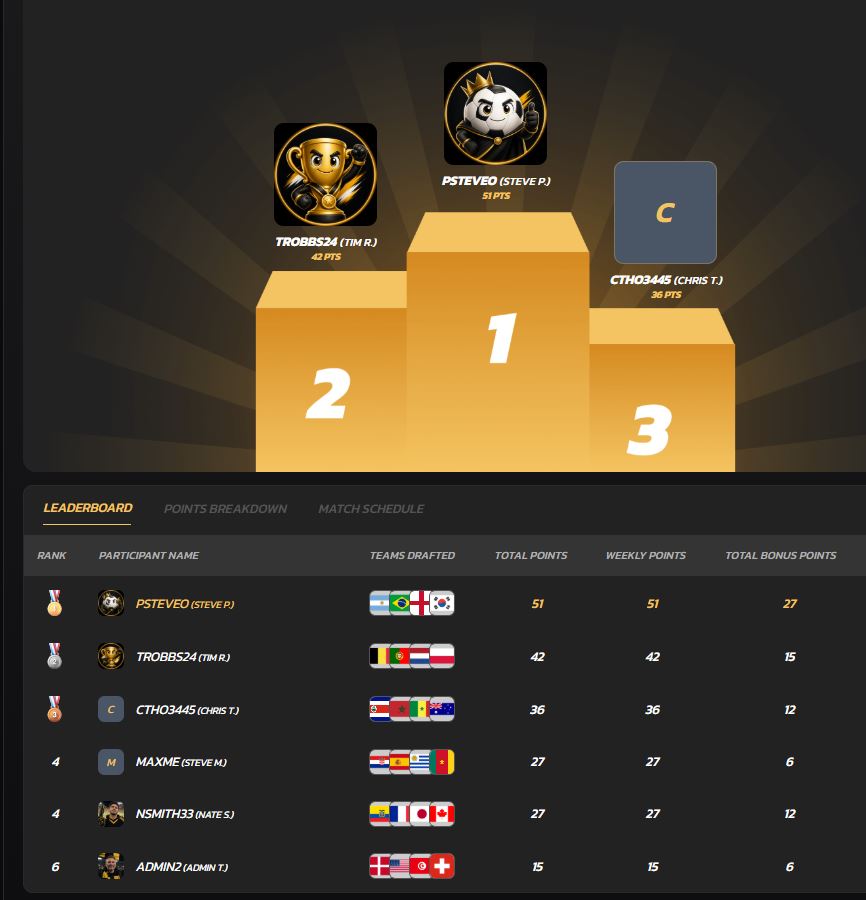
Commissioners can create private pools with custom scoring rules and invite participants directly through the platform. Draftwins handles the weekly score updates so you stay focused on trash talk and standings. The platform charges a hosting fee and does not collect entry fees or hold prize pools, keeping the experience clean and straightforward. Whether your group runs a casual Pick'em or a full NFL draft pool, Draftwins gives you the tools to run it well.
FAQ
What is a team-based NFL pool draft format?
A team-based NFL pool draft format is a group contest where participants draft NFL franchises instead of individual players and compete based on team performance. Common formats include Survivor, Pick'em, and Maxout, each with different scoring rules.
How is a team draft pool different from fantasy football?
A team draft pool requires no lineup management, waiver wire decisions, or player injury tracking. Participants simply pick winning teams, making it far more accessible for casual fans than a traditional fantasy league.
What is the best format for a large group?
Survivor pools work best for large groups because weekly eliminations keep the competition tight and the stakes high. Pick'em pools are better for smaller groups where everyone wants to stay active all season.
How do automated scoring platforms help pool commissioners?
Automated scoring platforms like Draftwins apply scoring rules consistently each week, eliminating manual calculations and reducing score disputes. Commissioners set the rules once and the platform handles the rest.
Can you run a team draft pool for free?
Entry fees for team-based pool formats range from $0 to $1,000 depending on the scale and prize structure your group chooses. Platform hosting fees may apply depending on which tool you use to manage the pool.