
Run private sports pools on a password-protected host that supports team-draft formats, not player-based fantasy rosters. Three steps get you live: create the pool and set the format, lock your rules and deadlines, then invite players. DraftWins fits this exact job because it builds pools around drafting whole teams, so nobody's stuck babysitting a lineup for a player who got hurt during warmups.
TL;DR:
- Pool organizers should lock entries at least one to two hours before game kickoff to prevent disputes and ensure a fair contest enforcement.
- Using team-draft formats reduces ongoing management by allowing participants to draft entire teams once, avoiding weekly lineups and injury tracking.
- Legal risks are minimized by avoiding personal payment apps like Venmo and Zelle and instead using escrow services or non-cash prizes to handle entry fees.
- Clear, published rules on scoring, tiebreakers, and sources for statistics decrease disputes and confusion after the season concludes.
- DraftWins simplifies setup with password-protected private pools, automated scoring, and lockable deadlines, making it suitable for quick, legal, and low-maintenance pools.
Table of Contents
- Quick Setup Checklist: Launch a Private Pool in 15 Minutes
- Which Pool Format Fits Your Group?
- How Should You Handle Payments and Prizes Legally?
- What Rules Should a Commissioner Set Before Game Day?
- Why DraftWins Is Built for Running Private Team-Draft Pools
- Sources
- FAQ
Quick Setup Checklist: Launch a Private Pool in 15 Minutes
Most of the friction in running a pool comes from doing things out of order. Follow this sequence and you'll have something live before halftime of whatever game you're half watching while you set it up.
- Pick a format and pool size. A team-draft pool works well for groups of 8 to 20; squares work better for a single game with a bigger crowd.
- Set up the pool basics. Name it, tie it to the season or event, and turn on password or invite-only access so random strangers can't join.
- Decide entry rules. Free-to-play removes almost all legal headaches. If you're doing a buy-in, decide upfront exactly how fees get collected and by whom.
- Set scoring defaults and a tiebreaker. Turn on automated scoring so nobody's manually tallying box scores on a Sunday night.
- Invite participants and confirm entries. Send the link, collect any required payment before the deadline, and don't let stragglers in after kickoff.
- Lock entries and run a test. Simulate one round of scoring before the real games start so you catch setup mistakes while they're still fixable.
Locking entries before games start, ideally one to two hours ahead, isn't just a courtesy. It prevents past-posting disputes where someone tries to submit picks after they already know how things are shaking out. An automated host enforces that lock for you instead of relying on the honor system.
Which Pool Format Fits Your Group?
The format you pick determines how much work you'll do all season and how much drama you'll referee.
- Pick'em pools ask everyone to pick winners each week. Simple scoring, works for any group size, and a coin-flip tiebreaker (like total points scored) settles most ties.
- Survivor pools eliminate anyone who picks a loser. Low weekly effort, but they thin out fast, so they're best for larger groups who don't mind most people being knocked out by Thanksgiving.
- Brackets fit single-elimination events like March Madness. Scoring gets more complex as rounds progress, and a common tiebreaker is total points scored across the whole bracket.
- Squares are built for one game, usually the Super Bowl. Everyone claims a number grid, and payouts happen by quarter, no ongoing management required.
- Team-draft pools let each participant draft entire teams instead of individual players. There's no weekly lineup to set, no bye weeks to track, no waiver wire to babysit. You draft your teams once and watch them play all season, which makes it the format with the best ratio of fun to upkeep.
March Madness favors brackets because the event is short and self-contained. A full NFL season rewards team-draft, because nobody wants to manage twelve fantasy rosters through Week 17. Super Bowl squares work because they need almost no setup for a one-night event.
How Should You Handle Payments and Prizes Legally?
Skip personal payment apps for pooled entry fees. Venmo and Zelle both have terms of service written around individual transfers, not collecting money for group contests, and using them for entry fees risks frozen funds if the platform flags the activity. Consumer payment tools can also monitor and block transactions that look like they're tied to a contest with a payout.
If money changes hands, a few practices keep things clean:
- Use an escrow or dedicated collection service rather than a personal account, since transparent record-keeping reduces disputes and speeds up payouts.
- When in doubt, run free-to-play or switch to noncash prizes. It removes most legal gray areas entirely.
- Pay winners promptly after the final result and keep receipts. Delayed payouts are the number one source of pool drama.
- Keep entries limited to one state where possible. Cross-state money pools can trigger federal or state law issues, so an intrastate pool where the organizer doesn't profit carries less exposure.
Statistic Callout: Legal guidance on office pools is consistent across sources: whether entry fees stay out of the pool entirely or the organizer simply doesn't take a cut, state laws vary enough that either approach meaningfully lowers legal risk for both employers and organizers.
For office pools specifically, keep participation voluntary, don't use company time or equipment to run it, and consider nonmonetary prizes like a trophy, a gift card, or bragging rights instead of cash.

What Rules Should a Commissioner Set Before Game Day?
Most pool disputes trace back to one thing: the commissioner never wrote the rules down. Fix that before you open registration, not after someone's already mad about a tiebreaker.
- Publish a one-page rules document first. Cover scoring, deadlines, and tiebreakers before a single person joins.
- Set a hard entry deadline and lock it. For weekly pools, lock one to two hours before kickoff. For March Madness, lock at Selection Sunday.
- Define your tiebreaker with an actual example. "Closest to predicted final score, then fewest incorrect picks" is clear. "We'll figure it out" is not.
- Name your official scoring source. Decide upfront whether you're pulling stats from the league's official site or a stats provider, and state how disputes get resolved.
- Keep the math visible. Publish final standings and payout calculations so nobody has to take your word for it.
Pro Tip: Write your tiebreaker rule with a real number example before the season starts, not after two people tie for first. A simple protocol like "predicted final score, then earliest submission" settles almost every tie without an argument.
Written rules aren't just about avoiding awkward group chats. Organizers who spell out scoring sources and tiebreakers upfront cut down on recurring complaints because there's nothing left to argue about once the season is over. If you want a deeper walkthrough on locking specific commissioner settings or building airtight tiebreaker rules, both are worth reading before your next pool opens.
Why DraftWins Is Built for Running Private Team-Draft Pools
Every practice covered above, password protection, locked deadlines, a real tiebreaker, transparent scoring, maps directly onto how DraftWins is built. You create a private, invite-only pool with a password, choose a team-draft format instead of a player-based roster, and let automated scoring and live leaderboards handle the math nobody wants to do by hand every Sunday.
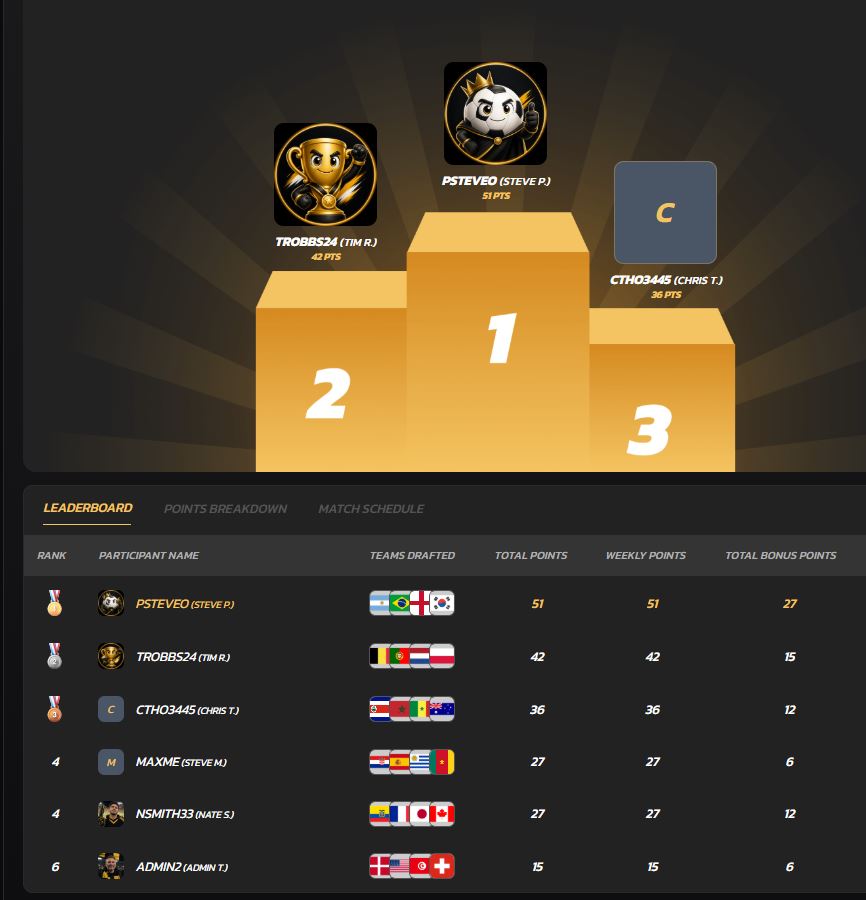
DraftWins charges a one-time platform hosting fee to the commissioner who creates the pool. It doesn't collect entry fees, hold a prize pool, or pay out winnings, so the money-handling risk that comes with personal payment apps and DIY escrow never touches the platform itself. That structure alone answers most of the legal caution outlined above: no pooled cash sitting in Venmo, no commingled funds, no organizer holding a prize pot that could freeze mid-season.
The commissioner hub gives you deadline locks, tiebreaker settings, and a scoring source, all the settings covered in the rules checklist, in one place instead of a spreadsheet you're updating by hand. DraftWins is launching with World Cup pools, with NFL and college football pools coming next. If you're setting up a private pool for the season ahead, start on the NFL pools page or browse DraftWins pool formats to see what a commissioner dashboard looks like before you invite a single player.
Sources
- Sports gambling in the workplace: A safe bet? | Mintz
- How employers can approach March Madness office betting pools | SHRM
- How to run a March Madness pool | LeagueSafe
- What issues do Super Bowl squares present in the workplace? | Littler
FAQ
What Is the Easiest Way to Start a Private Sports Pool?
Use a password-protected platform built for team-draft pools, like DraftWins, set your format and rules, then invite players. It takes about 15 minutes and avoids the spreadsheet upkeep of traditional player-based fantasy.
Is It Legal to Run a Private Sports Pool at Work?
Legality depends on your state and whether the organizer profits from the pool. Keeping the pool free-to-play or ensuring the organizer takes no cut lowers legal risk considerably.
Should I Use Venmo to Collect Entry Fees?
No. Personal payment apps aren't built for collecting group contest money, and using them this way risks frozen funds if the transaction gets flagged.
What Makes Team-Draft Pools Different From Fantasy Football?
Team-draft pools have participants draft entire teams instead of individual players, so there's no weekly lineup, no bye weeks, and no injury-driven roster panic. It's built for people who want season-long fun without the maintenance.
How Do I Handle a Tie in My Pool?
Set a tiebreaker rule before the season starts, such as closest predicted final score followed by earliest submission, and publish it in your rules document so nobody disputes it after the fact.
Does DraftWins Handle Prize Money?
No. DraftWins charges a one-time hosting fee to the commissioner but does not collect entry fees, hold a prize pool, or pay out winnings, which keeps money-handling risk off the platform entirely.