
Team pool formats for sports fans are structured group competition setups where participants compete around real sporting events, tracking results through shared scoring systems. The best formats balance easy entry, clear rules, and automated scoring so anyone can join without a spreadsheet or a sports science degree. Whether you are organizing a World Cup pool for 30 coworkers or a small bracket contest with six friends, the right format makes the difference between a competition people forget and one they talk about for years. Draftwins is built specifically for this kind of group contest, letting fans draft teams instead of managing individual player lineups.
1. Top team pool formats for sports fans
The four formats below cover the full range of group sizes and engagement styles. Each one suits a different type of fan and event.
Sweepstake pools
Sweepstake pools assign teams randomly to participants, and the last team standing wins the prize. This format works best for large, casual groups because it requires almost no ongoing input after the draw. Nobody needs to know the sport deeply. Luck levels the playing field, which keeps the whole group invested even if their team is an underdog.

Match prediction leagues
Match prediction leagues award points for correct outcomes and bonus points for exact scores, building cumulative standings across many matches. This format suits groups of 6 to 20 dedicated fans who want sustained engagement over a full tournament. A common scoring rule is 1 point per correct match prediction, with tiebreakers based on total goals in the final. The format rewards consistent attention, not just one lucky pick.
Bracket or knockout prediction pools
Bracket pools focus on forecasting elimination rounds, with weighted points for later stages. A correct quarterfinal pick earns more than a correct group stage pick. This format is ideal for groups that want high drama without weekly maintenance. One decision per round keeps the commitment low and the stakes high.
Hybrid formats
Hybrid formats combine a sweepstake draw with prediction elements. Participants get a randomly assigned team but also make match predictions throughout the tournament. This approach sustains engagement across the full event because fans have two reasons to stay interested. It works especially well for mixed groups where some participants know the sport well and others are just along for the fun.
Pro Tip: For casual groups new to sports pools, start with a sweepstake. Add a prediction side game as an optional layer for fans who want more involvement without forcing it on everyone.
2. Comparing formats by group size, duration, and complexity
Choosing the right format depends on three factors: how many people are playing, how long the event runs, and how much scoring complexity you want to manage. The table below maps the most common formats against those variables.
| Format | Best group size | Event duration | Scoring complexity |
|---|---|---|---|
| Sweepstake | 10+ participants | Full tournament | Very low |
| Match prediction league | 6–20 participants | Multi-week | Medium |
| Bracket/knockout | Any size | Single or multi-round | Low to medium |
| Round robin pool play | 4–16 participants | Weekend or short event | Medium |
| Group stage plus knockout | 10+ participants | Full tournament | Medium to high |
Group stage plus knockout is the format that guarantees the most matches and the longest engagement window. Participants survive the group stage before facing elimination, which means they stay active longer than in a pure single-elimination bracket. Format choice should match event duration: single elimination suits one-day events, while group stage plus knockout works best for tournaments spanning several weeks.
Four-team pool play produces 3 games per team and scales cleanly to 8, 12, or 16 total teams. This makes it a reliable choice for weekend office tournaments where you need clear standings fast. Round robin formats give every participant more games but take longer to complete, which can lose momentum in casual settings.
3. Setting rules and managing automated scoring
Clear rules set before the first match prevent every dispute that comes after it. The three areas that cause the most confusion are entry fees, pick deadlines, and scoring transparency.
Entry fees and prize splits
Entry fees in casual sports pools typically range between $5 and $20. Recommended prize splits include 50/30/20 for three places or 70/30 for two, keeping participants interested through the final rounds rather than dropping out once they fall behind. Keep the entry amount low enough that losing does not sting badly, but high enough that winning feels worth celebrating.
Deadlines and payments
Collecting entry fees after competition starts creates administrative problems that are hard to fix mid-tournament. Secure all payments before the first match kicks off. Digital payment apps simplify collection and eliminate the awkward "I'll pay you later" conversations. Set a firm pick deadline at least one hour before the opening match so no one can adjust their selections after seeing early results.
Automated scoring tools
Automated scoring removes the biggest burden on pool organizers: manual tracking. Platforms that offer private leaderboards and automated settlement for scoring cut the organizer's workload to almost nothing after setup. Draftwins handles scoring automatically and updates live leaderboards in real time, so you spend your energy watching the games, not updating a spreadsheet.
- Set all scoring rules in writing before the pool opens
- Lock picks at least one hour before the first match
- Collect all payments digitally before competition starts
- Use a platform with automated leaderboard updates
- Define tiebreaker rules upfront, such as total goals in the final
Pro Tip: Send one group message with the rules, the payment link, and the pick deadline all in the same note. Participants who see everything at once are far more likely to complete all three steps before the deadline.
4. How to run a pool that casual fans actually enjoy
The biggest mistake pool organizers make is designing for the most knowledgeable fan in the group. A format that rewards deep soccer knowledge will bore or frustrate casual participants within the first week. The goal is a pool where a casual fan has a realistic shot at winning.
Keep the format simple for mixed groups
Simple formats lower the barrier to entry. A sweepstake or a single-bracket pool requires no prior knowledge of team form, injury reports, or historical matchups. Casual fans can participate fully without feeling outmatched. Sports draft formats that match participant experience levels keep everyone engaged from round one through the final.
Use novelty props to boost engagement
Side props add a second layer of fun that does not depend on the main competition result. Examples include:
- Predict the tournament's top scorer
- Guess the total number of goals in the group stage
- Pick which team scores the most goals in a single match
- Predict which team gets eliminated first
- Name the player who scores the opening goal of the tournament
These props give casual fans something to cheer for even when their main team is eliminated. They also create conversation throughout the event, which is the real point of a group pool.
Host a draft night event
A draft night turns a digital activity into a social one. Gather participants in person or on a video call, draw teams live, and let people react to their assignments in real time. The energy of a live draw creates memories that a silent online form never will. Designing pools for casual competitors means prioritizing the social experience as much as the competition itself.
Communicate regularly throughout the event
Send a leaderboard update after each round. A quick message showing the top three standings and who just moved up keeps participants checking in even when their own team is out of contention. Regular updates remind people the pool is still running and give them a reason to watch the next match.
Key takeaways
The most effective team pool formats match group size, event duration, and participant experience level to keep everyone engaged from the first match through the final.
| Point | Details |
|---|---|
| Match format to event length | Use sweepstakes or brackets for short events; use group stage plus knockout for full tournaments. |
| Keep entry fees accessible | Fees between $5 and $20 with 50/30/20 prize splits sustain interest through the final rounds. |
| Automate scoring from day one | Platforms with live leaderboards remove manual tracking and keep organizers focused on the games. |
| Lock picks before the first match | Setting a firm deadline at least one hour before kickoff prevents last-minute changes and disputes. |
| Include casual-friendly elements | Novelty props and live draft nights keep participants engaged regardless of sports knowledge. |
Draftwins makes group sports pools easy to run
Running a group sports pool should feel exciting, not like a second job. Draftwins is built for exactly this situation: fans who want a real competition with friends during major sporting events, without the complexity of traditional fantasy leagues.
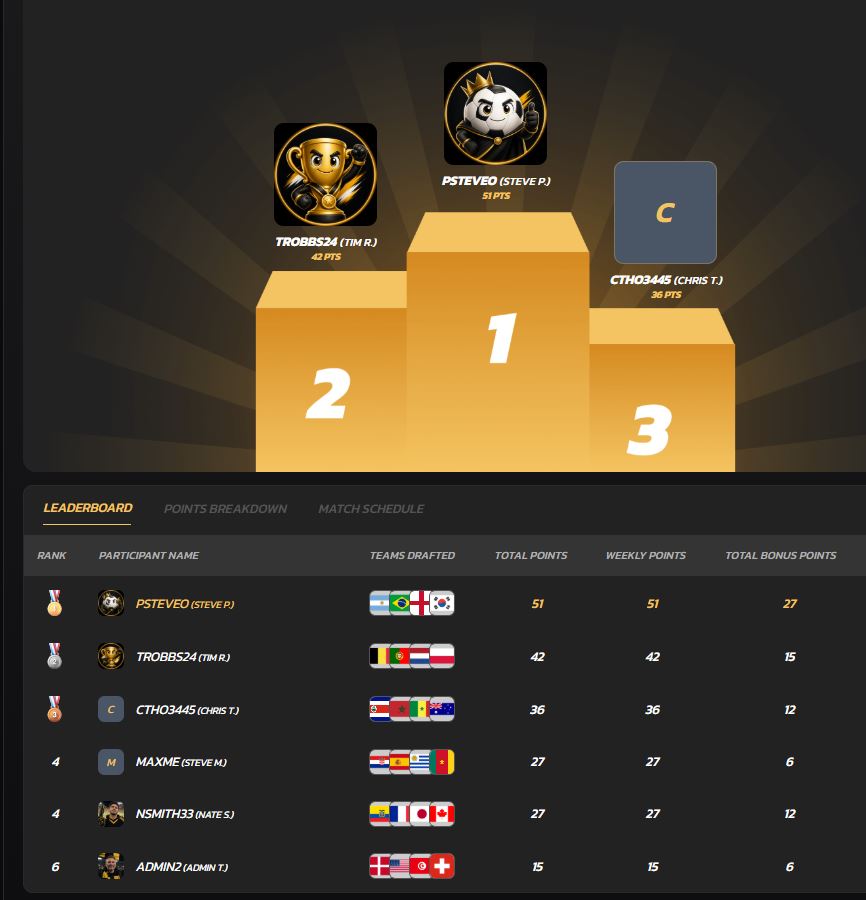
Draftwins lets participants draft teams instead of managing individual player rosters, which removes the lineup stress that drives casual fans away from traditional formats. Automated scoring and live leaderboards update in real time, so the organizer never touches a spreadsheet. Commissioners can create private pools with custom scoring rules and settings tailored to their group. Draftwins is launching with World Cup pools, with NFL and College Football pools to follow. Draftwins charges a platform hosting fee and does not collect entry fees or hold prize money.
FAQ
What is the easiest team pool format for beginners?
Sweepstake pools are the easiest format for beginners. Teams are assigned randomly, so participants need no prior sports knowledge to compete.
How many people do you need for a sports pool?
Match prediction leagues work well with 6 to 20 participants, while sweepstakes and bracket pools scale to larger groups with no upper limit.
What is a fair entry fee for a casual sports pool?
Entry fees between $5 and $20 are standard for casual pools. A 50/30/20 prize split across three places keeps participants motivated through the final.
When should I collect entry fees for a sports pool?
Collect all entry fees before the competition starts. Collecting fees after the event begins creates tracking problems and increases the chance of non-payment.
How do automated scoring platforms help pool organizers?
Automated platforms update leaderboards in real time and handle scoring calculations without manual input. This lets organizers focus on the competition rather than tracking results across a spreadsheet.