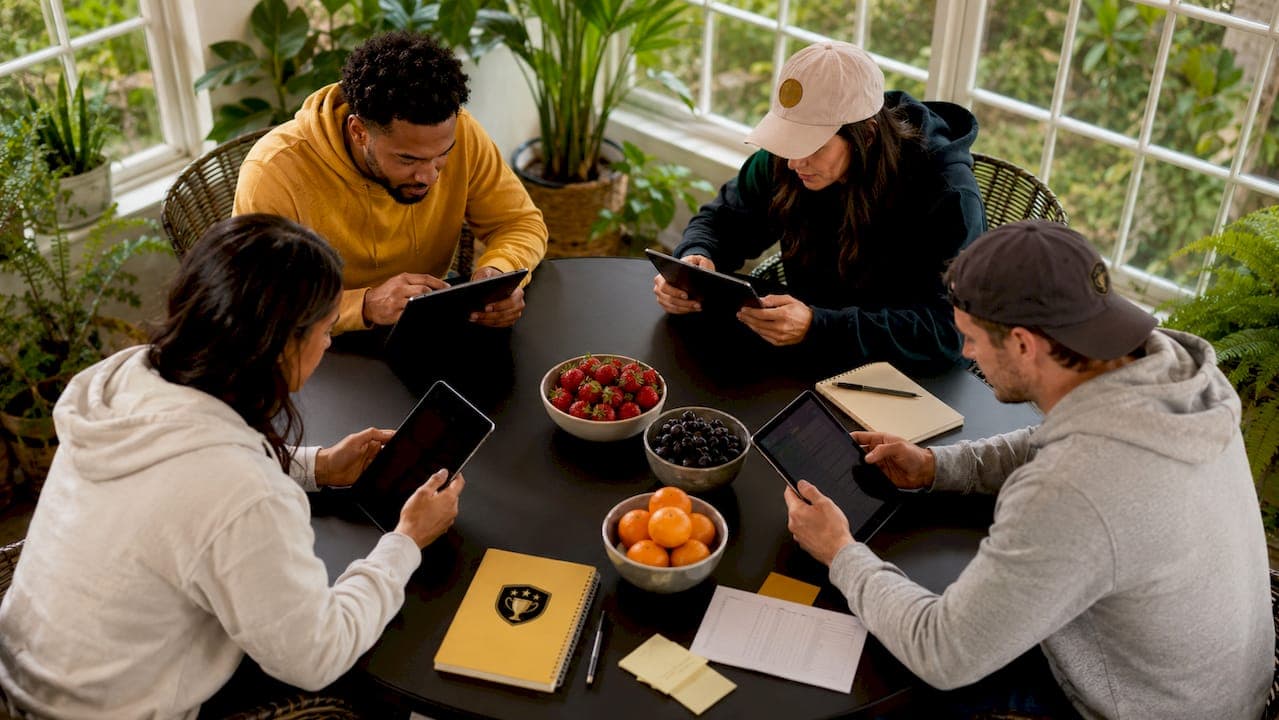
A group draft competition is a structured, turn-based selection game where participants pick players or teams from a shared pool in a set order, making it one of the most social and fair formats in sports gaming. Unlike traditional fantasy leagues that demand weekly lineup decisions and trade negotiations, a group draft competition puts all the excitement into a single draft event. The format works for casual fans, friend groups, and anyone who wants real sports stakes without the ongoing management grind. Platforms like Draftwins and tools like GetDraftedNow have made this format more accessible than ever.
What is a group draft competition and how does it work?
A group draft competition is a turn-based selection process where each participant picks from a shared pool of players, teams, or items in a structured order until every slot is filled. The core mechanic is simple: you get a pick, you make a choice, and the next person goes. No one can take what you have already selected.
The shared pool is the heart of the format. Every participant sees the same available options on a live board, which keeps things transparent and prevents disputes. Once a player or team is drafted, they are off the board for everyone else. This scarcity is what makes each pick feel meaningful.

Group draft formats range from live synchronous events to flexible async competitions. In a live draft, all participants join at the same time and picks move fast, often with timers of 60–120 seconds per turn. In an async draft, pick timers can run up to 8 hours, letting participants draft on their own schedule across days. That flexibility makes async drafts popular for groups spread across different time zones.
Snake draft vs. linear draft
The snake draft is the most common format in group draft competitions. The snake system reverses pick order each round so the person who picks last in round one picks first in round two. This balances the advantage of picking early, since top talent is spread more evenly across the group. A linear draft, by contrast, keeps the same order every round, which heavily favors the first pick and is rarely used in casual settings.
Best Ball and Mock Draft Challenges
Two popular group draft contest styles stand out for casual fans. Best Ball competitions require no ongoing roster management after the draft. Participants draft once and points count automatically from the best performing players each week. That single-event format removes the weekly stress that drives many casual fans away from traditional fantasy leagues.
Mock Draft Challenges take a different angle. Points are awarded for accurately predicting which players get drafted and in what position, with scores ranging from 1 to 3 points based on prediction accuracy. This format rewards draft knowledge rather than team performance, making it a great entry point for fans who love the draft process itself.
Pro Tip: If your group includes people with different availability, choose an async format with a 4–8 hour pick timer. It keeps the draft moving without forcing anyone to rearrange their schedule.
What rules and fairness mechanisms keep group drafts competitive?
Group draft competition rules exist to prevent one participant from dominating the pool and to keep the event moving at a pace that holds everyone's attention. The three core mechanisms are pick timers, auto-pick settings, and draft order determination.
The three core fairness rules
-
Pick timers set a hard deadline for each selection. Live drafts typically use 60–120 second timers. Async drafts extend this to several hours. Without a timer, one slow participant can stall the entire event.
-
Auto-pick kicks in when a participant misses their timer. Without auto-pick, one missing participant can halt the entire draft, frustrating everyone else. A well-configured auto-pick list, ranked by the participant in advance, keeps the draft flowing even when someone steps away.
-
Draft order determination sets who picks when. Common methods include random draws, reverse standings from a previous season, or a live lottery. Random draws are the most popular for casual groups because they feel fair and require no prior history.
| Mechanism | Purpose | Best for |
|---|---|---|
| Pick timer | Prevents stalling | All draft types |
| Auto-pick | Covers absent participants | Async and live drafts |
| Snake order | Balances top talent access | Groups of 6–14 participants |
| Random draw | Fair starting order | New groups with no history |
| Paused clock | Protects overnight participants | Async drafts across time zones |
A shared live board is the fourth pillar of a fair group draft. Digital boards prevent duplicate picks and disputes that plague manual tracking in group chats. When everyone sees the same board in real time, there is no room for confusion about who took which player.
Pro Tip: For async drafts that span multiple days, pause the draft clock overnight from roughly 2 AM to 8 AM. This prevents participants from timing out while they sleep, which is a common source of frustration in cross-time-zone groups.
The draft mechanism in sports is built around equitable resource distribution. In a group draft competition, that principle translates directly into keeping every participant competitive and engaged from the first pick to the last.
How does a group draft differ from a traditional fantasy league?
A group draft competition and a traditional fantasy league both start with a draft, but they diverge sharply after that moment. Traditional leagues demand weekly lineup decisions, waiver wire pickups, trade negotiations, and injury monitoring across a full season. A group draft competition, particularly in Best Ball format, ends at the draft. What you pick is what you get.
The differences matter most for casual fans:
- Time commitment. Traditional leagues require 2–4 hours of management per week. A group draft competition asks for one focused draft session and then lets the season play out automatically.
- Complexity. Traditional leagues involve scoring systems, trade rules, and roster limits that take time to learn. Group draft competitions use simpler rules that most participants can grasp in minutes.
- Social focus. The draft event itself becomes the social centerpiece. Friends gather, picks are made, and the competition runs on its own. This format is closer to a sports pool than a full fantasy league.
- Accessibility. Because there is no ongoing management, group drafts work for fans who follow sports casually. You do not need to know every depth chart or injury report to participate and enjoy the competition.
Mock Draft Challenges add another layer of accessibility. They reward prediction skill rather than team management, which opens the format to fans who love the NFL Draft or World Cup draw but have never played fantasy sports.
The core appeal of a group draft sports event is that it captures the excitement of selection and competition without the complexity that burns out casual players. Group draft competitions simplify the experience by focusing on draft day and removing the ongoing management burden entirely.
Tips for running or joining a group draft competition
Running a successful group draft competition comes down to preparation, clear communication, and the right tools. These five practices separate smooth drafts from chaotic ones.
-
Set your pick timer before the draft starts. Decide on live or async format and communicate the timer length to every participant in advance. Surprises around timing cause the most friction in group drafts.
-
Use a digital draft board. A live shared board prevents duplicate picks and removes the need for a manual moderator. Tools like GetDraftedNow handle this automatically, logging every pick in real time.
-
Determine draft order publicly and randomly. Use a random number generator or a live draw so every participant sees the process. Perceived fairness is as important as actual fairness in keeping a group engaged.
-
Configure auto-pick lists before the draft. Ask every participant to rank their backup preferences before the event begins. Setting accurate auto-pick backups prevents stalled drafts and keeps the event on schedule even when someone loses their connection.
-
Communicate the rules in writing before draft day. Organizers who clearly communicate rules around timers, pick order, and player pools upfront maintain group trust and avoid disputes mid-draft. A one-page rule sheet shared the day before is enough.
For groups drafting teams instead of individual players, the setup is even simpler. Check out drafting teams instead of players for a format that removes injury concerns entirely and lets participants focus on team performance across a tournament or season.
The social and fairness aspects of group drafts are what make them sustainable over time. Groups that run clean, well-organized drafts come back for the next event. Groups that run chaotic ones usually do not.
How Draftwins makes group draft competitions easy to run
Draftwins is built specifically for sports fans who want the excitement of a group draft competition without the setup headaches. The platform lets commissioners create private pools where participants draft teams instead of individual players, which removes the injury and lineup management stress that comes with traditional formats.
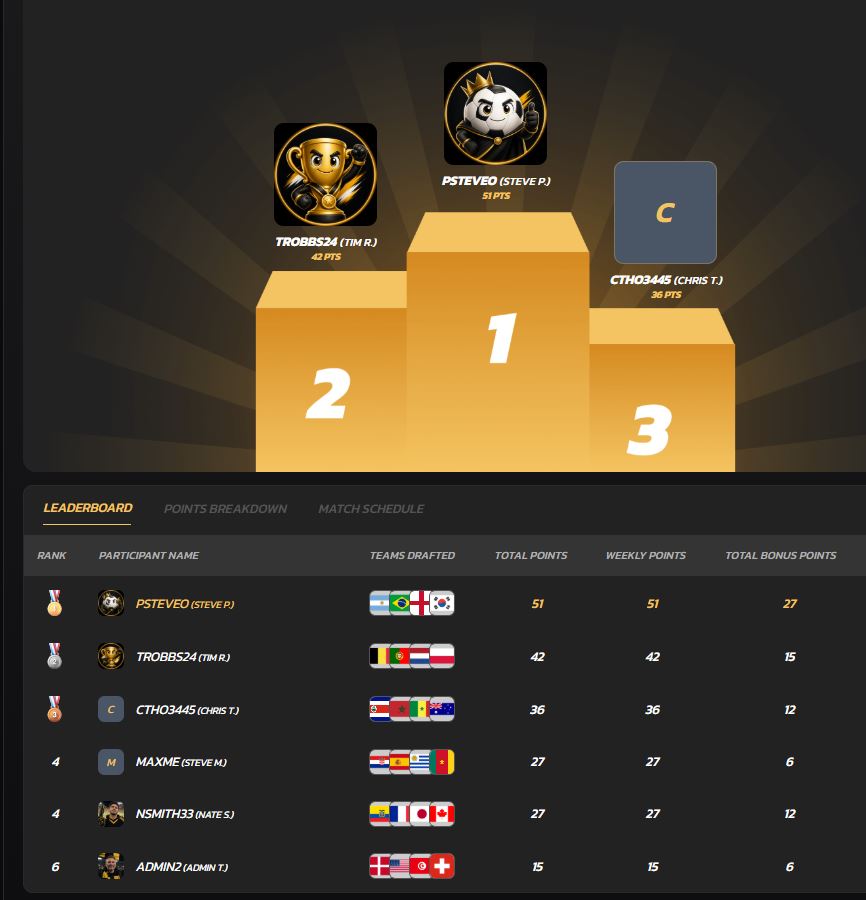
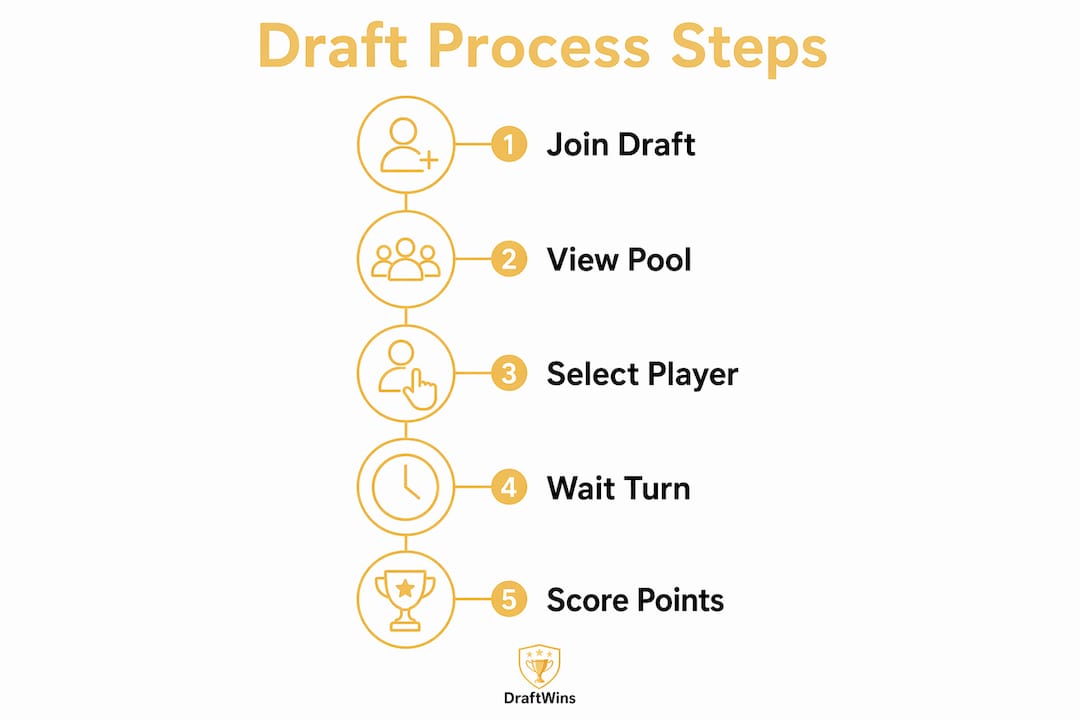
With Draftwins, automated scoring and live leaderboards handle the results so you can focus on the competition itself. The setup process is straightforward: create a pool, invite your group, set your scoring rules, and draft. Draftwins is launching with World Cup pools, with NFL and College Football pools coming next. The platform charges a hosting fee and does not collect entry fees or hold prize money, keeping the experience clean and social. If you are ready to run your first group draft, start at Draftwins and have your pool live in minutes.
Key takeaways
A group draft competition is the most accessible, social format in sports gaming because it concentrates all the excitement into one draft event and removes the ongoing management burden entirely.
| Point | Details |
|---|---|
| Core format | Participants take turns selecting from a shared pool in a structured, fair order. |
| Snake draft fairness | Pick order reverses each round so no single participant monopolizes top talent. |
| Best Ball simplicity | Draft once and scoring runs automatically, with no weekly lineup decisions required. |
| Auto-pick is critical | Configure backup picks before the draft to prevent stalling when participants miss their turn. |
| Digital boards win | Live shared boards eliminate duplicate picks and disputes that manual tracking cannot prevent. |
FAQ
What is a group draft competition in simple terms?
A group draft competition is a turn-based game where participants take turns selecting players or teams from a shared pool in a set order. The format ends at the draft in Best Ball style, with no ongoing management required.
How does the snake draft system work?
The snake draft reverses pick order each round. If you pick 10th in round one, you pick first in round two. This balances access to top talent across all participants.
What is the difference between a live draft and an async draft?
A live draft requires all participants online at the same time with short pick timers, typically 60–120 seconds. An async draft allows picks over hours or days, with timers up to 8 hours per turn.
Do I need fantasy sports experience to join a group draft competition?
No prior experience is needed. Group draft competitions are designed to be accessible, and formats like Best Ball or Mock Draft Challenges are straightforward enough for first-time participants to enjoy immediately.
What makes group draft competitions fairer than traditional leagues?
Equitable resource distribution through snake drafting, shared live boards, and auto-pick rules keeps every participant competitive. Traditional leagues favor experienced managers who invest more time each week.