
A team draft pool is a group competition format where participants select full sports teams, not individual players, to build their roster and compete for points. The role of draft strategy team pools goes far beyond picking favorites. It coordinates group drafting efforts, distributes picks fairly, and turns a casual sports watch party into a structured competition with real stakes. Platforms like Draftwins have made this format accessible to casual fans by pairing team drafting with automated scoring and live leaderboards. Whether you are running a World Cup soccer pool or an NFL group contest, understanding how team pools work changes how you compete.
What is the role of draft strategy team pools in group competitions?
Draft strategy in team pools is the process of building the strongest possible roster by making deliberate, round-by-round decisions that account for pick order, team quality, and group competition rules. The industry term for this process is roster construction theory. It treats your draft picks as a limited resource that must be allocated across rounds to maximize your team's scoring potential.
Roster construction theory assigns distinct purposes to each phase of the draft. Rounds 1 through 3 build your foundation with top-tier teams. Rounds 4 through 6 address positional scarcity, meaning you fill gaps before other participants take those options. Rounds 10 through 15 target high-ceiling picks that carry risk but offer the biggest upside. That structure matters because a pool winner rarely wins on one great pick. They win because every round served a purpose.

Team pools also create a social layer that individual fantasy leagues often miss. Card and team drafting mechanics exploit psychological loss aversion, which creates tension and camaraderie during group drafts. Every pick someone else makes feels like something you almost lost. That feeling keeps everyone engaged from round one through the final whistle.
How do draft rounds function in team pools?
Each draft round in a team pool serves a specific job. Skipping that structure is the most common mistake casual players make.
Rounds 1 through 3: Build your foundation. These picks are your anchors. In a soccer draft pool or NFL pool, the top teams in these rounds are the ones most likely to advance deep into a tournament or finish the season with strong records. Missing on a round-1 pick is hard to recover from.
Rounds 4 through 6: Address positional scarcity. In formats with positional requirements, this is where you fill gaps before they close. If your pool scores quarterbacks separately, round 5 is often the last chance to grab a top-tier option before the field thins out.
Rounds 10 through 15: Target upside. Late-round picks are best used for high-ceiling lottery tickets rather than safe veterans. A team that overperforms expectations in late rounds can flip a mid-table pool standing into a first-place finish.
Pro Tip: Before your draft starts, write down one target for each round phase. Knowing your round-1 anchor, your round-5 scarcity fill, and your round-12 upside pick prevents panic decisions when the clock runs out.
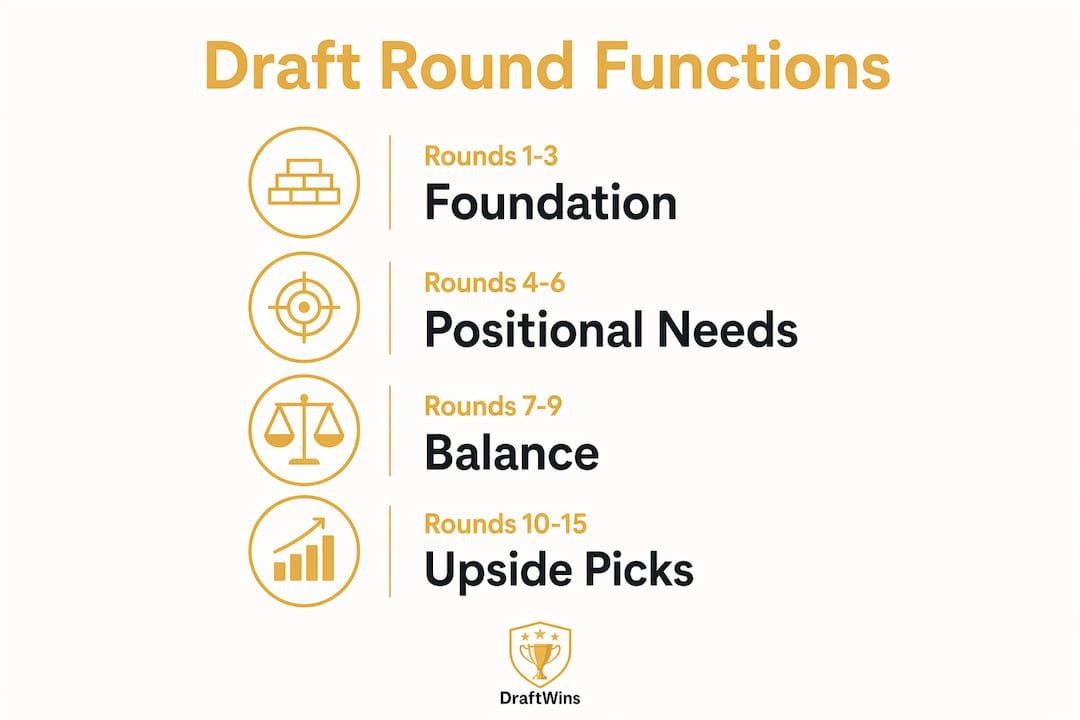
Roster construction also forces you to think about balance. A team loaded with round-1 favorites but weak in rounds 8 through 12 will run out of depth. Cohesive pre-planned team strategy consistently outperforms ad-hoc selections, because reactive picking leads to forced and ineffective lineups.
Why does draft order matter in a team pool?
Draft order is not a luck factor. It is a strategic variable. The misconception that your draft slot determines your fate ignores the real advantage each position offers. Strategic exploitation of slot advantages combined with tier-based drafting produces better results than any single pick position.
Here is how each slot type plays out in a typical snake draft pool:
- Early slots (picks 1 through 3). You get the best available team in round 1. The tradeoff is a long wait before your next pick. Use that time to monitor which tiers are collapsing around you.
- Middle slots (picks 4 through 7). These are the most balanced positions. You rarely get the single best option, but you consistently land strong value across multiple rounds.
- Late slots (picks 8 through 12). You pick last in odd rounds but first in even rounds. The pick pair or "turn" position at the end of one round and the start of the next is the most efficient slot in a snake draft. You make two consecutive picks with no wait time between them.
- Tier-based drafting. Group players or teams into performance tiers instead of strict rankings. Tier-based drafting reduces bad decisions by preventing you from reaching for a pick just because someone in your tier disappeared a round earlier than expected.
Pro Tip: Print or write out your tiers before the draft. When a tier breaks earlier than expected, you will know immediately whether to adjust or stay patient. Reacting to a broken tier is strategy. Panicking is not.
The NBA's 2026 draft lottery reform illustrates how draft incentives shift strategic focus when odds change. The worst team's odds of picking first dropped from 14.0% to 5.4%. That shift pushed teams to compete harder for mid-lottery spots rather than tank for the top pick. The same logic applies to your pool. No single slot is worth surrendering your overall strategy.
Live snake drafts vs. automated tiered pools: which fits your group?
The format you choose shapes the entire experience. Both live snake drafts and automated tiered pools have real advantages depending on your group size and how much time you want to spend.
Live snake drafts take 1 to 2 hours for groups of 8 to 20 participants. Tiered pools for 10 to 50 participants need about 10 minutes to set up and draft. That difference is not just about convenience. It changes the social dynamic, the strategy depth, and the barrier to entry for casual players.
| Factor | Live snake draft | Automated tiered pool |
|---|---|---|
| Setup time | 1 to 2 hours | About 10 minutes |
| Group size | 8 to 20 participants | 10 to 50 participants |
| Strategy depth | High, round-by-round decisions | Moderate, tier selection focus |
| Social engagement | High, real-time interaction | Moderate, async participation |
| Complexity | Requires draft knowledge | Accessible to casual players |
Live snake drafts work best for dedicated groups who want the full event experience. The real-time pressure, the trash talk, and the shared tension of watching someone take your target are part of the appeal. Snake drafts provide high social value as memorable events that automated formats cannot fully replicate.
Automated tiered pools work best for larger groups, office competitions, or anyone who wants to run a soccer pool or NFL pool without coordinating everyone's schedules. The tradeoff is less real-time drama, but the accessibility brings in participants who would never join a traditional fantasy league.
For a deeper look at common draft formats and how each one fits different group sizes, the differences go beyond just time commitment.
How does drafting teams instead of players change your strategy?
Drafting full teams instead of individual players removes the most stressful parts of traditional fantasy sports. There are no injury reports to track on a Tuesday morning. There is no waiver wire to monitor. Your roster performs based on how the teams you drafted actually play, not on whether a running back cleared concussion protocol.
The strategic shift is real, though. Team drafting rewards a different kind of thinking:
- Macro-level analysis. You evaluate team strength, schedule difficulty, and tournament bracket position rather than individual player matchups.
- Synergy over stats. A team that plays well together scores more consistently than a collection of individual stars. That logic applies directly to how you build your pool roster.
- Simplified scoring models. Team-based scoring typically awards points for wins, goals, or tournament advancement. That clarity makes it easier to explain the pool to new participants and keeps everyone engaged longer.
- Reduced management burden. Once you draft, your job is to watch and cheer. There are no lineup decisions to make each week.
Drafting teams instead of players also changes the social dynamic in a positive way. When your drafted team wins a match, everyone in your group knows it. The connection between your pick and the outcome is direct and easy to follow, which is exactly why team draft pools build camaraderie faster than individual player formats.
The group dynamic deepens because everyone is rooting for different teams in the same tournament. A World Cup pool where eight friends each draft four national teams creates eight different stories playing out simultaneously. That shared investment is what keeps group chats active and watch parties packed.
Key Takeaways
The role of draft strategy team pools is to give every participant a fair, structured path to building a competitive roster while keeping group competitions social, accessible, and genuinely fun.
| Point | Details |
|---|---|
| Round roles matter | Rounds 1 through 3 build your foundation; late rounds target high-upside picks. |
| Draft order is a tool | Every slot has advantages; tier-based drafting removes the fear of any single pick position. |
| Format fits the group | Snake drafts suit dedicated groups; tiered pools work better for larger, casual audiences. |
| Team drafts reduce complexity | Drafting full teams eliminates weekly lineup stress and keeps casual players engaged. |
| Camaraderie is built in | Loss aversion and shared investment during group drafts create social tension that keeps everyone involved. |
Ready to run your own team draft pool with Draftwins?
Draftwins is built for exactly the kind of group competition this article describes. The platform lets commissioners create private pools where participants draft full teams instead of individual players, with automated scoring and live leaderboards handling everything after the picks are in.
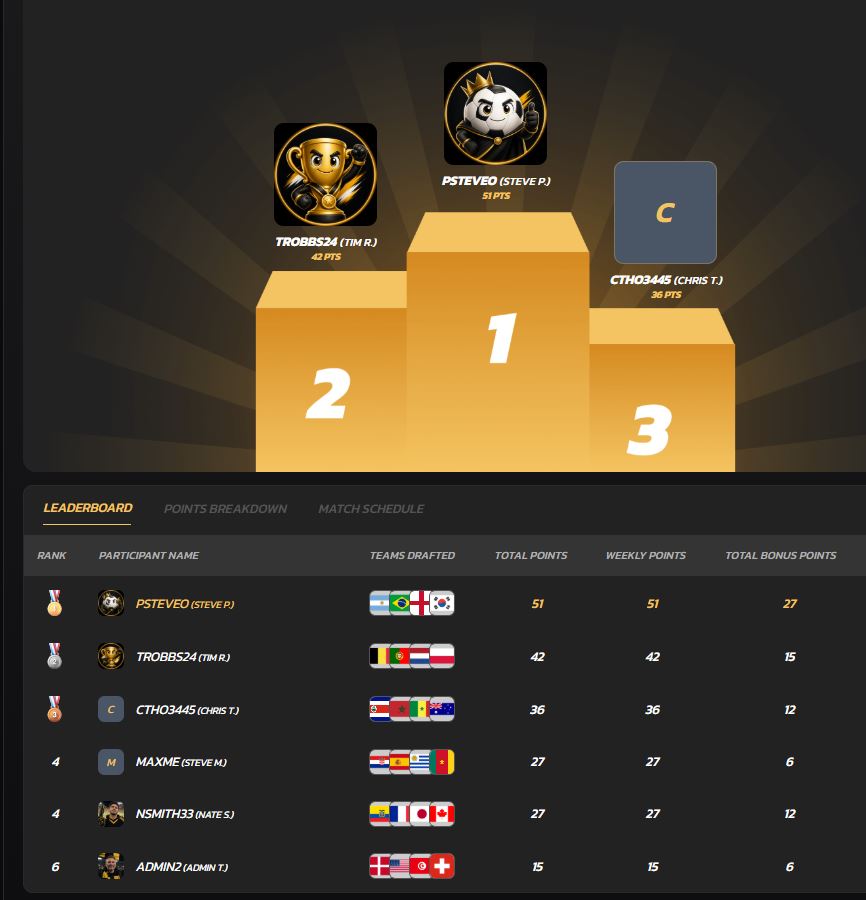
Draftwins launches with World Cup pools, followed by NFL and College Football pools. Setup takes minutes, and there is no lineup management required after draft day. Draftwins charges a platform hosting fee and does not collect entry fees or hold prize money, so your group controls the competition on its own terms. If you are ready to run a pool that your group will actually finish, start your pool on Draftwins today.
FAQ
What is a team draft pool?
A team draft pool is a group competition where participants draft full sports teams, not individual players, and earn points based on how those teams perform. Automated scoring tracks results without requiring weekly lineup management.
Why does draft order matter in a pool?
Draft order determines which teams are available to you in each round. Late slots gain the "pick pair" advantage of two consecutive picks, while early slots secure top-tier teams but face longer waits between selections.
How do draft rounds work in team pools?
Each round serves a specific purpose. Early rounds build your foundation with top teams, middle rounds address scarcity, and late rounds target high-upside picks that can separate your roster from the competition.
What is the difference between a snake draft and a tiered pool?
A snake draft is a live, round-by-round format that takes 1 to 2 hours and works best for groups of 8 to 20. A tiered pool is automated, takes about 10 minutes to set up, and scales to 50 participants.
Why do team draft pools build camaraderie?
Team drafting creates loss aversion during picks, meaning every selection someone else makes feels like something you almost took. That shared tension and investment keeps groups engaged and makes the competition social from start to finish.