
Team draft pool rules define how group drafts are structured to deliver balanced, engaging gameplay for everyone at the table. Whether you are organizing a World Cup pool with friends, running an NFL fantasy league, or setting up a casual bracket competition, the rules you choose determine whether your draft feels fair or chaotic. Formats like snake drafts, auction pools, and team-based selection systems each carry distinct advantages depending on group size and experience level. This guide breaks down the most common team draft pool rules examples, with concrete illustrations drawn from professional leagues and popular fantasy formats.
1. Common types of team draft pool rules with examples
Team draft pool rules fall into several clear categories, and understanding each one helps you build a format that fits your group. The most widely used rule types cover draft timers, player allocation limits, bonus or salary pools, and selection order formats.
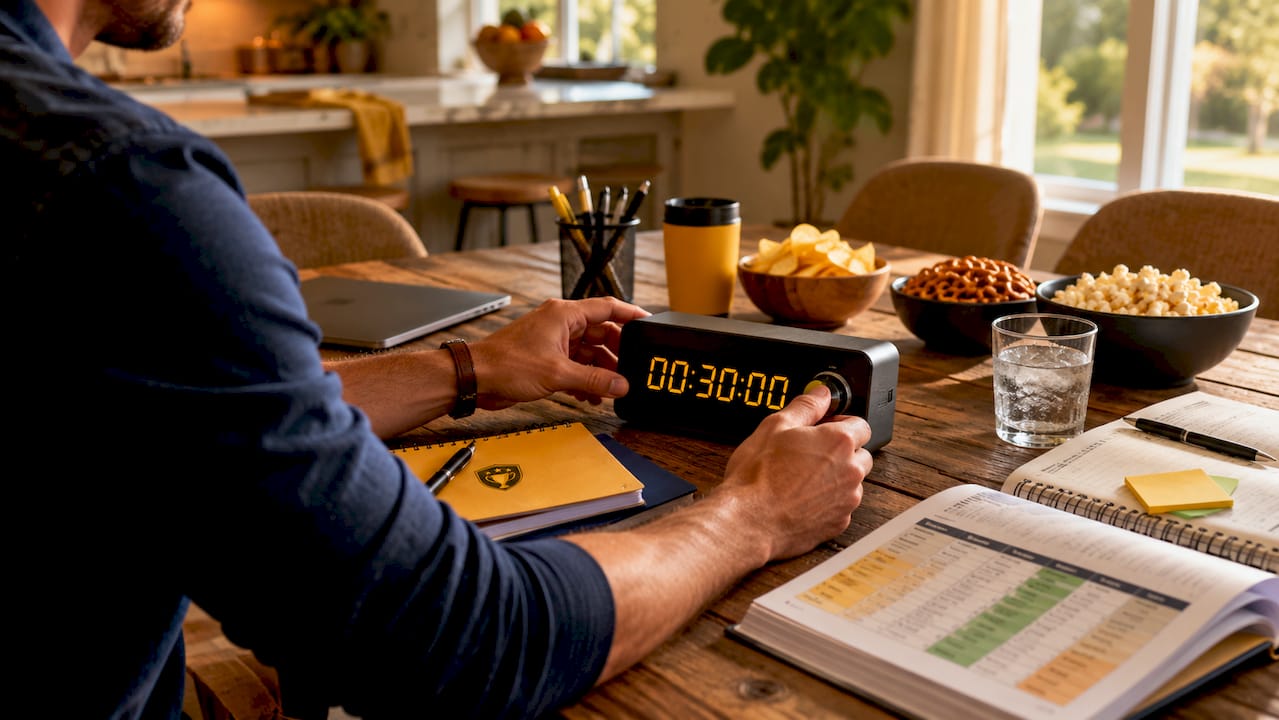
Draft timers control the pace of the entire event. Standard live draft timers use 90 seconds per pick, which balances decision quality against momentum. A 12-team, 15-round draft at that pace runs about 27 minutes of pure clock time. That figure does not account for network lag or participant delays, so experienced commissioners add buffer time to every session.
Player allocation limits prevent any single team from monopolizing talent. The 2026 WNBA expansion draft caps selection at two players per existing team, with each pick coming from a different round. Existing teams also designate five protected players whose contracts are off the table entirely. That two-player ceiling is a direct example of how allocation limits preserve competitive balance across the whole pool.
Bonus and salary pools add a budget layer that forces strategic tradeoffs. In the 2026 MLB Draft, each team receives a total bonus pool with slot values assigned to every pick. The Pittsburgh Pirates hold the largest total bonus pool at $19,130,700, while the Chicago White Sox carry a first-pick slot value of $11,350,600. Teams can spend above or below individual slot values, but exceeding the total pool by more than 5% triggers financial penalties.
Selection order formats include snake drafts, linear drafts, and auction formats. Snake drafts reverse the order each round, so the team picking last in round one picks first in round two. Linear drafts maintain the same order throughout, which rewards early picks but creates imbalance over time. Auction formats replace pick order entirely with a bidding system, giving every participant equal access to top talent.
- Snake draft: Best for casual groups of 8 to 14 participants who want simplicity.
- Linear draft: Common in tournament brackets where seeding matters.
- Auction draft: Highest skill ceiling, best for experienced groups who enjoy budget management.
- Team-based pool: Participants draft entire teams rather than individual players, which removes lineup management stress entirely.
Pro Tip: Set your draft timer before the session starts and share it with all participants in writing. Mid-draft timer disputes are one of the most common sources of conflict in group pools.
2. How to set up a team draft pool step by step
A well-organized team draft pool setup guide follows six clear steps. Skipping any one of them tends to create confusion once the draft goes live.
-
Choose your draft format. Decide between snake, auction, or team-based selection. For casual gamers new to group drafts, a team-based format removes the complexity of individual player management and keeps the focus on competition.
-
Define your pool size and rounds. Most casual pools run 8 to 14 participants across 10 to 20 rounds. Larger pools need longer timers or pre-draft preparation time to stay on schedule.
-
Set your timer rules. A 90-second pick timer is the standard for live events. Decide in advance what happens when a timer expires. Autodraft fallback is the most common solution, but it carries risk. Autodraft behavior picks the highest-ranked available player by default, which often misaligns with a manager's actual strategy.
-
Establish player eligibility and protection rules. Specify which teams or players are available for selection and which are protected. The WNBA expansion draft model, with its five-player protection list, is a clean template for any pool that wants to limit dominant selections.
-
Set bonus pool or budget limits if applicable. Borrowing from MLB's slot value system, you can assign each participant a spending budget and let them allocate it across picks. This adds strategic depth without requiring professional-level knowledge.
-
Document and distribute all rules before draft day. Written, pre-shared rules covering tie-breakers and timer resets significantly reduce disputes. Relying on platform defaults often leads to mid-draft confusion, particularly around tie-breaking scenarios that nobody anticipated.
Pro Tip: Run a five-minute rules review call or send a one-page summary to all participants at least 48 hours before the draft. Groups that do this report far fewer mid-draft disputes.
Physical vs. digital draft boards
| Feature | Physical board | Digital board |
|---|---|---|
| Social atmosphere | High. Creates event energy that screens cannot replicate. | Moderate. Depends on platform design. |
| Update speed | Real-time with a dedicated board keeper | Shared Google Sheets lag 15 to 30 seconds behind live picks |
| Error correction | Requires laminated boards for easy fixes | Editable instantly with no physical materials |
| Best for | Groups of 10 to 14 in the same room | Remote or hybrid draft groups |
Physical draft boards work best for in-person events with 10 to 14 managers. They require a designated board keeper who updates picks in real time and a laminated surface that allows corrections without reprinting. Digital boards scale better for remote groups but introduce lag risk during fast-paced drafts.
3. Comparing popular draft pool rule formats
Different rule sets serve different goals. The table below compares four widely used formats across the dimensions that matter most for group competitions.
| Format | Fairness | Strategic depth | Complexity | Best scenario |
|---|---|---|---|---|
| Snake draft | High | Moderate | Low | Casual groups, first-time commissioners |
| Auction draft | Very high | High | High | Experienced leagues, budget-focused play |
| MLB bonus pool model | High | High | Moderate | Pools with spending limits and pick trades |
| WNBA expansion rules | High | Moderate | Low to moderate | Pools with protection lists and allocation caps |
The MLB bonus pool model excels when you want to reward research and preparation. No MLB team has exceeded the 5% overage penalty threshold since bonus pool rules were introduced, which shows that spending constraints genuinely shape behavior. For casual gamers, that level of financial structure may feel like too much overhead, but a simplified version with fixed budgets per participant translates well to group pools.
The WNBA expansion draft model works well for pools where you want to protect certain selections while still allowing new entrants to build competitive rosters. The two-player-per-team cap prevents any single dominant source from being stripped, which keeps existing participants engaged even after the expansion pick.
Snake drafts remain the most popular format for casual fantasy leagues because the rules are intuitive and the setup takes minutes. The tradeoff is that early picks carry outsized value, which can frustrate participants who draw late positions in large pools.
Auction drafts produce the most equitable outcomes because every participant starts with the same budget. The downside is complexity. New participants often overbid on early players and run out of budget before filling their rosters, which requires a commissioner who can explain strategy before the draft begins.
4. Tips to maximize fun and fairness in your draft pool
The best draft pool strategy guidelines go beyond rule selection. How you communicate, pace, and customize the experience determines whether participants come back next season.
-
Adjust timers to your group. Experienced groups handle 60-second timers without stress. New participants benefit from 120 seconds or more. Customizing roster and scoring settings deepens engagement and directly influences how participants approach their draft strategy.
-
Use protection limits to maintain competitiveness. Borrowing the WNBA model of five protected slots keeps dominant teams from being completely dismantled in redraft or expansion scenarios. This rule is particularly useful in multi-year pools where participant loyalty matters.
-
Add a budget layer for strategy depth. Even a simple spending cap, where each participant gets 100 points to allocate across picks, transforms a casual draft into a strategic exercise. Professional leagues use bonus pools for exactly this reason. The model works at any scale.
-
Leverage physical boards for social events. Physical boards create a social atmosphere that digital platforms rarely match. If your group is meeting in person, a laminated board with a designated keeper adds energy and ceremony to the draft event.
-
Document every edge case before draft day. What happens if a participant disconnects mid-draft? What is the tie-breaker for equal scores? Experienced commissioners finalize rules early and share them in writing to prevent disputes that derail the event.
-
Customize scoring to fit your sport. A World Cup pool scores differently than an NFL pool. Align your scoring rules with the actual outcomes that matter in your chosen sport, and communicate those rules clearly so participants can draft with the right priorities in mind.
Pro Tip: Run a mock draft round before the real event if your group includes first-time participants. One practice round eliminates most timer and format confusion before anything counts.
Run your next draft pool with Draftwins
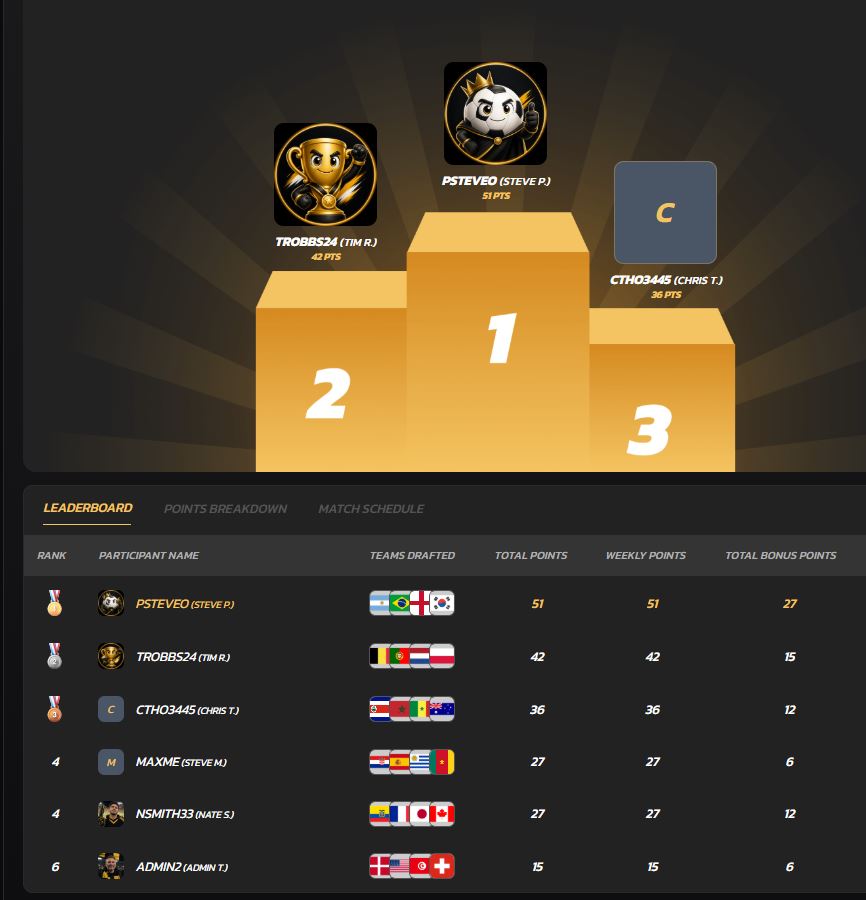
Draftwins is built for exactly the kind of group competition this article describes. The platform lets commissioners set up private pools where participants draft entire teams rather than individual players, which removes the lineup management burden that overwhelms most casual gamers. Automated scoring and live leaderboards handle the tracking automatically, so your group focuses on competition rather than spreadsheets. Draftwins launches with World Cup pools, with NFL and College Football pools following. If you are ready to run a group draft that is organized, fair, and genuinely fun, start your pool on Draftwins today.
FAQ
What are team draft pool rules?
Team draft pool rules are the agreed-upon guidelines that govern how participants select teams or players during a group draft competition. They cover selection order, timer limits, allocation caps, and scoring to create a fair and structured experience.
How long should a draft timer be for casual groups?
A 90-second timer is the standard for live draft events and works well for most casual groups. Groups with newer participants may benefit from extending the timer to 120 seconds to reduce pressure.
What is the difference between a snake draft and an auction draft?
A snake draft reverses pick order each round, giving later picks a compensating advantage. An auction draft gives every participant an equal budget to bid on selections, producing more equitable outcomes but requiring more strategic experience.
How many players should be protected in a team draft pool?
Five protected slots per team is the model used in the 2026 WNBA expansion draft and translates well to casual pools. The number can be adjusted based on roster size and how much flexibility you want new entrants to have.
Do I need a digital platform to run a team draft pool?
No. Physical draft boards work well for in-person groups of 10 to 14 participants, provided a dedicated board keeper manages updates in real time. Digital platforms are better for remote groups, though shared tools like Google Sheets can lag 15 to 30 seconds behind live picks during fast-paced drafts.
Key takeaways
Well-structured team draft pool rules combine clear timing, defined allocation limits, and documented tie-breakers to create fair and repeatable group competitions.
| Point | Details |
|---|---|
| Set timers before draft day | A 90-second standard timer balances pace and decision quality for most group sizes. |
| Use allocation limits for fairness | Caps like the WNBA's two-player-per-team rule prevent dominant selections and keep all participants competitive. |
| Document rules in advance | Written tie-breaker and timer rules shared before the draft eliminate the most common sources of mid-draft conflict. |
| Match format to group experience | Snake drafts suit beginners; auction formats reward experienced participants who can manage budgets under pressure. |
| Customize scoring to your sport | Scoring rules aligned to real outcomes, such as World Cup goals or NFL touchdowns, make draft decisions feel meaningful and strategic. |