
Team performance analysis is the single most important factor separating consistent NFL pool winners from casual participants who rely on gut feeling. The role of team performance in NFL pools goes far beyond picking the team with the best record. Win probability, schedule strength, future value, and situational motivation all shape which picks give you the best chance of surviving each week. Draftwins is built around this reality, letting participants draft teams and track results through automated scoring and live leaderboards, so the focus stays on what actually matters: how teams perform.
How do team performance metrics shape NFL pool strategy?
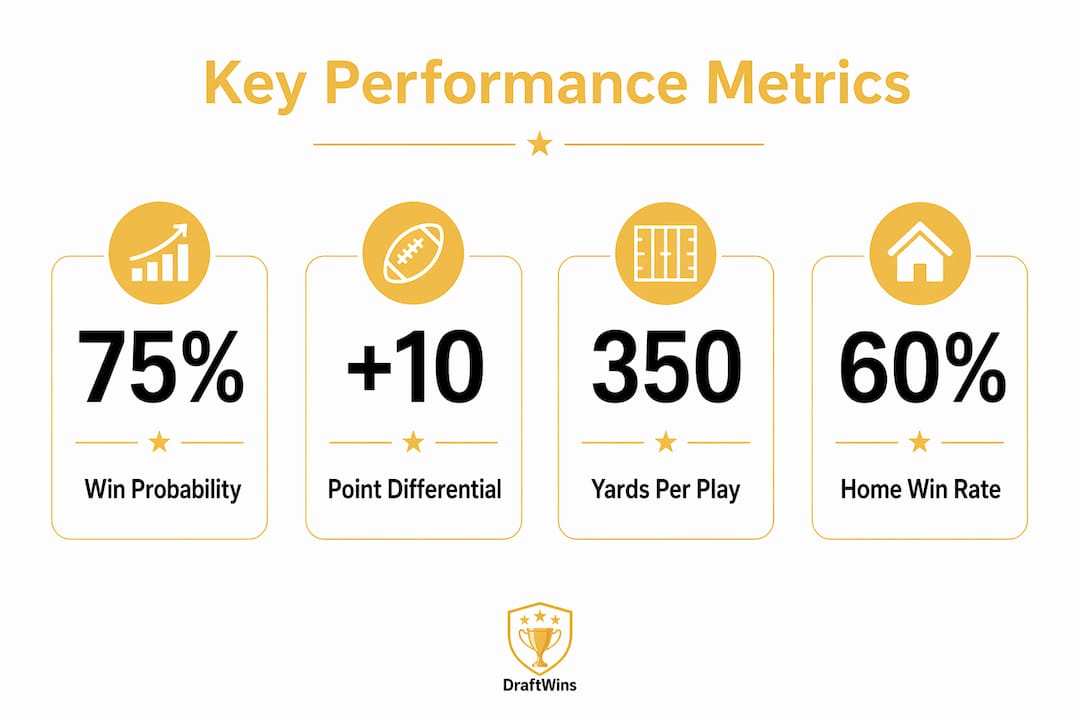
Win probability is the foundation of every sound NFL pool pick. It quantifies how likely a team is to win a specific game in a specific week, accounting for opponent strength, home-field advantage, and recent form. A team with a 75% win probability is not just "a good pick." It is a mathematically defensible choice that reduces your elimination risk.

Future value is often more important than weekly win probability alone. This concept means preserving your strongest teams for the hardest weeks on the calendar, rather than burning them early on soft matchups. If the Kansas City Chiefs face a weak opponent in week 3 but also have a favorable matchup in week 14 against a struggling defense, saving them for week 14 may protect your season far more effectively.
Pick popularity adds another layer to team performance analysis. Contrarian picks carry higher expected value in large pools because when a popular favorite loses, a large portion of the field gets eliminated. However, this math only works in your favor under one condition.
- Win probability threshold: Contrarian picks are only advantageous when the team's raw win probability exceeds 65%. Below that, the risk of elimination outweighs the competitive edge.
- Pool size matters: In a 10-person pool, pick popularity has minimal impact. In a 500-person pool, it can be the deciding factor between winning and finishing in the middle of the pack.
- Schedule mapping: Identify weeks where elite teams face the weakest opponents, then decide whether to use them now or save them for a later "choke point" week when few strong options remain.
- Avoid redundancy: Using your best teams too early leaves you with weak options in the final weeks, when the competition is fiercest and the stakes are highest.
Pro Tip: Map out the full NFL schedule in week 1 and flag three to five weeks where your top-tier teams have their most favorable matchups. Build your picks backward from those weeks, not forward from week 1.
What seasonal factors influence team performance in NFL pools?
The NFL season does not behave as a single uniform block of games. Seasonality effects from coaching changes, roster turnover, and player injuries create performance volatility that shifts dramatically from september through january. Treating all 18 weeks the same way is one of the most common mistakes pool participants make.
-
Early season (weeks 1–5): New coaching staffs, untested rosters, and limited game film make early predictions unreliable. Teams that looked dominant in the preseason can stumble badly. The priority in this phase is bankroll preservation, not chasing upsets or making bold contrarian plays.
-
Mid-season (weeks 6–12): Data stabilizes. Point differential, yards per play, and turnover margin become genuinely predictive. Teams reveal their true identity by mid-season, and metrics from this window carry the most weight for evaluating actual team strength.
-
Late season (weeks 13–18): Motivation becomes the dominant variable. Late-season team motivation outweighs raw talent, making teams fighting for a playoff spot safer picks than technically superior teams resting their starters. A 9-4 team needing a win to clinch a division is a far more reliable pick than an 11-2 team that has already locked up the top seed.
"Motivation often overrides raw talent in December games. A team with everything to play for will outperform its season averages, while a team with nothing to gain may underperform significantly. Identifying which teams are in each category is the most underrated skill in late-season pool play."
The transition between these phases requires you to adjust your evaluation criteria, not just your picks. Early-season strategy focuses on avoiding chasing upsets, while late-season success depends on reading playoff motivation correctly. Recognizing where you are in the season calendar is as important as knowing which team has the best record.
Common misconceptions about team performance in NFL pools
The biggest mistake casual pool players make is treating a team's reputation as a proxy for its current performance. Picking the Dallas Cowboys or the New England Patriots because of their historical brand, rather than their current metrics, is a losing approach. Casual players who overweight emotional attachments to name-brand teams consistently make suboptimal picks.
A second misconception is that always picking against the weakest team in the league is a reliable strategy. Even the weakest NFL teams win between 3 and 5 games per season. That level of parity means a simple "always avoid the worst team" approach will eventually get you eliminated.
| Approach | Problem | Better alternative |
|---|---|---|
| Picking by team reputation | Ignores current form and matchup context | Use point differential and yards per play |
| Always avoiding the weakest team | NFL parity makes upsets frequent | Evaluate matchup-specific win probability |
| Locking in picks without a schedule view | Wastes elite teams on easy weeks | Map picks across the full season calendar |
| Ignoring home/away splits | Home-field advantage shifts win probability | Factor in location for every pick |
Professional pool players rely on metrics like point differential, yards per play, and home/away splits rather than team narratives. Point differential tells you how dominant a team actually is, not just whether they won. Yards per play reveals offensive and defensive efficiency that the final score often hides.
Pro Tip: Before finalizing any pick, check the team's home/away record separately. Some teams are dramatically better at home, and that split can shift win probability by 8 to 12 percentage points in a given week.
Mid-season injuries are the most disruptive force in team performance analysis. A starting quarterback going down in week 8 can turn a 70% win probability into a coin flip by week 10. A rolling 6-to-9-week planning window balances foresight with the flexibility needed to absorb those shocks without losing your entire season plan.
How can you apply team performance insights to improve NFL pool outcomes?
Practical application of team performance data separates participants who understand the theory from those who actually win. The first step is building a season-long pick map, not just deciding week to week. A season-long draft pool format rewards exactly this kind of forward planning.
Balancing risk and reward across the season
- Use elite teams at choke points: Identify weeks where no strong alternatives exist and reserve your best teams for those moments. Future value planning is the most important skill in survivor-style pools.
- Go contrarian only above 65%: When a less popular team has a win probability above 65%, taking them over the crowd favorite increases your expected value in large pools.
- Adjust for pool size: Small pools of under 20 players reward safe, high-probability picks. Large pools reward calculated contrarian plays that thin the field when favorites lose.
- Track motivation weekly: In weeks 13 through 18, check each team's playoff status before finalizing picks. A team eliminated from contention is a pick to avoid regardless of its season record.
Key performance metrics to track each week
| Metric | What it measures | Why it matters for pools |
|---|---|---|
| Win probability | Likelihood of winning a specific game | Core pick selection filter |
| Point differential | Margin of victory across the season | Reveals true team strength beyond wins |
| Yards per play | Offensive and defensive efficiency | Predicts performance better than raw yardage |
| Home/away splits | Performance variance by location | Adjusts win probability for venue |
| Playoff motivation score | Stakes in a given game | Critical for late-season picks |
Adapting your draft pick strategy as the season progresses is not optional. Injuries, coaching changes, and unexpected losing streaks will force you to revise your plan. The best pool players treat their pick map as a living document, updating it every two to three weeks based on new performance data.
The NFL draft pool format you participate in also shapes how aggressively you apply these metrics. In a team-based draft pool, where you select franchises rather than individual players, team performance analysis becomes the entire game. You are not managing a roster. You are betting on organizational strength, coaching quality, and schedule positioning across a full season.
Draftwins makes team-based NFL pool play straightforward
Draftwins is built for sports fans who want the competitive thrill of an NFL pool without the complexity of managing individual player rosters. The platform lets participants draft teams directly, so your results track with how franchises perform week to week.
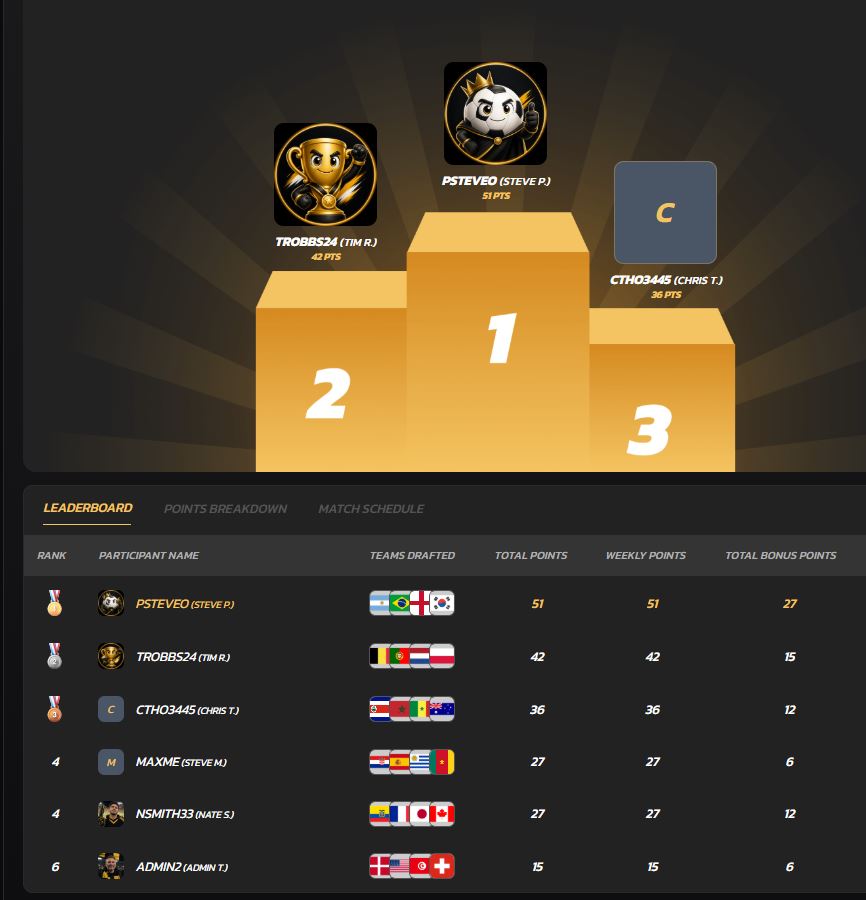
Draftwins handles automated scoring and live leaderboards, so you spend your time analyzing team performance rather than managing spreadsheets. Commissioners can set up private pools with custom scoring rules, making it easy to run a group contest that fits your crew's preferences. Whether you are applying win probability analysis, tracking playoff motivation, or planning picks around late-season choke points, Draftwins gives you the structure to put those insights to work. Visit Draftwins to set up your NFL pool and compete on the metrics that actually decide who wins.
FAQ
What is the role of team performance in NFL pools?
Team performance metrics like win probability, point differential, and schedule strength determine which picks give pool participants the best chance of surviving each week. Analyzing these factors consistently outperforms picking by team reputation or gut feeling.
How does future value affect NFL pool strategy?
Future value means saving elite teams for weeks where favorable matchups are scarce, rather than using them on easy early-season games. This approach protects your survival chances during the hardest stretches of the schedule.
When should you make a contrarian pick in an NFL pool?
A contrarian pick is only mathematically sound when the less popular team has a win probability above 65%. Below that threshold, the risk of elimination outweighs the competitive advantage of diverging from the crowd.
Why does late-season motivation matter more than team record?
Teams fighting for a playoff spot in december and january consistently outperform their season averages, while teams that have already clinched often rest starters. Late-season motivation is the most reliable predictor of game outcomes in the final weeks of the NFL regular season.
How often should you update your NFL pool pick plan?
A rolling 6-to-9-week planning window is the standard approach among experienced pool players. Revisiting your plan every two to three weeks accounts for injuries, performance shifts, and changes in playoff positioning.
Key Takeaways
Team performance analysis, not reputation or habit, is the defining skill in NFL pool competition across every format and pool size.
| Point | Details |
|---|---|
| Win probability is the baseline | Every pick should start with a team's win probability for that specific matchup, not its season record. |
| Future value beats weekly instinct | Save elite teams for late-season choke points where strong options are scarce. |
| Contrarian picks need a threshold | Only pick against the crowd when the less popular team has a win probability above 65%. |
| Seasonal phase changes your criteria | Early season favors safe picks; late season favors teams with high playoff motivation. |
| Rolling planning absorbs surprises | Update your pick map every two to three weeks to account for injuries and performance shifts. |