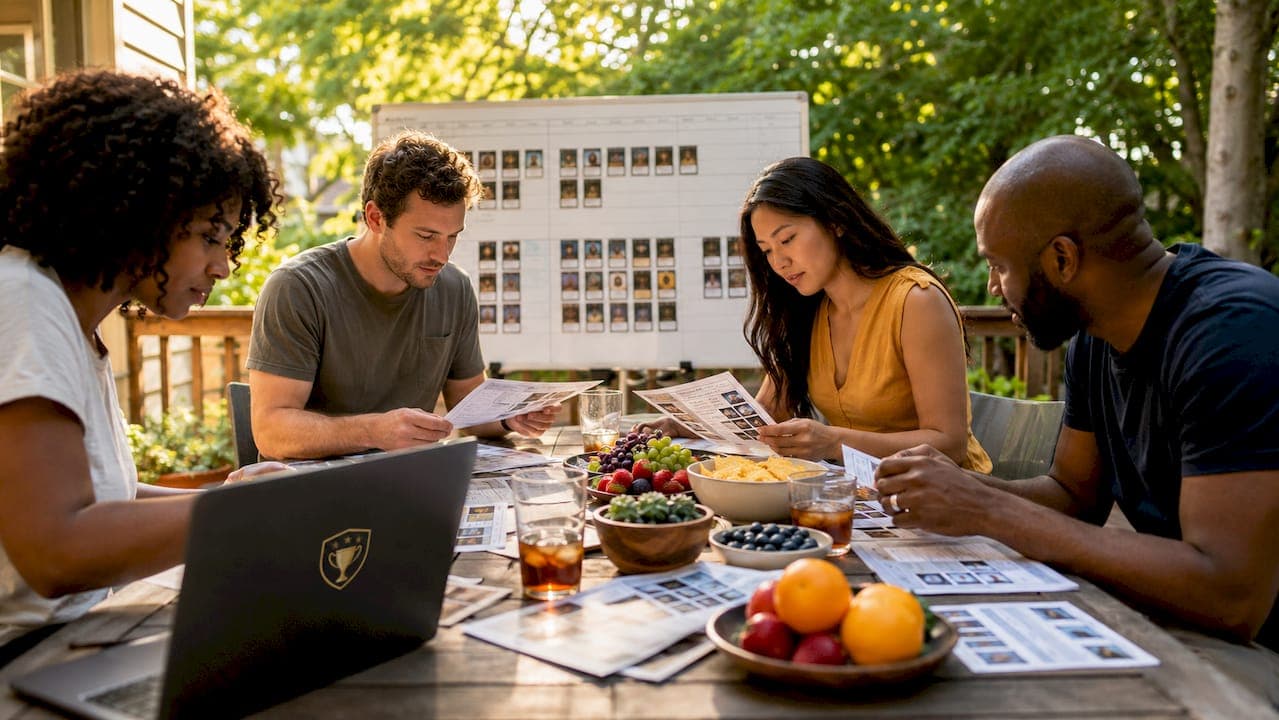
Sports pool draft night preparation is the process of organizing your team selections, event logistics, and draft strategy before and during a live group draft event. Unlike traditional fantasy sports, where you manage individual players week to week, a sports pool draft centers on selecting entire teams, which shifts your focus from roster micromanagement to smart team evaluation. The core challenge is the same as any draft night strategy: show up ready, or get outpicked by someone who did their homework. This guide covers every step, from sending invitations to managing the live pick clock, so your draft night runs smoothly and competitively.
What are the essential prerequisites for sports pool draft night preparation?
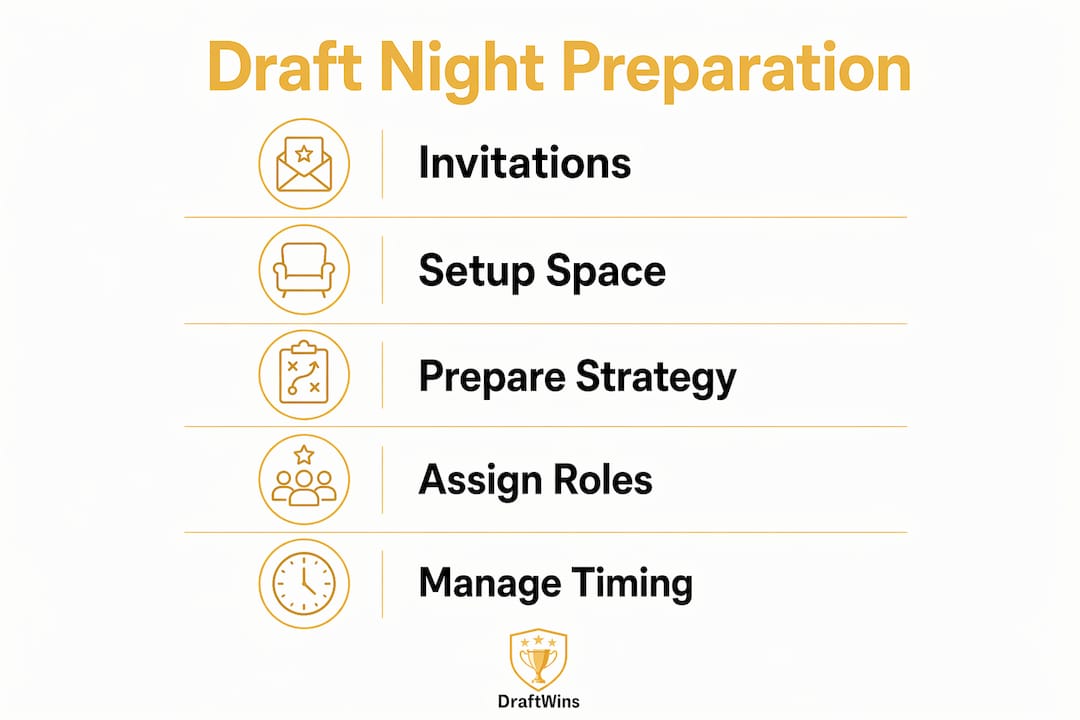
Solid sports pool draft night preparation starts at least a week before the event. The two biggest failure points are logistics and backup planning, and both are preventable with a clear checklist.
Invitations and headcount
Send formal invitations with a hard RSVP deadline at least 5 days before the draft. That window gives you accurate numbers for food, seating, and printed materials. A last-minute headcount forces you to scramble on every other detail.
Physical and digital setup
Set up both a physical draft board and a digital backup. Printed cheat sheets, positional rankings, and a visible pick order are non-negotiable. Digital app crashes and mobile data interruptions happen often enough that printed materials are your safety net, not a redundancy.
Technical equipment
- A dedicated screen or TV for the draft board, visible to everyone in the room
- Reliable Wi-Fi with a confirmed backup hotspot
- A timer device or app set to your agreed pick clock
- Power strips and charging cables for all participants
- A second screen or laptop for hybrid participants joining remotely
Space and comfort
Insufficient table space is the most common failure at home draft parties. Each participant needs room for a laptop or tablet, a phone, printed cheat sheets, and food. Standard dining tables rarely fit 10 or 12 people with all that gear. Rent or borrow folding tables if needed, and confirm your seating count matches your RSVP list.
Pro Tip: Print two full sets of cheat sheets per participant. One set is for active use during the draft, and the second is a clean backup in case of spills, tears, or a last-minute addition to the group.
How do you build a winning draft strategy before the event?
A strong draft day checklist is built on preparation that starts 48 hours out, not the morning of the draft. The participants who win pools consistently do the same things in the same order.
-
Understand your league settings. Knowing your league's starters per position dictates your entire positional targeting strategy. A pool that rewards defensive performance weights your picks differently than one that is purely offensive. Read the scoring rules before you build any rankings.
-
Build positional tiers at least 48 hours out. Finalize your positional tiers and target pick windows no later than 48 hours before the draft. Tiers group teams or players by value, so when your top target is gone, you know exactly who the next best option is without hesitating.
-
Monitor injury and roster news in the final 24 hours. The 24 hours before a draft produce the most relevant last-minute information. Check official team injury reports, starting lineup confirmations, and any late-breaking news that could shift a team's value up or down.
-
Use a decision-first drafting workflow. A decision-first approach means you identify the question before you pick, select the best available option from your tiers, and act only when you have clear reasoning. This prevents panicked picks when the clock is running and your top choice just got taken.
-
Prioritize scarce positions early. In sports pools, certain positions or team types have a short supply of elite options. Identify those positions before the draft and target them in early rounds. Missing on a scarce position in round two often means settling for a significant drop in value by round five.
Pro Tip: Write your top three targets for each round on a single index card the night before. When the draft moves fast, a quick glance at that card is faster than scrolling through a spreadsheet.
The team-based draft format also affects how you tier your selections. In a pool where you draft entire teams rather than individual players, depth and schedule strength matter more than individual star power.
How do you maintain organization and engagement during the live draft?
A well-run draft night keeps energy high and prevents the most common social failure: everyone going silent and staring at their phones. Draft party success depends on participant interaction, and a strong MC presence is the single biggest factor in preventing disengaged moments.
Designate a commissioner and MC
The commissioner should act as both timekeeper and announcer. The commissioner announces each pick aloud and calls out the clock with 30 seconds remaining. That vocal presence keeps the room focused and gives the draft a live-event feel rather than a quiet study session.
Set and enforce the pick clock
A 60 to 120 second draft timer is the standard range for maintaining pace and pressure across a multi-hour draft. A 60-second clock creates urgency and keeps the total draft time manageable. A 90-second clock gives participants enough time to think without letting the event drag. Anything beyond 2 minutes per pick risks losing the room's energy entirely.
Managing hybrid drafts
Hybrid drafts, where some participants join remotely, require deliberate setup. Remote participants need a dedicated screen showing the room and the draft board, and in-person participants need regular reminders to acknowledge and engage remote players. Assign one person specifically to monitor the remote feed and relay any technical issues immediately. Most groups underestimate hybrid logistics until the draft is already underway.
Seating and flow
Arrange seating so every participant can see the main draft board without turning around or craning their neck. Place food and drinks on a separate table away from the draft area to reduce clutter. Keep the pick order posted visibly, either on a whiteboard or a screen, so no one has to ask whose turn it is.
What are the most common draft night mistakes to avoid?
Most draft night problems are predictable. The same mistakes appear at home drafts repeatedly, and all of them are fixable before the event starts.
-
Skipping the backup plan. Relying solely on a digital app is the fastest way to lose control of your draft. App crashes, Wi-Fi drops, and dead phone batteries all happen during long events. A physical draft board and printed cheat sheets are your fallback, and they should be ready before the first pick.
-
Ignoring the RSVP deadline. Late RSVPs mean you underestimate food, seating, and printed materials. A participant who shows up without a seat or a cheat sheet disrupts the entire draft flow.
-
Failing to adapt your strategy mid-draft. Your pre-draft tiers are a starting point, not a script. When a run on a specific position depletes your targets early, you need to pivot to the next tier immediately. Participants who stick rigidly to a plan after the board shifts consistently end up with weaker selections.
-
Underestimating table space. Each participant needs room for multiple devices, printed materials, and food. Crowded tables create frustration and slow down picks. Plan for more space than you think you need.
-
No designated MC. A draft without a vocal commissioner loses energy fast. Silence between picks is the enemy of a good draft night.
Pro Tip: Always prepare a backup physical draft board and a second set of cheat sheets, stored separately from your primary setup. If your main setup fails mid-draft, you can switch to the backup in under two minutes without losing your place.
For more on building a fantasy football draft strategy that holds up under live-draft pressure, the principles of tier-based selection and positional scarcity apply directly to sports pool formats as well.
Key Takeaways
Successful sports pool draft night preparation requires logistics, strategy, and live event management working together from at least 5 days before the draft through the final pick.
| Point | Details |
|---|---|
| Send invitations early | Use a hard RSVP deadline at least 5 days out to plan food, seating, and materials accurately. |
| Build tiers 48 hours out | Finalize positional tiers and target windows before the draft to avoid panicked picks under the clock. |
| Set a 60–90 second pick clock | A timed pick clock maintains pace and energy across a multi-hour draft event. |
| Prepare physical backups | Print cheat sheets and set up a physical draft board as a fallback for any digital failure. |
| Designate a commissioner MC | A vocal commissioner who announces picks and calls the clock keeps the room engaged and the draft moving. |
Draftwins makes your draft night easier to run
Running a sports pool draft night takes real coordination, from managing pick timers to keeping remote participants in the loop. Draftwins is built specifically for group draft pools, letting participants draft entire teams rather than managing individual player rosters week to week.
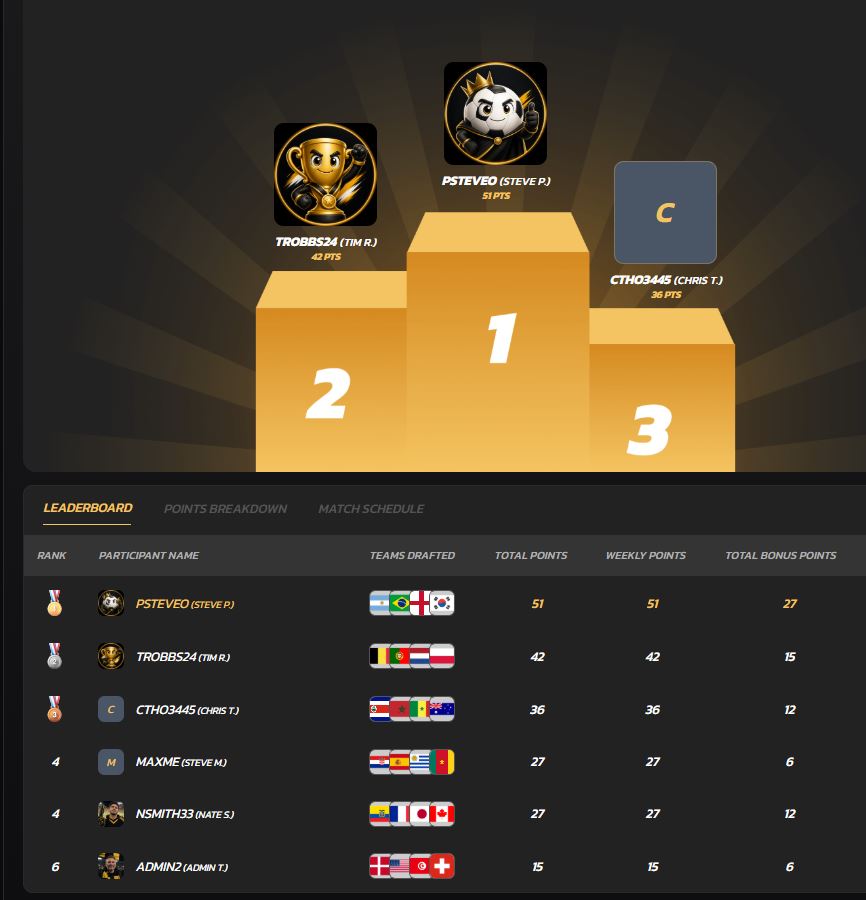
Draftwins handles automated scoring and live leaderboards, so the commissioner spends draft night running the event instead of tracking points manually. Private pools let you set your own scoring rules and invite your group directly. Draftwins is currently live with World Cup pools, with NFL and College Football pools launching next. If you want a platform that removes the logistical weight from draft night and puts the focus back on competition, visit Draftwins to set up your pool.
FAQ
How far in advance should I prepare for a draft night?
Start at least 5 days before the draft for logistics like invitations and seating, and finalize your draft strategy no later than 48 hours before the event.
What is the recommended pick timer for a sports pool draft?
A 60 to 90 second pick clock is the standard recommendation. It maintains pace and pressure without rushing participants into poor decisions.
Do I need a physical draft board if I have a digital app?
A physical draft board and printed cheat sheets are necessary backups. Digital apps crash and Wi-Fi fails, and a printed setup lets the draft continue without interruption.
How do I keep remote participants engaged in a hybrid draft?
Assign a dedicated screen showing the room and draft board to remote participants, and designate one in-person person to monitor the remote feed and relay any issues during the event.
What is the biggest mistake people make on draft night?
Insufficient table space is the most common physical failure at home drafts. Each participant needs room for a laptop, phone, printed materials, and food, which exceeds what standard dining tables provide.