
The simplest no-research sports competition format is a team-draft pool: participants draft whole teams instead of individual players, then sit back and watch the season play out. No injury reports. No waiver wires. No weekly lineup decisions. Three things to set up before you launch: draft order and format, a scoring template, and where you'll run it.
- Draft teams, not players — one pick, done for the season
- Automated scoring (on a platform like Draftwins) tracks wins and bonuses without any weekly input
- Social draft takes 20–30 minutes and works in a group chat, video call, or in person
Table of Contents
- Why drafting whole teams removes the research burden
- Commissioner checklist: launch your pool in 5–15 minutes
- Which draft method should you use?
- Scoring templates that keep tracking simple
- Rules and edge cases to publish before the draft
- Platform vs. manual: which setup is right for your group?
- How to go live on Draftwins in under an hour
- Draftwins makes running a no-research pool simple
- Useful templates and resources
- Draftwins: the fastest path from idea to live pool
- Sources
- FAQ
Why drafting whole teams removes the research burden
Traditional fantasy sports require you to know which running back is nursing a hamstring, which wide receiver just got promoted to the starting lineup, and which defense is playing a weak schedule in Week 11. A team-draft pool cuts all of that. You pick a franchise, and that franchise's season record does the work.
The behavioral payoff is real. When participants don't need to research player stats, they show up to the draft for the fun of it rather than dreading the prep. World Cup team-draft pools have used snake drafts and slow-draft formats successfully for years precisely because the picks are intuitive: everyone has a rough sense of which national teams are strong, and that gut-level knowledge is enough to play.
For NFL or College Football pools, the same logic holds. A casual fan knows the Kansas City Chiefs are a safe pick; a contrarian might grab a dark-horse team hoping for a playoff run. Research on pool strategy confirms that in smaller pools, safer picks tend to outperform, while larger pools reward more contrarian choices — which means even the "obvious" picks stay interesting depending on your group size.
Commissioner checklist: launch your pool in 5–15 minutes
Practical pool guides consistently recommend a one-page rulesheet and a copy-paste invite to cut onboarding friction. Here's the full pre-launch sequence:
- Set pool size — 4–16 participants is the sweet spot for team-draft pools.
- Pick a draft date and time — give participants at least 48 hours' notice.
- Choose a draft order method — random lottery, snake, or pots (details in the next section).
- Select a scoring template — wins-based with a small playoff bonus is the easiest default.
- Decide on a tiebreaker — head-to-head record, then total wins, then coin flip.
- Write your one-page rulesheet — trade policy (usually none), eligibility, and what happens if a game is canceled.
- Send the invite — include draft date/time, join link, and the scoring summary.
Sample invite text (copy-paste ready):
| Step | Time estimate |
|---|---|
| Pool setup (platform or spreadsheet) | 5–10 minutes |
| Sending invites and collecting RSVPs | 5 minutes |
| Live draft (8–12 participants) | 20–30 minutes |
| Slow draft (async, 24-hour pick window) | 1–3 days |
Which draft method should you use?
The right method depends on your group size and how much time you have on draft day. Snake drafts and slow-draft formats work well for pools as small as 4 and as large as 16 without requiring any pre-draft analysis.
Random/lottery order is the fastest. Assign numbers, draw from a hat or use a random number generator, and go. Every participant gets a fair shot with zero strategy overhead.
Snake draft is the most common structure for 6–16 participants. Round 1 goes 1 through N; Round 2 reverses. The person who picks last in Round 1 picks first in Round 2, which balances the advantage of early picks. This is the default for most casual pools.
Pots/seeding works well when your group has strong opinions about team tiers. Split teams into Pot 1 (favorites), Pot 2 (contenders), and Pot 3 (long shots), then draw one team per pot per participant. Drafting by pots keeps perceived strength balanced across the pool without requiring anyone to study rankings in depth.
Draft-by-region is a fun variation for World Cup pools: group teams by confederation, then let participants draft one team per region. It guarantees geographic variety and prevents one person from hoarding all the European powerhouses.
Pro Tip: Set a 60-second pick clock during live drafts. Analysis paralysis is the single biggest time-killer in casual pools. A visible timer keeps the energy up and the draft under 30 minutes.
Scoring templates that keep tracking simple
The goal is a system where participants never have to log in weekly to submit anything. Research on scoring weights shows that modest bonus weighting preserves late-season excitement without pushing participants toward overly strategic pick behavior — which is exactly what you want in a casual, no-research pool.
Two ready-to-use templates:
- Template A — Season Wins + Playoff Bonus: 1 point per regular-season win, 3 bonus points for a playoff appearance, 5 bonus points for reaching the championship game, 8 bonus points for winning the championship. Clean, automatic, and keeps everyone watching through the postseason.
- Template B — Wins + Conference/Group Stage Bonus: 1 point per win, 2 points for advancing from the group stage (World Cup) or winning your division (NFL), 5 points for a conference championship, 8 points for the title. Adds a mid-season check-in moment without requiring any participant action.
Studies on multi-entry pool strategies confirm that simpler win-based scoring reduces strategic gaming while keeping casual participants engaged. Template A is the recommended default for first-time commissioners.
Rules and edge cases to publish before the draft
State these up front in your rulesheet. Disputes almost always trace back to something that wasn't written down before the season started.
Minimum rules to publish:
- Trade policy: For no-research pools, the standard is no trades. It keeps things simple and prevents anyone from feeling pressured to negotiate mid-season.
- Canceled or suspended games: Points are awarded only for games officially counted in the standings. Forfeits and postponements follow the league's official ruling.
- Draft eligibility: All teams must be eligible to compete at the time of the draft. If a team withdraws before the season starts, the affected participant gets the next available team by draft order.
Tiebreaker sequence: head-to-head record between tied participants, then total regular-season wins, then playoff bonus points, then a coin flip.
For larger pools, consider a fairness cap on seeding: Ultiworld's draft pool proposal suggests limiting how far a team can be moved from its pre-draft ranking, which prevents any single participant from stacking all the top seeds.
Legal note: This pool is for entertainment only. No entry fees are collected, no prize pools are held, and no wagers are placed. If you use Draftwins, the platform charges a hosting fee to the commissioner; participants join free.
Platform vs. manual: which setup is right for your group?
| Factor | Platform (e.g., Draftwins) | Manual (spreadsheet/email) |
|---|---|---|
| Setup time | 5–10 minutes | 10–20 minutes |
| Scoring updates | Automated, real-time | Manual, weekly |
| Live leaderboard | Yes | No (email updates only) |
| Remote participants | Handled automatically | Requires coordinator effort |
| Cost | One-time hosting fee (commissioner) | Free |
| Best for | Groups of 8+, remote teams, busy commissioners | Small in-person groups, tech-averse participants |
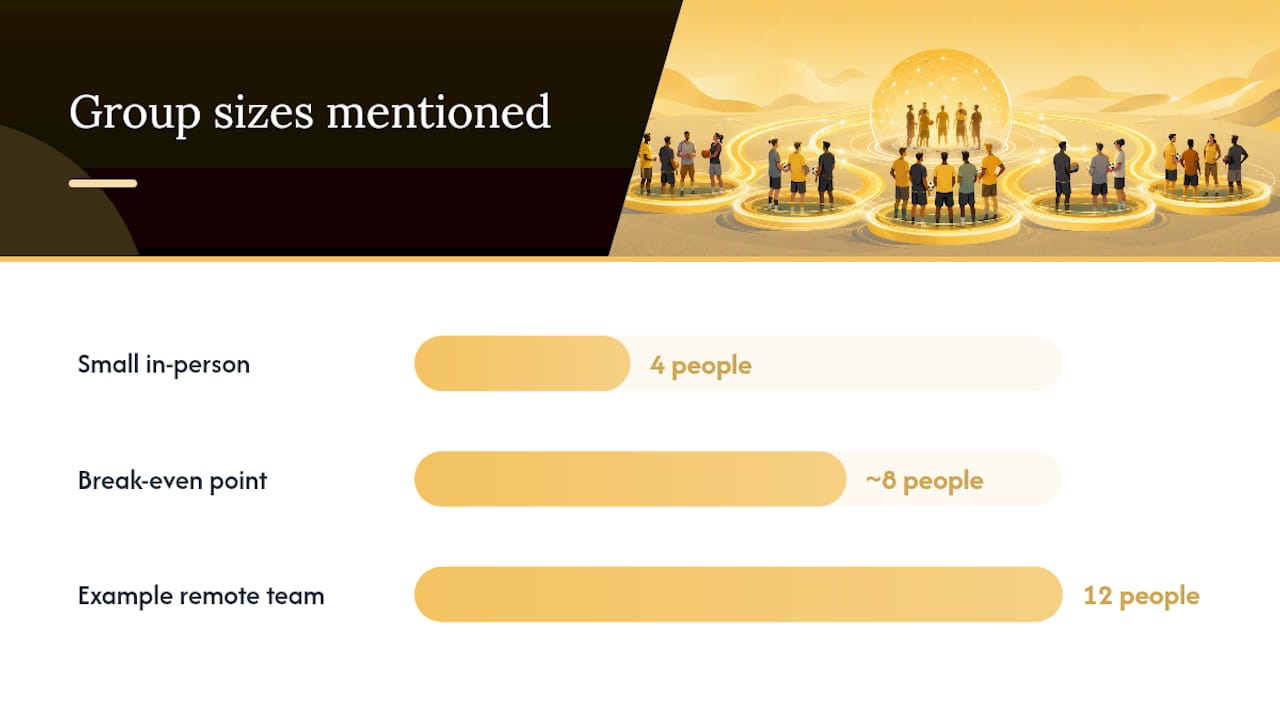
Running a pool without spreadsheets is the main reason commissioners pay a hosting fee. For a group of 12 remote coworkers, manually tracking wins every week across a full NFL season adds up to several hours of work. A platform absorbs that entirely.
For a four-person in-person group where everyone sees each other weekly, a shared Google Sheet works fine. The break-even point is roughly 8 participants or any group where at least a few people are joining remotely.
How to go live on Draftwins in under an hour
Draftwins is built specifically for team-draft pools — you draft franchises, not players, so the platform matches the format exactly.
- Go to Draftwins and create a private pool.
- Select team-draft mode and choose your sport (World Cup, NFL, or College Football).
- Pick your scoring template or customize it using the options above.
- Set your draft date and enable automated reminders so participants get a nudge before the clock starts.
- Copy your invite link and send it via email, Slack, or group text.
- Run the live draft in the platform's quick-pick UI, or enable slow-draft mode for a 24-hour async pick window.
- Once the draft closes, automated scoring and live leaderboards handle the rest of the season.
Participants join for free. The commissioner pays a one-time hosting fee. No entry fees are collected, no prize money changes hands through the platform.
Pro Tip: Pre-configure your scoring template before you send invites. Participants who see the scoring rules in the invite are far less likely to ask questions on draft day, which keeps the draft moving.
Draftwins makes running a no-research pool simple
The simplest no-research sports competition format is a team-draft pool. Setup takes 5–15 minutes, the draft runs 20–30 minutes, and automated scoring handles the rest of the season without any weekly input from participants.
| Point | Details |
|---|---|
| Format choice | Team-draft pools (draft teams, not players) require zero player research. |
| Setup time | Commissioner setup takes 5–15 minutes; live draft runs 20–30 minutes. |
| Scoring default | Season wins plus a playoff bonus keeps late-season interest without weekly input. |
| Platform vs. manual | Groups of 8+ or remote participants benefit most from automated scoring and leaderboards. |
| Draftwins | Handles automated scoring, live leaderboards, and team-draft mode; commissioners pay one hosting fee. |
Useful templates and resources
Copy-paste invite text:
One-page rulesheet outline:
- Pool name, sport, season dates
- Draft order method and date/time
- Scoring template (Template A or B from above)
- Trade policy (recommended: none)
- Tiebreaker sequence
- Platform fee note and join instructions
Helpful links:
- Team-draft pool formats overview
- Draft competition styles guide
- Low-maintenance fantasy options for casual fans
- World Cup pool how-to (The Football Girl)
Draftwins: the fastest path from idea to live pool
Draftwins is built for commissioners who want a private pool running in under an hour, with no spreadsheets and no weekly scoring work. You set the draft, invite your group, and the platform handles automated scoring and live leaderboards for the full season. Participants join free; the commissioner pays a single hosting fee to create the pool.
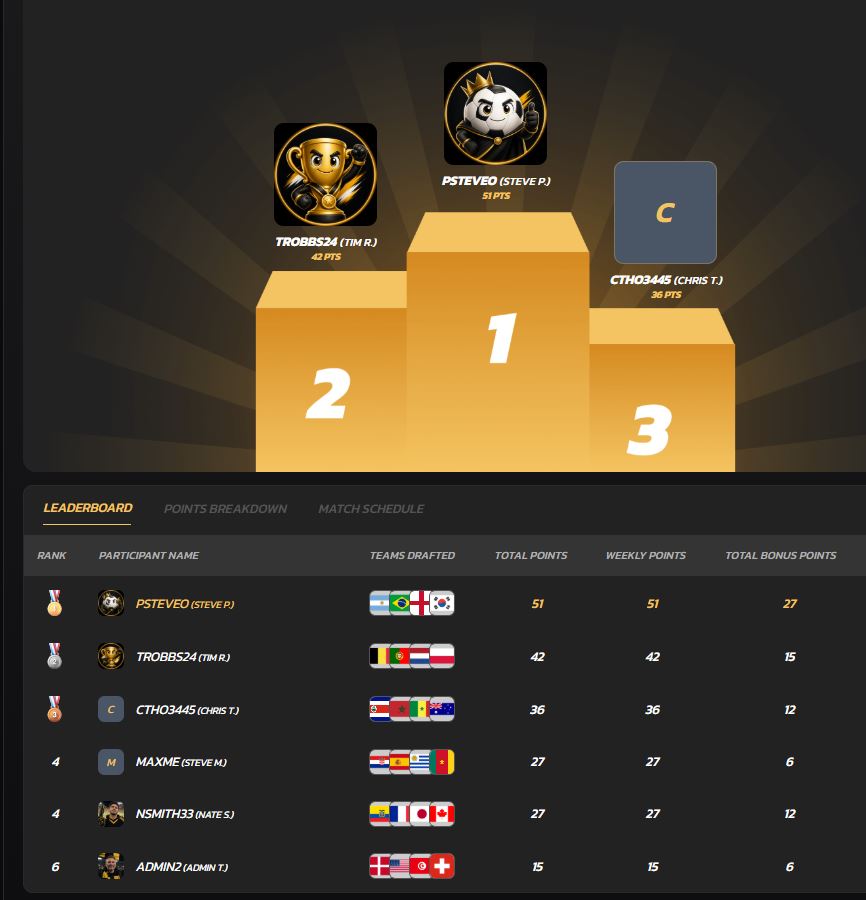
No entry fees pass through the platform, no prize pools are held, and no wagers are involved. Create your private team-draft pool at Draftwins and send your first invite today.
Sources
- A probability model for betting pools (Clair & Letscher)
- Pick Your Poison: A Case for Drafting Pools at Club Nationals - Ultiworld
- Simplifying the madness of multiples: multi-entry strategies (Decary et al.)
- How to Run a Proper FIFA World Cup Pool | The Football Girl
FAQ
What is a no-research team-draft pool?
A team-draft pool lets participants draft whole sports franchises instead of individual players, so no player stats, injury reports, or lineup decisions are needed. Scoring runs automatically based on team results.
How long does it take to set up a team-draft pool?
Commissioner setup takes 5–15 minutes; a live draft with 8–12 participants typically runs 20–30 minutes.
What's the easiest scoring system for a casual pool?
One point per regular-season win plus a playoff bonus (3–8 points depending on how far the team advances) keeps scoring simple and maintains interest through the postseason.
Does Draftwins charge participants to join?
No. Participants join a Draftwins pool for free. The commissioner pays a one-time hosting fee to create the private pool.
What's the best draft method for a small group?
A snake draft works well for 4–16 participants: picks go 1 through N in Round 1, then reverse in Round 2, balancing the advantage of early selections without any research required.