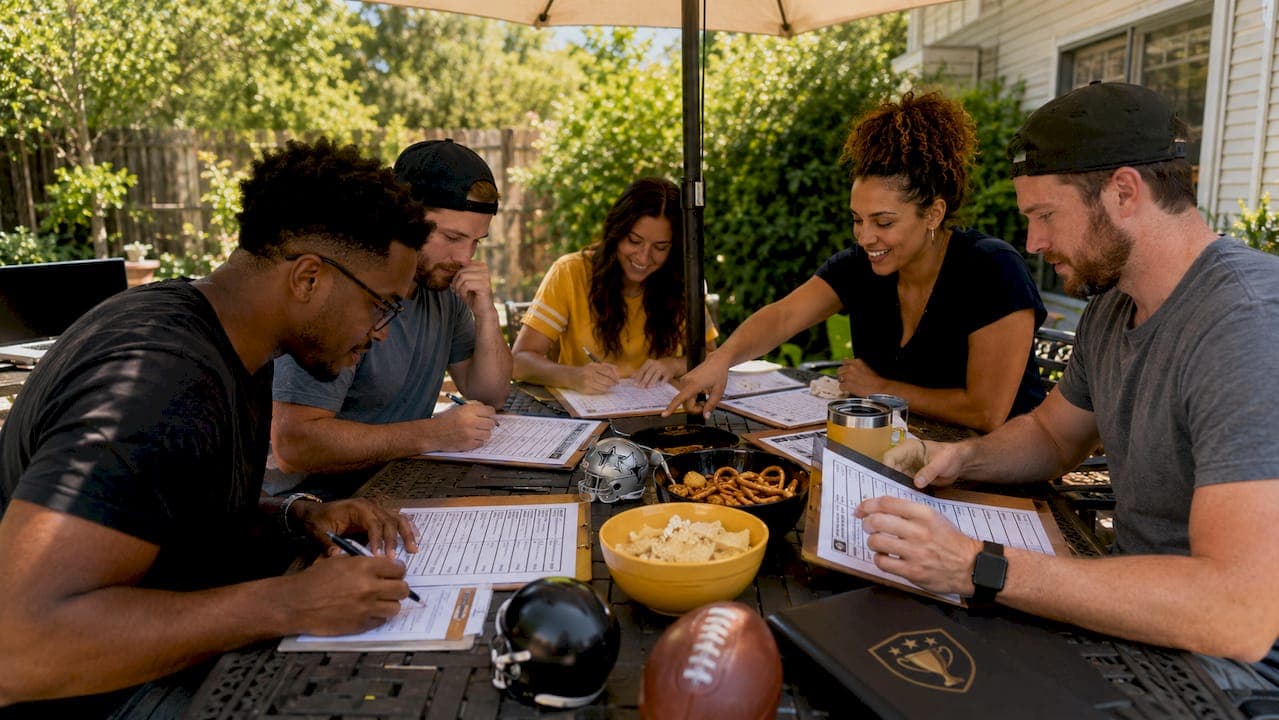
Draft competition styles for sports enthusiasts are structured formats that determine how participants select teams or players in group sports contests. The best formats combine fairness, engagement, and fun without burying players in lineup management. Snake drafts, best ball tournaments, and round robin formats each serve different group sizes and goals. Platforms like Draftwins have built their entire experience around this insight: when you draft a whole team instead of managing individual players, you spend more time enjoying the competition and less time stressing over injuries and weekly roster decisions.
1. What are the most popular draft competition styles for sports enthusiasts?
The snake draft is the most widely used format in casual group play. It works by reversing the pick order each round, so the person who picks first in round one picks last in round two. Snake drafts mitigate picking order imbalances effectively, making them the preferred choice for amateur group drafts. That fairness is why they remain the default format for first-time groups.
Best ball tournaments take a different approach. You draft your roster once, and the platform automatically counts your highest-scoring players each week. Standard best ball tournaments use 12-team, 22-round slow drafts with 4-hour pick clocks, Big 3 scoring, and fixed payouts. No post-draft roster moves are allowed, which removes lineup anxiety entirely.

Round robin formats guarantee every participant plays every other participant at least once. The math is fixed: 8 participants require 28 matches across 7 rounds. That thoroughness is the format's biggest strength and its biggest scheduling challenge.
Bracket formats, including single-elimination and double-elimination, work best for larger tournaments. In double-elimination brackets, a bracket reset match is required if the loser-bracket winner defeats the winner-bracket champion. That rule preserves the integrity of the format and prevents accidental shortcuts to the title.
Pro Tip: For a first-time group of 8 to 12 people, start with a snake draft. It takes under 30 minutes, requires no prior knowledge of tournament structures, and produces a fair result every time.
2. How to choose the best draft style for your group or event
Choosing the right format starts with your group size and available time. Round robin works best for groups under 16 because the match count stays manageable. Once you exceed 16 participants, scheduling demands grow fast and a group-plus-playoff hybrid becomes the smarter call.
Your group's competitive intent matters just as much as its size. Casual groups benefit from snake drafts because the rules are simple and the draft itself is the main event. Competitive groups get more out of slow drafts and best ball formats, where draft strategy prioritizes player upside over consistency to maximize potential win weeks.
Here is a practical framework for picking your format:
- Count your participants. Groups of 3 to 9 fit snake or round robin. Groups of 10 to 15 fit best ball or slow draft. Groups of 16 or more need bracket or group-plus-playoff structures.
- Set a time budget. A snake draft for 10 people takes roughly 30 to 45 minutes. A 22-round slow draft with 4-hour clocks runs over multiple days.
- Decide on roster management. If your group wants to set it and forget it, best ball is the answer. If weekly lineup decisions are part of the fun, a standard snake draft league works better.
- Match complexity to experience. New groups should avoid double-elimination brackets on their first run. The rules require explanation, and a confused bracket kills momentum.
- Plan for dropouts. Slow drafts with overnight pauses need a no-redo policy and pre-draft pick queues to prevent stalling when someone goes offline.
Simpler tournament formats consistently produce higher participant satisfaction by reducing fatigue and scheduling complexity. That finding holds across amateur sports leagues, casual gaming groups, and office pools alike.
3. Unique and creative draft styles to boost engagement
Team drafting is the most underused format in casual sports groups. Instead of selecting individual players, you draft entire squads or national teams. This approach removes injury risk from the equation entirely and lets participants apply their sports knowledge strategically during selection. Draftwins is built around exactly this model, letting groups draft full teams for World Cup pools, NFL, and College Football contests.
Tier-based drafting, sometimes called pot drafting, divides available teams or players into quality tiers before the draft begins. Each participant must select one team from each tier, which prevents anyone from stacking all the top options. The result is a more balanced field and longer competitive interest throughout the event.
Hybrid formats combine live performance challenges with the draft itself. For example, groups can award bonus draft picks to participants who correctly predict first-round outcomes before the draft begins. That pre-draft challenge layer adds a second game on top of the main competition.
- Upward and downward draft order movement: Adjust pick positions based on prior-week results. The last-place finisher moves up in the next round's order, keeping every participant invested even after a bad week.
- Draft queues with strict no-redo rules: Enforcing a no-redo pick policy with pre-draft queues prevents stalling and keeps live drafts moving at a consistent pace.
- Blind auction drafts: Each participant gets a fixed budget and bids silently on teams or players. The highest sealed bid wins. This format rewards research and punishes panic bidding.
- Survivor-style drafts: Each round, the participant whose drafted team performs worst is eliminated. The format creates weekly drama and keeps every matchup meaningful.
Pro Tip: If you run a team draft for a World Cup pool, assign each participant two or three national teams instead of one. It extends competitive interest past the group stage and gives everyone a reason to watch more matches.
4. Comparison of draft competition styles: key features, pros, and cons
Each format serves a different purpose. The table below maps the five most common styles across the factors that matter most to group organizers.
| Format | Fairness | Scheduling complexity | Engagement | Ideal group size |
|---|---|---|---|---|
| Snake draft | High | Low | Moderate | 6–14 |
| Best ball | High | Low to moderate | High | 8–14 |
| Round robin | Very high | High | High | 4–16 |
| Bracket (double-elim) | Moderate | Moderate | Very high | 8–32 |
| Team draft | High | Low | Very high | 4–20 |
Snake drafts win on simplicity. Best ball wins when your group wants competition without weekly maintenance. Round robin wins on pure fairness but demands the most calendar coordination. Double-elimination brackets create the most dramatic moments but require participants to understand the reset rule before play begins. Team drafts, the format Draftwins centers its platform on, deliver high engagement with low overhead because participants draft once and follow team performance rather than tracking individual player stats.
The Perfect Draft® Challenge illustrates how scoring nuances change strategy: participants earn 6 points for an exact slot pick and 1 point for a correct team-player match. That gap in point values forces participants to weigh precision against coverage, which is a strategic layer most casual formats skip entirely.
5. Situational recommendations: best formats for different sports and groups
The right format depends on the sport, the group size, and how much time everyone wants to invest. These recommendations cover the most common scenarios sports groups face.
For football pools (NFL and College Football):
- Small groups of 3 to 9: use a quick snake draft with 10 to 15 rounds. The draft takes under an hour and produces clear weekly matchups.
- Medium groups of 10 to 15: slow draft best ball works well. The 4-hour pick clock with overnight pauses is the standard for this format and keeps the draft from dragging.
- Large groups of 16 or more: split into groups of 4 to 6, run a round robin within each group, then advance top finishers to a playoff bracket.
For World Cup and soccer pools:
- Team drafting is the natural fit. Assign 2 to 3 national teams per participant and score based on match results and advancement rounds.
- Pot drafting by seeding tier prevents one participant from landing all the tournament favorites.
For flag football and amateur leagues:
- Round robin formats work well for groups under 12 because every team plays every other team. That structure builds social interaction and reduces complaints about uneven scheduling.
- For larger amateur leagues, a group-plus-playoff hybrid keeps the regular season short and the playoff bracket competitive.
General tips for any format:
- Announce the draft format at least one week before the event so participants can prepare.
- Use live leaderboards to maintain engagement between rounds. Groups with visible standings stay more active throughout the competition.
- Keep the draft window short for casual groups. Long pick clocks favor experienced players and frustrate newcomers.
Key takeaways
The most effective draft competition style matches your group's size, time budget, and competitive goals rather than defaulting to the most complex format available.
| Point | Details |
|---|---|
| Snake drafts suit casual groups | Alternating pick order creates fairness without requiring any prior tournament knowledge. |
| Best ball removes weekly stress | No post-draft roster moves means participants focus on results, not lineup decisions. |
| Round robin demands scheduling | 8 participants generate 28 matches, so this format works best for groups under 16. |
| Team drafts maximize engagement | Drafting whole squads eliminates individual player injury risk and simplifies scoring. |
| Format complexity should match experience | New groups benefit from simple formats; double-elimination brackets require rules explanation before play begins. |
Draftwins makes team draft contests easy to run
Running a group draft contest used to mean spreadsheets, manual scoring, and someone spending their weekend updating standings. Draftwins changes that by letting commissioners create private pools with custom scoring and rules, while automated scoring and live leaderboards handle the rest.
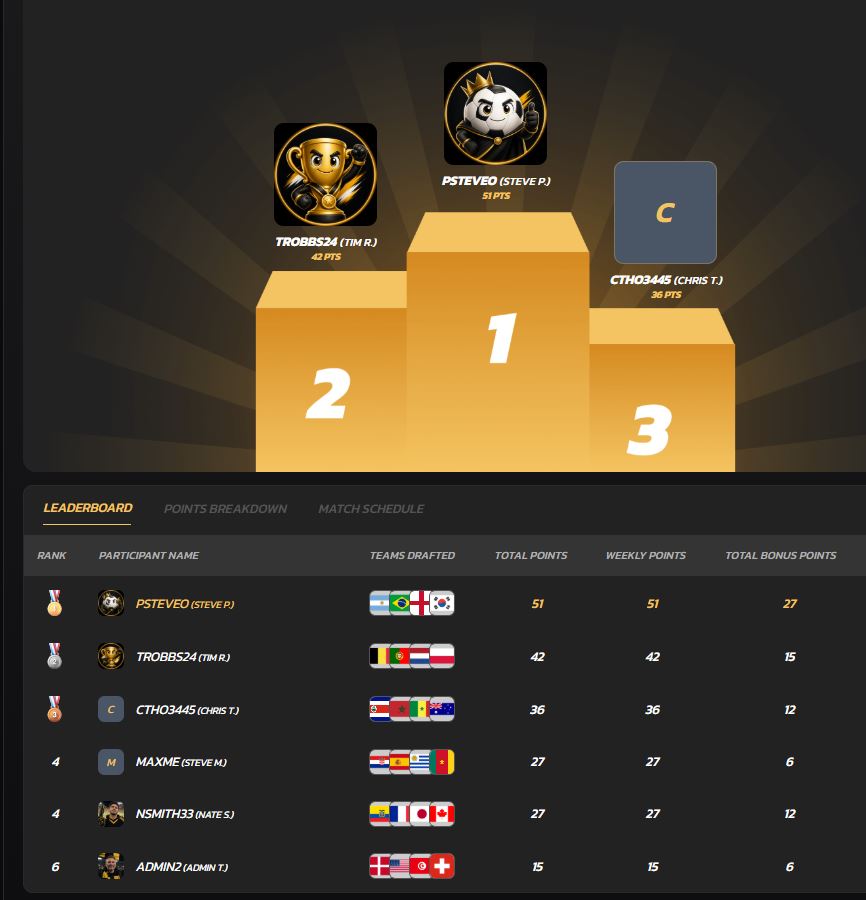
Draftwins is built around the team draft model, which means participants draft full squads instead of individual players. That single design choice removes lineup anxiety and keeps everyone focused on the competition. Draftwins launches with World Cup pools, with NFL and College Football pools to follow. If your group wants a team-based draft experience without the overhead of a traditional fantasy league, Draftwins is the platform built for exactly that.
FAQ
What is a snake draft in sports competitions?
A snake draft reverses the pick order each round so no single participant holds a permanent advantage. It is the most common format for casual group sports contests because the rules are simple and the results are fair.
What is best ball drafting?
Best ball is a format where you draft your roster once and the platform automatically scores your highest-performing players each week. No lineup management is required after the draft ends.
How many matches does a round robin tournament require?
A round robin with 8 participants requires 28 matches across 7 rounds, calculated using the formula N*(N-1)/2. The format guarantees every participant faces every other participant at least once.
What is a team draft and how does it differ from a player draft?
A team draft has participants select whole squads or national teams instead of individual players. This removes individual player injury risk and simplifies scoring, making it ideal for casual groups and World Cup pools.
What draft format works best for large groups?
Groups of 16 or more work best with a group-plus-playoff hybrid. Participants are split into smaller round robin groups, and top finishers advance to a bracket stage for the final rounds.