
For casual groups, the best low-complexity football contest platforms are private team-draft pools with automated scoring, live leaderboards, and free participant access. Draftwins fits that description exactly. You draft teams, not individual players, so there's no lineup management, no injury stress, and no reason for anyone to drop out by Week 3.
Why this works for your group:
- Automated scoring means no one has to manually tally results
- Live leaderboards keep everyone engaged between matches
- Private pools let you control who's in and set your own rules
- Participants join free; only the commissioner pays a one-time hosting fee.
Ready to get started? Create a pool on Draftwins and have it running before kickoff.
Table of Contents
- Why do low-complexity contest formats outperform traditional fantasy for casual groups?
- What features does a true low-complexity football contest platform need?
- Which contest format is right for your group?
- What red flags should you watch for before choosing a platform?
- Are DIY spreadsheet pools worth the hassle?
- Key Takeaways
- Draftwins makes running a casual football pool genuinely easy
- Useful sources and next steps
- FAQ
Why do low-complexity contest formats outperform traditional fantasy for casual groups?
The short answer: simple formats meet fans where they already are. Sports fans already text each other predictions, argue about which team will cover, and check scores together on game day. A well-designed participation layer sits on top of that existing behavior rather than demanding new habits. Industry analysts confirm the next phase of fan engagement is structured participation, not invented engagement.
The numbers back this up. Research on fan viewing behavior found that 56.3% of fans overall prefer interactive viewing experiences, and that figure climbs to 74.2% among viewers under 35. That's not a niche preference.
The participation insight: Simple prediction mechanics convert casual interest into recurring engagement. A fan who picks a winner once is far more likely to check back for the next match than one who just watched passively.
Think about a Monday morning office pick'em. Someone sends a group chat link, eight coworkers make their picks in two minutes, and by Tuesday everyone's checking the leaderboard. No spreadsheets, no commissioner chasing people down. Or picture a watch-party team-draft during a World Cup group stage weekend: each person drafts two or three national teams, and the automated scoring handles the rest while everyone watches together. Both scenarios work because the format matches the social moment.
Free-to-play formats lower friction at first interaction and raise long-term retention, which is exactly what keeps a friend-group pool alive through an entire season.
What features does a true low-complexity football contest platform need?
Before you commit to any platform, run it through this checklist. These are the features that actually reduce your workload as a commissioner.
Core features to confirm:
- Automated scoring: No manual entry after each match. The platform pulls results and updates standings automatically.
- Live leaderboards: Participants can check standings anytime without asking you.
- Private pools: Invite-only access so your pool stays between your group.
- Simple entry flow: Participants should be able to join and make picks in under five minutes, on any device.
- Web-based access: No app download required lowers the barrier for less tech-savvy participants.
- Commissioner tools: Rule customization, scoring adjustments, and the ability to manage your pool without contacting support for every change.
Trust signals that matter:
- Transparent pricing (what does the commissioner pay, and when?)
- Clear privacy policy and data-handling terms
- Explicit statement that the platform does not accept wagers or hold prize pools
- Reachable customer support before and during your contest
Dedicated pool software automates scoring, standings, and notifications, and reduces errors compared with manual tracking. That last point matters more than it sounds. Scoring disputes are the fastest way to kill a group pool.
Pro Tip: Set your scoring rules and tiebreakers before you send invites. Changing rules mid-contest creates disputes. Most platforms let you lock settings after the pool opens, so use that feature.
For low-maintenance fantasy options that cover these features in more depth, the Draftwins blog breaks down what each format demands from organizers.
Which contest format is right for your group?
Prefer team-draft or pick'em for social groups; use brackets or predictors for single-tournament weekends. Here's how each format stacks up:
| Format | Best for | Organizer effort | Typical session |
|---|---|---|---|
| Team-draft | Season-long leagues, watch parties | Very low after setup | Full season or tournament |
| Pick'em | Office pools, weekly contests | Low (weekly picks) | Week-by-week |
| Predictor/bracket | Single tournaments (World Cup, playoffs) | Low, one-time setup | Tournament weekend |
| Fantasy-lite | Groups wanting some player involvement | Moderate | Season-long |
| Full bracket | March Madness-style events | Low setup, no ongoing work | Single event |
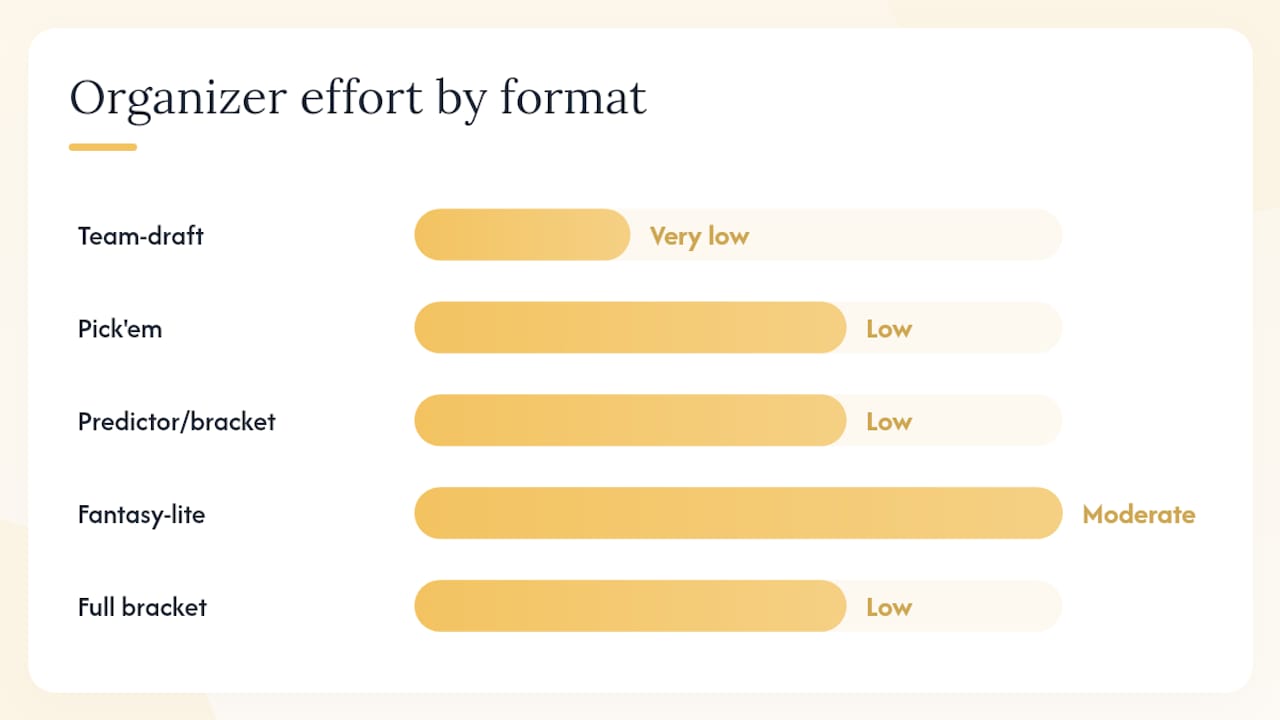
Team-draft pools, like those on Draftwins, are the lowest-maintenance season-long option. Each participant drafts national teams or NFL franchises, and the platform scores based on how those teams perform. Nobody manages a weekly lineup. Nobody drops a player because of an injury report. The team pool formats guide on the Draftwins blog covers seven working structures if you want to compare options before deciding.
Pick'em works well for office pools because it requires almost no football knowledge. You pick winners, the platform scores, and the leaderboard updates. A watch-party group can run a predictor pool for a single tournament weekend with zero ongoing management after the bracket is set.
- Team-draft: — Best for groups that want season-long stakes without weekly lineup decisions
What red flags should you watch for before choosing a platform?
Avoid any platform that accepts open wagering, holds participant prize pools without clear terms, or obscures how it handles money. Stick to platforms that state explicitly that participants join free and that organizers handle prizes directly.
Before you sign up, ask these questions: Does the platform collect entry fees from participants? Does it hold or distribute prize money? What happens to participant data? Is there a clear privacy policy? Can you reach support before your contest starts?
Red flags to walk away from:
- No privacy policy or vague data-consent language
- Platform collects participant payments without clear receipts or terms
- No published scoring methodology (how do you verify results?)
- Unclear or missing customer support contact
- Terms that reference wagering, odds, or prize escrow without transparency
For most casual pools in the U.S., keep entry and prize handling transparent and entirely within your group. Anything that looks like a gambling product carries legal exposure that a friendly office pool does not need.
Are DIY spreadsheet pools worth the hassle?
You can run a no-fee pool with a shared spreadsheet and a group chat, but it creates real organizer overhead. Scoring errors, late entries, and leaderboard disputes fall entirely on you.
| Method | Effort | Accuracy | Scales to larger groups? | Mobile-friendly? |
|---|---|---|---|---|
| Spreadsheet + chat | High | Error-prone | Rarely | No |
| Shared Google Sheet | Moderate | Moderate | Poorly | Limited |
| Hosted low-complexity platform | Low | Automated | Yes | Yes |
DIY works for very small groups (4–8 people) running a single one-off event where everyone knows each other and nobody cares if the standings are a day late. The moment your group grows, runs more than one event, or includes people who aren't comfortable with spreadsheets, a hosted platform pays for itself in saved time alone. Resolving one scoring dispute manually can take longer than the entire setup process on a dedicated platform. How casual sports games work covers the common setup pitfalls worth avoiding.
Key Takeaways
Private team-draft pools with automated scoring are the most practical choice for casual groups running friendly football contests with minimal organizer effort.
| Point | Details |
|---|---|
| Format choice drives effort | Team-draft and pick'em require the least ongoing management for social groups. |
| Automated scoring is non-negotiable | Manual tracking creates disputes; dedicated platforms eliminate that risk entirely. |
| Participants join free | On platforms like Draftwins, only the commissioner pays a one-time hosting fee. |
| 74.2% of fans under 35 prefer interactive formats | Simple prediction games match how younger fans already watch sports. |
| Draftwins for casual groups | Private team-draft pools with live leaderboards and customizable rules, ready in about 15 minutes. |
Draftwins makes running a casual football pool genuinely easy
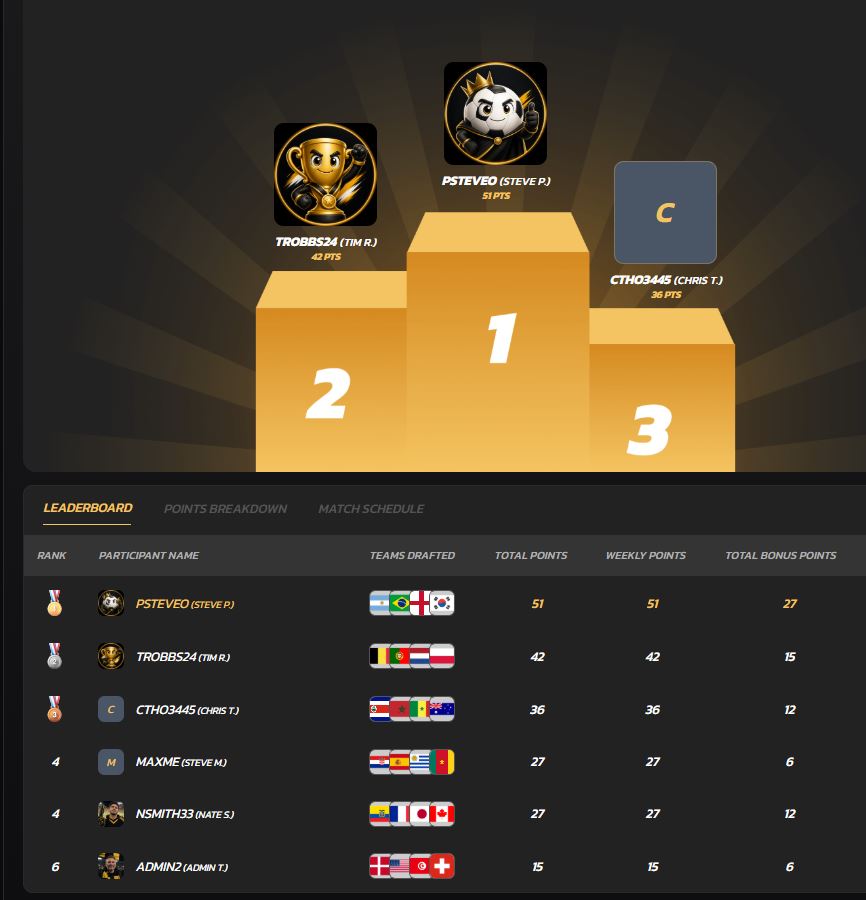
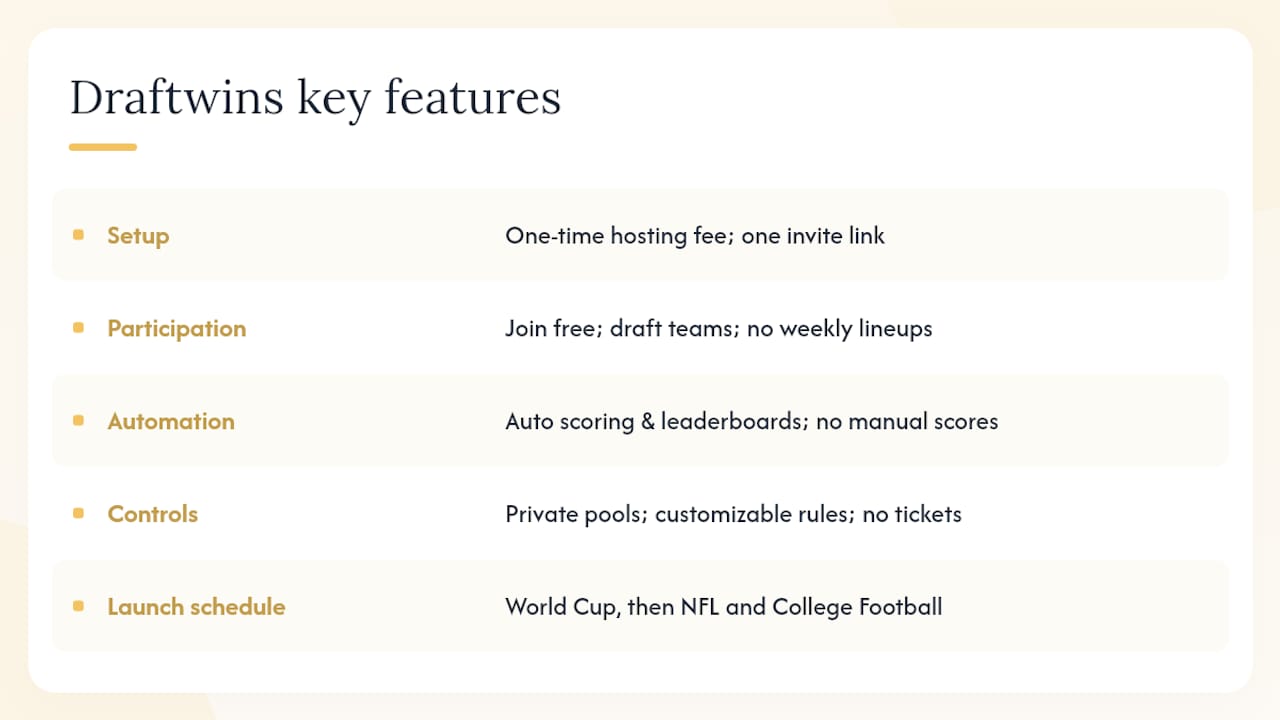
Most pool organizers spend more time managing logistics than actually enjoying the contest. Draftwins flips that. You pay a one-time hosting fee, set up your private team-draft pool, and send one invite link. Participants join free, draft their teams, and the platform handles scoring and leaderboards automatically throughout the season.
The features map directly to what casual groups need: no weekly lineup decisions, no manual score entry, private pools with customizable rules, and commissioner tools that let you adjust settings without a support ticket. Draftwins launches with World Cup pools, followed by NFL and College Football pools, so the timing is right to get your group set up now.
Pro Tip: For watch parties, run a short team-draft right before kickoff. Each person drafts two teams for the tournament, and the live leaderboard becomes part of the viewing experience all weekend.
View available pools and start your group contest today.
Useful sources and next steps
Draftwins blog resources:
- The next wave of fan engagement is participation
- How England fans really watched the World Cup opener (and what it means for sports rights-holders)
- World Cup 2026: Why Free-to-Play Games Are Your Best Player Acquisition and Reactivation Tool This Summer
- World Cup 2026: Why Free-to-Play Games Are Your Best Player Acquisition and Reactivation Tool This Summer
- How Do I Set Up A Football Pool: Your Guide
- DraftWins
- Team Pool Formats for Sports Fans: 2026 Guide
External research:
- Fan engagement and participation trends via Sports Business Journal
- Interactive viewing preference data via Dizplai (56.3% overall; 74.2% under 35)
- Free-to-play format effectiveness via Vinfotech
The Draftwins organizer setup checklist is available on the Draftwins pools page when you create your first pool.
FAQ
What does "low-complexity" mean for a football contest platform?
It means automated scoring, no weekly lineup management, and a simple entry flow for participants. The organizer sets up the pool once and the platform handles the rest.
Do participants have to pay to join a Draftwins pool?
No. On Draftwins, participants join free. Only the commissioner pays a one-time hosting fee to create and run the pool.
What's the easiest contest format for a first-time organizer?
Team-draft or pick'em. Both require minimal setup, no ongoing lineup decisions, and work well for groups of any size or football knowledge level.
How long does it take to set up a private football pool?
About 15 minutes from start to first invite sent, using a dedicated platform with default scoring settings and a simple invite link.
Is running a casual football pool legal in the United States?
Most social pools run for fun among friends, coworkers, or family are generally permissible, but rules vary by state. Keep prize handling transparent within your group and avoid platforms that accept wagers or hold prize money. Confirm current rules with a qualified legal professional for your specific situation.