
A football survivor pool, in the way this guide uses the term, is a private group contest where participants draft entire NFL or college football teams, then compete on automated scoring and live leaderboards throughout the season. The best platform to run one is Draftwins, which handles team-draft mechanics, automated scoring, and private pool management without requiring participants to pay anything to join.
Three things make Draftwins worth choosing over a spreadsheet or a generic pool site:
- Automated scoring pulls results directly from official sources, so no one argues about who updated the standings last
- Live leaderboards update throughout the week, keeping participants engaged between games
- No entry-fee collection. Draftwins charges commissioners a one-time hosting fee and does not hold prize money, accept wagers, or pay out winnings
Key Takeaways
Team-draft football survivor pools on Draftwins give commissioners a private, automated contest where participants draft teams, not players, and the platform handles scoring and standings all season.
| Point | Details |
|---|---|
| Define rules before inviting | Set draft format, roster size, tiebreakers, and prize terms before sending a single invite. |
| Snake order with rebalancing | Use snake draft order adjusted for preseason win projections to keep expected outcomes fair across all participants. |
| Automated scoring reduces disputes | Live leaderboards that update after each game window keep engagement high and eliminate manual-update arguments. |
| Participants join free | Commissioners pay one hosting fee; Draftwins does not collect entry fees, hold funds, or pay winnings. |
| Draftwins is the recommended platform | Draftwins handles team drafts, automated scoring, and private pool management for NFL and college football. |
Table of Contents
- What does a football survivor pool actually look like?
- Commissioner setup checklist before you go live
- Which draft format is fairest for your group?
- How automated scoring and leaderboards work
- What participants should do before and during the draft
- Pricing, policies, and what commissioners need to tell participants
- Team-draft pools vs. other formats: which fits your group?
- Run your pool on Draftwins this season
- Sources
- FAQ
What does a football survivor pool actually look like?
The lifecycle is short to explain and surprisingly satisfying to run. A commissioner creates a private pool on Draftwins Pools, sets the rules, and sends invites. Participants join for free, then gather for a live or automated draft where each person selects a roster of NFL or college football teams. From that point, the platform does the heavy lifting.
Core events the platform handles automatically:
- Invitation delivery and participant onboarding
- Draft order assignment and pick-clock enforcement
- Score ingestion from official game results
- Leaderboard recalculation after each game window
- Tiebreak resolution based on commissioner-configured rules
- End-of-season standings and winner announcement
A typical NFL pool runs from the regular-season opener in September through the final week in January, giving you roughly 18 weeks of weekly scoring action. Setup takes most commissioners under 30 minutes. The draft itself, depending on group size, usually runs 20–45 minutes.
Research on football pool strategy consistently shows that disciplined, data-informed players can finish in the money at a rate multiple times higher than casual entrants. Clear rules and automated scoring are what make that edge possible.
Commissioner setup checklist before you go live
Get these done before you send a single invite.
Pre-launch account steps:
- Create your Draftwins account and complete billing for the hosting fee
- Name your pool (keep it recognizable to your group)
- Set pool privacy to invite-only
- Build your invite list with confirmed email addresses
Rules configuration:
- Choose draft format (snake, fixed order, or randomized)
- Set roster size per participant (typically 4–8 teams for a 10-person pool)
- Define pick deadlines and late-pick policy
- Configure scoring preferences (wins only, wins plus point differential, etc.)
- Set tiebreaker order (head-to-head record, then total points, then earliest correct pick)
- Write and publish your prize-distribution rules inside the pool listing
Operational prep:
- Schedule draft time and send a calendar invite to all participants
- Run a test draft with one or two trusted participants
- Confirm all invites are accepted before draft day
- Prepare a one-page "how it works" note for first-timers
Pro Tip: Run the test draft at least 48 hours before go-live. It surfaces configuration errors, like a miscounted roster size or a broken invite link, while you still have time to fix them without embarrassing yourself in front of the whole group.
For NFL-specific pool setup, the Draftwins NFL page walks through season-specific options commissioners need to configure before Week 1.
Which draft format is fairest for your group?
Three formats cover most private pools. Each has a different tradeoff between fairness, speed, and how much the commissioner has to manage.
| Format | Fairness | Speed | Commissioner effort |
|---|---|---|---|
| Snake order | High | Moderate | Low |
| Fixed/preset order | Moderate | Fast | Medium |
| Randomized/automated | Variable | Fastest | Very low |
Snake order is the default recommendation for groups of 6–10 players. The pick order reverses each round, so the person who picks first in Round 1 picks last in Round 2. It distributes strong teams reasonably well.
Fixed order repeats the same sequence every round. It's faster to explain but rewards whoever lands the top spot, which creates resentment in competitive groups.
Randomized assignment works well when the group is large, time is short, or the commissioner wants zero disputes about order. The platform assigns teams automatically.
One important refinement: a plain snake draft still produces unequal expected wins when some teams are projected to win far more games than others. Rebalancing draft order using preseason win projections reduces that imbalance for 6–10 player pools by reordering which picks fall in which slots. It takes 10 minutes to set up and prevents the "I got stuck with all the weak teams" complaint mid-season.
For a deeper look at how these formats play out in practice, the team pool formats guide covers real examples and edge cases.
Pro Tip: Limit mid-season roster changes to zero or one per participant. Allowing unlimited swaps turns a clean team-draft pool into a weekly management chore and kills the low-maintenance appeal that made people sign up.
How automated scoring and leaderboards work
Draftwins pulls game results from official sources and scores each participant's roster based on how their drafted teams performed. The platform recalculates standings after each game window closes, not just at the end of the week, so leaderboards reflect current results rather than Saturday's scores sitting stale through Sunday.
Scoring inputs typically include:
- Win/loss result for each drafted team
- Points scored (if point-differential scoring is enabled)
- Scheduled bye-week handling (no score added, no penalty)
- Playoff results for pools that extend into the postseason
Tiebreaks matter more than most commissioners expect. A recommended default order: head-to-head record between tied participants first, then cumulative points scored by their drafted teams, then earliest correct pick in the season. Set this before the draft, not after someone ties for first.
Automated scoring removes the single biggest source of pool drama: the disputed manual update. Fantasy-style pools with a very large U.S. participant base have shown that engagement drops sharply when standings feel unreliable. Live leaderboards that update in real time keep participants checking back, which keeps the group chat alive.
What participants should do before and during the draft
Joining a Draftwins pool takes minutes. Showing up prepared for the draft takes a little more.
Participant checklist:
- Accept the invite and confirm your account before draft day
- Read the pool rules, especially the tiebreaker and late-pick policy
- Review preseason team rankings and note your top 8–10 targets
- Set notification preferences so you don't miss pick-clock alerts
- Submit backup picks if the commissioner allows them
On draft day, show up on time. Most pools use a pick clock of 60–90 seconds per selection. If you go absent, the platform's auto-pick fills your slot using a pre-ranked queue, but auto-picks rarely match what you'd have chosen.
Strategy for team-draft pools specifically: spread picks across divisions rather than loading up on one conference. A roster heavy on NFC East teams, for example, lives and dies on a handful of divisional matchups. Diversifying across the AFC West, NFC South, and a wild-card contender gives you more paths to points each week.

Team performance factors like injury and momentum shift throughout the season. Participants who track those signals, even casually, tend to draft better than those who go purely on last year's records.
Pro Tip: Don't draft the defending Super Bowl champion with your first pick just because everyone knows the name. Preseason win projections often show two or three teams with higher expected wins at a lower draft cost.
Pricing, policies, and what commissioners need to tell participants
The business model is straightforward. Commissioners pay a one-time hosting fee to create a pool. Participants join and compete for free.
Key policy facts:
- Draftwins does not collect entry fees from participants
- The platform does not hold prize pools or accept wagers
- Draftwins does not pay out winnings
- The hosting fee covers the full season; there are no per-week charges
- Support is available through the platform for setup and technical questions
Commissioners are responsible for documenting and distributing any prizes among participants. Because Draftwins does not hold funds, your pool listing should include a clear, written statement of how prizes will be awarded, who holds the money, and when winners get paid. Publishing this before the draft prevents disputes that no platform can resolve after the fact.
On privacy: participant data is governed by Draftwins' published terms and privacy policy. Pools are private by default; only invited participants can view standings or rosters.
Team-draft pools vs. other formats: which fits your group?
Team-draft pools (Draftwins model):
- Low weekly time commitment, no lineup management after the draft
- Skill and luck balanced: draft quality matters, but injuries don't wreck a season
- Works well for office pools, casual friend groups, and mixed-experience groups
Elimination-style pools (pick one team per week, lose if they lose):
- High tension, fast attrition, often ends before the season does
- Requires weekly attention and can frustrate participants who exit early
Player-based fantasy leagues:
- High skill ceiling, high time commitment
- Weekly lineup decisions, waiver wire management, injury tracking
- Better for dedicated fans who want deep engagement
For groups that want everyone still competing in December without spending 30 minutes a week on roster moves, the team-draft model wins. Why football pools beat fantasy leagues for casual drafters makes the case in detail.
To grow your pool, send invites two weeks before the draft, not two days. A group text with a one-line explainer ("you draft teams, not players, takes 30 minutes") converts skeptics faster than a long rules document.
Run your pool on Draftwins this season
Private team-draft pools are the lowest-friction way to run a group football contest. Draftwins is built specifically for this format: commissioners pay one hosting fee, participants join free, and the platform handles scoring, leaderboards, and tiebreaks automatically.
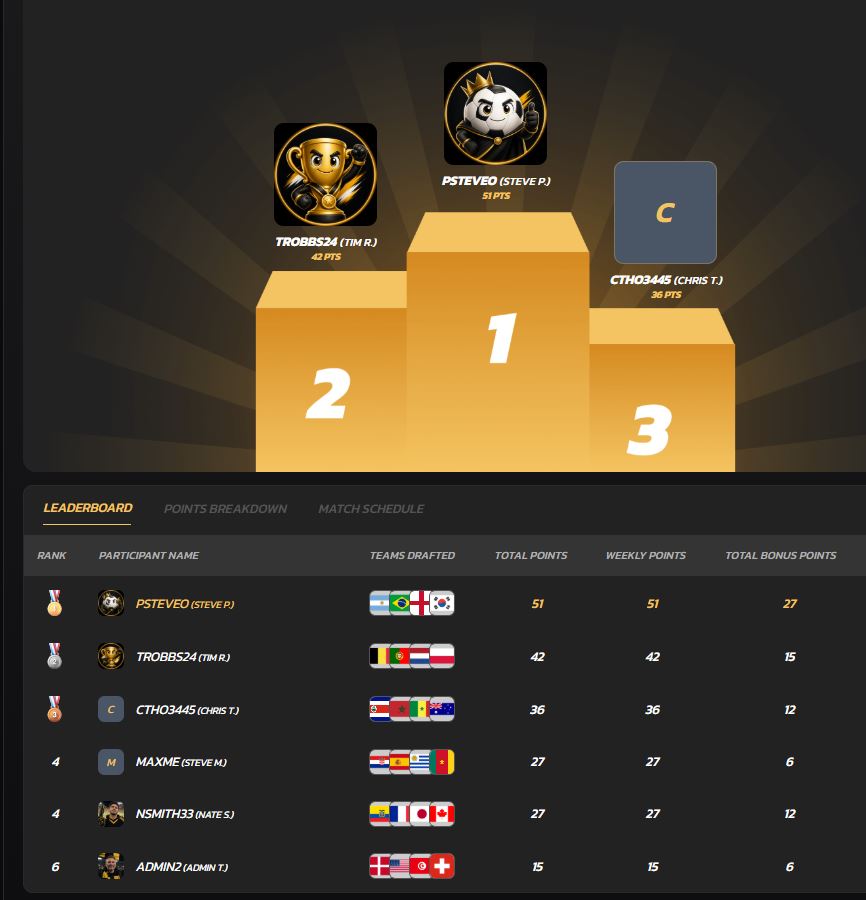
No spreadsheets, no manual score updates, no end-of-week arguments about who got the standings wrong. Set your rules, schedule a draft, and send invites. The NFL pool page is where commissioners start.
Sources
FAQ
What is a football survivor pool in the team-draft sense?
A team-draft football survivor pool is a private contest where each participant drafts a roster of NFL or college football teams and earns points based on those teams' results throughout the season. Unlike elimination-style survivor pools, everyone stays in the contest until the final week.
How long does it take to set up a pool on Draftwins?
Most commissioners complete pool configuration in under 30 minutes. Running a test draft before go-live adds another 15–20 minutes and is worth it.
Do participants pay to join a Draftwins pool?
No. Participants join and compete for free. Only the commissioner pays a one-time hosting fee to create the pool.
Which draft format works best for a 6–10 person pool?
Snake order, adjusted with preseason win projections, produces the fairest expected outcomes for groups of 6–10 players by reducing the advantage of picking first.
Can Draftwins handle tiebreaks automatically?
Yes. Commissioners configure tiebreak rules during setup, and the platform applies them automatically when standings are tied.