
A football draft contest format is a defined rule set that determines how participants select players or predict NFL Draft outcomes in a group competition. These formats range from classic snake drafts in fantasy football to real-draft prediction contests like PFF's Draft Pick Challenge. Understanding the football draft contest format you choose shapes every decision, from pick strategy to scoring to how you declare a winner. Platforms like NFL.com, ESPN, and Pro Football Focus (PFF) each support distinct contest structures worth knowing before you organize your own group.
What is a football draft contest format?
A football draft contest format is the structural framework governing how participants pick players, bid on rosters, or predict real NFL Draft selections in a competitive group setting. The industry uses two broad categories: fantasy draft formats and real-draft prediction contests. Both share a common goal, putting your football knowledge to the test against friends or colleagues, but the inputs and scoring differ substantially.
Fantasy draft formats focus on building a roster of real NFL players whose in-season stats generate your points. Real-draft prediction contests ask you to forecast which players NFL teams will actually select during the NFL Draft, then score your accuracy live. Knowing which category your contest falls into is the first decision any organizer should make.
The three most common contest types are:
- Snake (serpentine) drafts: Participants take turns selecting players in a rotating order across rounds.
- Auction (salary cap) drafts: Participants bid on players using a fixed budget, with no real money involved.
- Prediction contests: Participants submit picks forecasting real NFL Draft selections before the event locks.
What are the main types of football league draft formats?
NFL.com's fantasy basics describe standard drafts as either linear or snake order, and salary cap drafts as budget-based nomination without actual money. That distinction is the foundation of every football league draft format you will encounter.
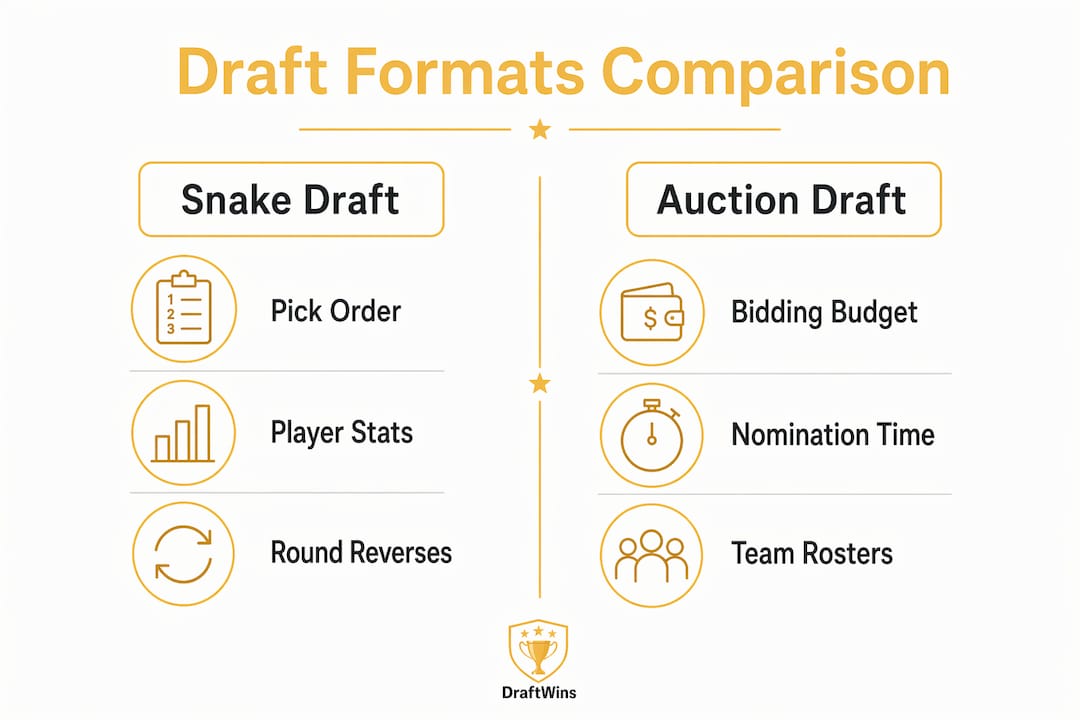
Snake drafts are the most widely used format in casual and competitive fantasy leagues. The pick order reverses each round, so the participant who picks last in Round 1 picks first in Round 2. This alternating structure reduces the advantage of holding the first overall pick. ESPN, NFL.com, and most major fantasy platforms default to this format because it is easy to explain and fast to run.
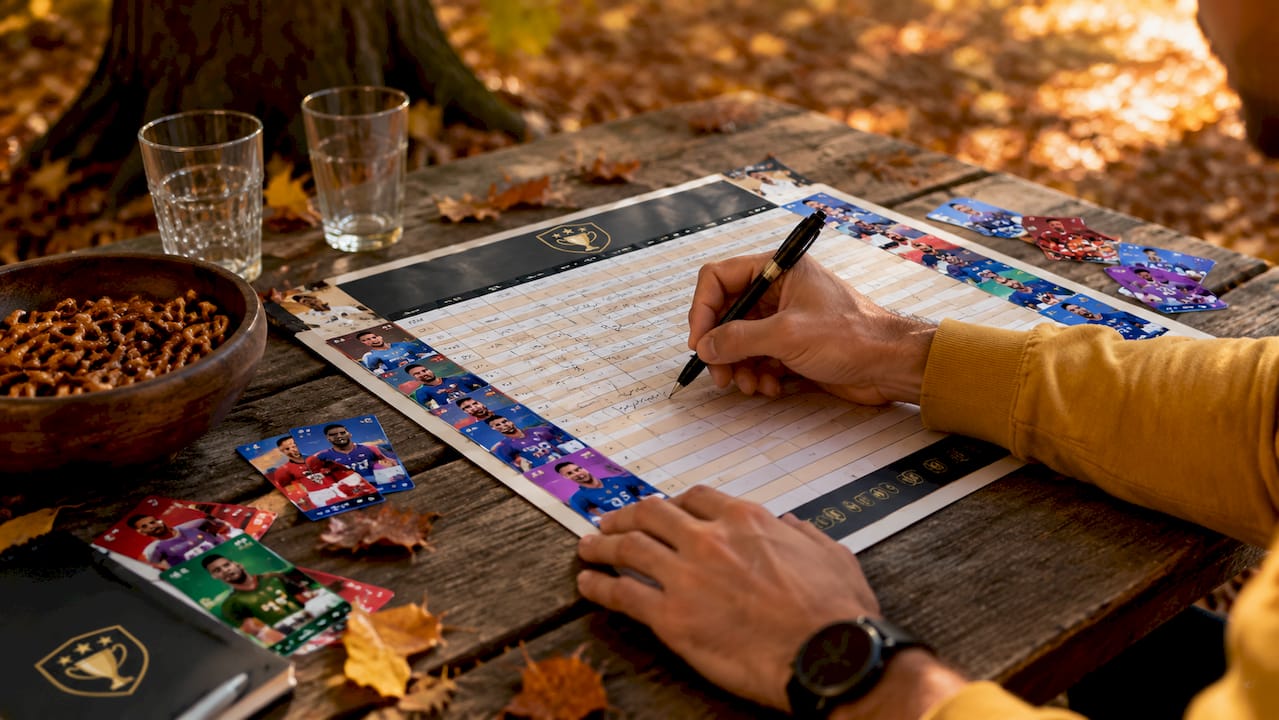
Auction drafts, also called salary cap drafts, work differently. ESPN's 2025 guide explains the auction process with a $200 budget per participant. Each person nominates a player, everyone bids, and the highest bidder wins that player. No real money changes hands. Auction drafts reward budget management and player valuation skills more directly than snake drafts do.
Prediction contests are a separate category entirely. PFF's Draft Pick Challenge scores the accuracy of your predicted player, team, pick slot, and round, with a live leaderboard updating as the real NFL Draft unfolds. This format requires no season-long roster management. You submit your predictions, watch the draft, and track your score in real time.
How does the draft order and pick selection process work?
The mechanics of each format differ enough that mixing them up causes real confusion during a live contest. Here is how each one runs in practice.
Snake draft mechanics
In a snake draft, the pick order reverses every round. If you have 10 participants, the person with pick 10 in Round 1 gets pick 11 at the start of Round 2. NFL.com explains that randomizing draft order ahead of time and disclosing it to all participants increases perceived fairness. Most leagues run 15 rounds, covering starters and a bench. The NFL Draft itself runs 7 rounds with roughly 257 picks in 2026, and its reverse-standings pick order follows a similar fairness logic.
Auction draft mechanics
- A participant nominates a player to start the bidding.
- All participants bid openly until no one raises the price.
- The highest bidder wins the player and their budget decreases by that amount.
- The process repeats until all roster spots are filled.
ESPN outlines rules to keep auction drafts from running long or creating budget conflicts, including time limits per nomination. Setting a 30-second or 60-second bid clock per player is standard practice.
Prediction contest mechanics
Prediction contest entries lock before the real NFL Draft begins. Once the draft starts, scoring updates live as each pick is announced. Formats like the Commanders Pick-3 contest allow entrants to nominate up to 24 players for fixed picks and bonus trade picks. The bonus picks account for trades that shift pick order, keeping the contest fair even when the NFL's own draft board changes unexpectedly.
Pro Tip: In prediction contests, always submit your entry at least 24 hours before the draft locks. Last-minute injury news or trade rumors can shift consensus picks dramatically, and early submission forces you to commit to your true football knowledge rather than chasing the crowd.
What are the scoring and winning mechanisms in football draft contests?
Scoring is where football draft contest formats diverge most sharply. The right scoring system rewards the skills your group actually wants to test.
Scoring comparison by format
| Format | What scores points | Winner determined by |
|---|---|---|
| Snake draft | In-season player stats (TDs, yards, receptions) | Most cumulative points at season end |
| Auction draft | Same in-season player stats as snake | Most cumulative points at season end |
| Prediction contest | Accuracy of real NFL Draft pick predictions | Highest accuracy score after draft concludes |
In fantasy snake and auction drafts, scoring ties directly to player performance across the NFL season. A running back who rushes for 1,500 yards generates far more points than one who misses six games. The SI Fantasy Football Beginner Guide notes that setting clear roster and scoring rules before the draft is one of the most critical planning steps for any group contest.
PFF's Draft Pick Challenge uses a layered scoring system. PFF awards 10 points for a correct player and team combination, 5 points for an exact pick slot, 5 points for landing within two picks, 4 points for the correct round, and 3 points for the correct position group. Multipliers like the Captain's Pick and a hot streak bonus add another layer of strategy. That scoring depth rewards both broad knowledge and bold, specific predictions.
Tie-breakers matter more than most organizers expect. WalterFootball's contest registration specifies tie-breaker questions, such as the duration of the first round or the first trade pick, to resolve deadlocks when multiple entrants finish with equal scores. Build at least one tie-breaker question into any prediction contest you run.
Pro Tip: For casual group prediction contests, weight the "correct round" category more heavily than exact pick slot. Most participants can predict a player's draft round but not their exact pick number. Higher weights on round accuracy keep the contest competitive for everyone, not just the most obsessive draft analysts.
How to organize a fun and fair football draft contest among friends or colleagues?
Running a great group contest comes down to four decisions made before anyone submits a single pick. Get these right and the contest runs itself.
- Choose the right format for your group. Snake drafts work best for groups who want a full fantasy season. Auction drafts suit groups who enjoy strategy and player valuation. Prediction contests are ideal for one-time events tied to the real NFL Draft, with no season-long commitment required.
- Set roster and scoring rules in writing before the draft. Verbal agreements create disputes. Write out every scoring category, roster slot, and tiebreaker rule and share it with all participants before the contest opens. NFL.com and SI both identify clear pre-draft communication as a core requirement for fair group contests.
- Randomize draft order and publish it. In snake drafts, the pick order directly affects roster quality. Randomizing it publicly, through a live draw or a random number generator, removes any perception of favoritism. NFL.com confirms that disclosing the randomized order increases fairness.
- Set time limits for auction drafts. Without a bid clock, auction drafts stall. ESPN recommends defining bidding time limits and budget rules before the draft starts to prevent disputes and keep the event moving.
- Add tie-breakers to prediction contests. A single tie-breaker question, such as how many quarterbacks get drafted in the first round, prevents a shared winner scenario that deflates the competition.
- Use an online draft client when possible. Platforms that automate pick timers, budget tracking, and scoring remove the administrative burden from the commissioner and let everyone focus on competing.
For groups new to draft contest structures, starting with a snake draft or a simple prediction contest lowers the barrier to entry. Auction drafts are best introduced after participants have one season of experience with the basics.
What examples illustrate popular football draft contest formats in 2026?
Real-world contest models show how these formats adapt to different audiences and goals.
| Contest | Format type | Key scoring feature | Unique rule |
|---|---|---|---|
| NFL.com Fantasy | Snake or salary cap | Standard fantasy stats | Randomized draft order |
| PFF Draft Pick Challenge 2026 | Prediction contest | Layered accuracy points + multipliers | Captain's Pick and hot streak bonus |
| Commanders Pick-3 Contest 2026 | Prediction contest | Points by predicted round accuracy | Bonus picks for anticipated trades |
NFL.com's standard snake draft and salary cap options represent the baseline for fantasy football. They are well-documented, widely used, and easy to replicate for a private group. The salary cap version uses a $200 budget and follows the same nomination-and-bid process ESPN describes.
PFF's 2026 Draft Pick Challenge raises the ceiling on prediction contest design. The live leaderboard updates pick by pick during the real NFL Draft, creating a shared viewing experience that a standard fantasy draft cannot replicate. The Captain's Pick multiplier, where you designate one prediction to score at double value, forces a strategic commitment that separates casual entries from serious ones.
The Commanders Pick-3 contest addresses one of the trickiest problems in prediction contest design: trades. When teams trade picks, the expected pick slot shifts. The Commanders contest solves this by including bonus picks for anticipated trade scenarios, so participants are not penalized for accurate predictions that land on a traded pick. That design choice, as seen in this contest format, keeps the contest fair and engaging even when the NFL's draft board reshuffles on the fly.
These three examples show that format adaptability is the real competitive advantage. The best contests borrow mechanics from multiple formats and tailor them to the group's knowledge level and entertainment goals. For a deeper look at how NFL draft pools are scored, the mechanics behind each point category become clearer with real examples.
Key takeaways
The most effective football draft contest format matches your group's knowledge level, time commitment, and competitive goals before the first pick is ever made.
| Point | Details |
|---|---|
| Know your contest type | Decide between fantasy roster drafts and real-draft prediction contests before setting any rules. |
| Snake drafts favor simplicity | Reversing pick order each round balances the field without requiring budget management skills. |
| Auction drafts reward strategy | A fixed budget and open bidding create a more skill-intensive experience than snake drafts. |
| Prediction contests need tie-breakers | Always include at least one tie-breaker question to prevent shared-winner outcomes. |
| Clear rules prevent disputes | Publish scoring, roster, and bidding rules in writing before the contest opens. |
Run your next football draft contest on Draftwins
Draftwins is built for groups who want the fun of a draft contest without the administrative headache of managing it manually.
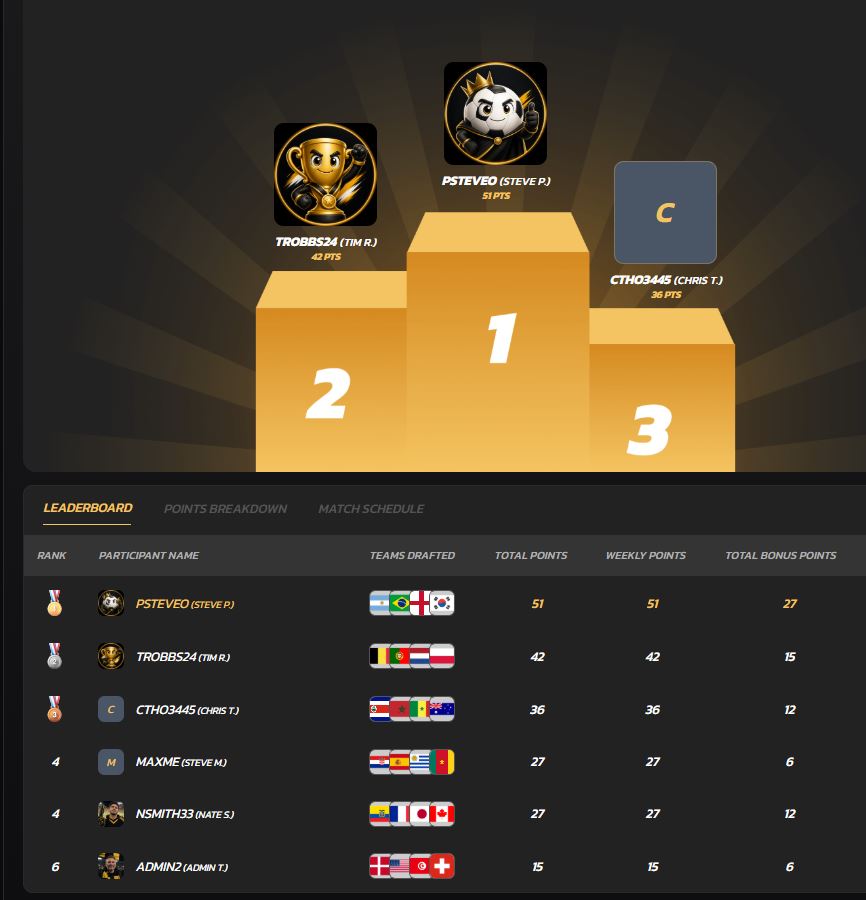
Draftwins lets commissioners create private pools with custom scoring and rules, so your group plays by the format you actually want. Automated scoring and live leaderboards mean no one has to track points by hand. Participants focus on competing, not on spreadsheets. Draftwins charges a platform hosting fee and does not collect entry fees, hold prize pools, or accept wagers. NFL and College Football pools are coming after the World Cup launch. If your group is ready to run a fair and engaging contest, Draftwins gives you the tools to set it up in minutes.
FAQ
What is the difference between a snake draft and an auction draft?
A snake draft reverses pick order each round so no single participant holds a permanent positional advantage. An auction draft gives every participant a fixed budget to bid on players, rewarding valuation skill over pick position.
How does a football draft prediction contest work?
Participants submit picks forecasting real NFL Draft selections before the event locks. Scoring updates live as each pick is announced, with points awarded for accuracy of player, team, round, and pick slot.
How many rounds does a standard fantasy football snake draft have?
Most fantasy snake drafts run 15 rounds, covering starting roster spots and bench players. The actual NFL Draft runs 7 rounds with roughly 257 total picks.
Do prediction contests need tie-breakers?
Tie-breakers are necessary in prediction contests because multiple participants can finish with identical accuracy scores. A single tie-breaker question, such as the number of first-round quarterbacks, resolves deadlocks cleanly.
What is the easiest football draft contest format for a first-time group?
A snake draft or a simple round-based prediction contest works best for first-time groups. Both formats are easy to explain, quick to run, and require no prior experience with budgets or bidding.