
Automated scoring systems for sports pools are platforms that sync live game data, update leaderboards, and handle payments without any manual input from a commissioner. The best tools pull scores directly from official league feeds via APIs, refreshing standings every 10 minutes during live events. That frequency matters because stale scores kill engagement. Draftwins takes this further by letting participants draft entire teams instead of individual players, removing the lineup complexity that makes traditional fantasy leagues frustrating. The result is a pool format where automation does the heavy lifting and everyone stays focused on the game.
1. Top features to look for in automated scoring systems for sports pools
The best automated scoring platforms share five core features. Each one directly affects how much work you do as a commissioner and how much fun participants have.
- Live data sync frequency. Leaderboards should update every 10 minutes or faster from official league sources. Slower sync rates create confusion and complaints.
- Integrated payment handling. The platform should collect entry fees, hold them securely, and distribute payouts automatically after the event ends. Automated payouts occur within minutes post-event, compared to the manual reconciliation that used to take days.
- Real-time leaderboard visibility. Participants need to see standings at any moment without asking the commissioner. Visible, live standings keep people engaged through the final whistle.
- Simple pool setup without lineup management. The best platforms let you name a pool, set entry terms, invite participants, and let automation handle the rest. Setup takes as little as 90 seconds on modern platforms.
- Clear payout rules and dispute resolution. The system should display payout splits, deadlines, and tiebreaker logic upfront. Ambiguity is the root cause of most pool disputes, not bad intent.
Pro Tip: Before you pick a platform, test its leaderboard on a mobile browser. Most participants check standings on their phones during games, so a clunky mobile experience will generate more complaints than any scoring error.
2. How do automated scoring systems for sports pools work?
Automated pool scoring follows a straightforward four-step process. Understanding each step helps you choose the right platform and set accurate expectations for your group.
- Data ingestion. The platform connects to official league APIs or licensed data feeds. These feeds push score updates in real time, so the platform never relies on manual entry or screen scraping.
- Score calculation. The system applies your pool's scoring rules to the incoming data. For team-based pools, this means tallying points based on team performance rather than individual player stats.
- Leaderboard update. Standings refresh automatically, typically every 10 minutes during live events. Every participant sees the same current standings without refreshing or asking the commissioner.
- Payment and payout execution. Entry fees sit in a secure escrow layer until the event concludes. The system then calculates winners and distributes payouts based on the rules you set at the start.
"Automated pools convert a 12-hour manual chore into a 2-minute setup, giving commissioners their weekends back and keeping participants engaged through the final result." Office Golf Pool Management, RunPools
The practical benefit is clear. Manual score tracking for a single tournament week can consume 8–12 hours of a commissioner's time. Automation collapses that to a one-time setup. Participants get accurate, live standings, and the commissioner actually watches the game instead of updating a spreadsheet.
Pro Tip: Ask any platform you evaluate whether it uses official league API feeds or third-party aggregators. Official feeds are more reliable and update faster, which matters most during playoff rounds when every point counts.

3. Popular types of automated scoring systems and their ideal use cases
Not every pool format needs the same kind of automation. The right system depends on your group size, sport, and how much scoring complexity you want.
| Pool type | Best for | Scoring complexity | Lineup management required |
|---|---|---|---|
| Team draft pools | Casual groups, World Cup, NFL | Low | No |
| Pick'em style pools | Office brackets, March Madness | Low to medium | No |
| Salary cap formats | Experienced fantasy players | High | Yes |
| Survivor pools | Weekly NFL groups | Low | No |
| Golf stroke pools | Small friend groups | Medium | No |
Team draft pools are the simplest format for casual participants. You draft a team, the system tracks that team's performance, and standings update automatically. Draftwins is built around this model, letting participants draft teams for sports pools without worrying about individual player injuries or weekly lineup decisions.
Pick'em pools work well for office groups during major tournaments. Participants make predictions before the event, and the automated system scores results as games conclude. There is no ongoing lineup management, which makes these pools accessible to casual fans.
Salary cap formats require participants to build rosters within a budget and make weekly lineup changes. These formats carry the highest complexity and generate the most commissioner workload even with automation. They suit experienced players but often overwhelm casual groups.
Survivor pools ask participants to pick one winning team per week. Automation handles the elimination logic and updates standings instantly. These pools work well for NFL season-long engagement with minimal participant effort.
For casual sports fans who want to avoid complexity, team draft pools and pick'em formats deliver the best experience. They require no lineup management, generate fewer disputes, and keep automation doing the work it does best.
4. Benefits of automated sports pool scoring that go beyond convenience
Automation does more than save time. It changes the social dynamic of a pool in ways that manual tracking never could.
Accuracy builds trust. Manual score entry creates errors, and errors create arguments. When scores come directly from official data feeds, participants trust the standings. Simplicity and transparency in automated scoring strongly increase participant trust and reduce the need for manual dispute handling.
Engagement stays high throughout the event. A commissioner who spends Saturday updating a spreadsheet misses the game and sends updates hours late. Automated leaderboards keep participants checking standings in real time, which drives conversation and keeps the pool alive through the final round.
Payment clarity prevents the most common disputes. Digital payment records with timestamped transaction histories simplify payout reconciliation and reduce confusion. Cash-based pools leave room for "I thought I paid" arguments. Automated payment systems eliminate that ambiguity entirely.
Pools scale without extra work. A commissioner running a 10-person pool manually can just about manage. A 50-person pool with manual tracking becomes a part-time job. Automated systems handle 10 or 500 participants with the same setup effort.
5. Tips for managing automated sports pools without disputes
Automation handles the scoring, but the commissioner still sets the rules. The rules you write before the pool starts determine whether the experience is fun or frustrating.
- Pin your rules in one shared location. Experienced commissioners keep a single documented rule set pinned in a group chat or shared document. Late-entry confusion and payout disagreements almost always trace back to rules that were never written down.
- Set deadlines and payout splits before the first entry. Participants should know exactly when entries close, how winnings are split, and what happens in a tiebreaker. Upfront clarity combined with automation minimizes conflicts and improves pool longevity.
- Use neutral language when addressing disputes. Experienced commissioners recommend phrases like "let's check our understanding" rather than accusatory language. Relationship-damaging arguments often arise from tone, not actual scoring errors.
- Choose payment platforms with transparent records. Digital payment tools with transaction histories give you evidence if a dispute arises. Avoid cash or informal transfers for any pool with more than a handful of participants.
- Send regular standings updates. Even with live leaderboards, a weekly summary message keeps participants engaged and reminds them the pool is active. Engagement drops sharply when participants feel disconnected from the standings.
Pro Tip: Write your tiebreaker rule before the pool opens, not after a tie happens. "Closest to the total score" or "earliest entry timestamp" are both clear, defensible tiebreakers. Deciding tiebreakers after the fact is the fastest way to lose trust in your group.
Avoiding the spreadsheet trap is the single biggest upgrade most commissioners can make. A good automated platform replaces the spreadsheet entirely and gives participants a better experience at the same time.
6. How to choose the right automated scoring platform for your group
The right platform depends on three factors: your sport, your group size, and how much complexity your participants can handle.
For casual groups and first-time pools, prioritize platforms with no lineup management, automatic score updates, and simple invite flows. The goal is zero friction from signup to final standings. Check that the platform handles fair scoring rules transparently so participants understand how points are earned.
For larger office pools or multi-round tournaments, look for platforms that support bracket logic, automatic elimination, and group-stage scoring. The group stage scoring mechanics matter most in tournaments like the World Cup, where pool points accumulate across multiple rounds.
For team-based pools specifically, Draftwins is built for exactly this use case. Participants draft teams, not players, which removes injury concerns and weekly lineup decisions entirely. The platform handles automated pool scoring and live leaderboards so commissioners spend their time watching the game, not managing data.
The most common mistake is choosing a platform with more features than your group needs. Complexity creates friction, and friction kills participation. Start with the simplest format that covers your sport and scale up only if your group asks for it.
Key Takeaways
Automated scoring systems for sports pools save commissioners hours of manual work by syncing live data, updating leaderboards every 10 minutes, and handling payments automatically from setup to payout.
| Point | Details |
|---|---|
| Live data sync | Leaderboards update every 10 minutes from official league feeds, keeping standings accurate without manual entry. |
| Setup speed | Modern platforms complete pool setup in as little as 90 seconds, including invites and entry fee configuration. |
| Dispute prevention | Pinned written rules and digital payment records eliminate the ambiguity that causes most pool arguments. |
| Format choice | Team draft and pick'em formats require no lineup management, making them ideal for casual groups. |
| Engagement driver | Real-time standings keep participants checking in throughout the event, not just at the final result. |
Draftwins makes automated pool management simple
Running a sports pool should feel like fun, not a second job. Draftwins is built for sports fans who want live leaderboards, automatic score updates, and a clean group experience without the complexity of traditional fantasy leagues.
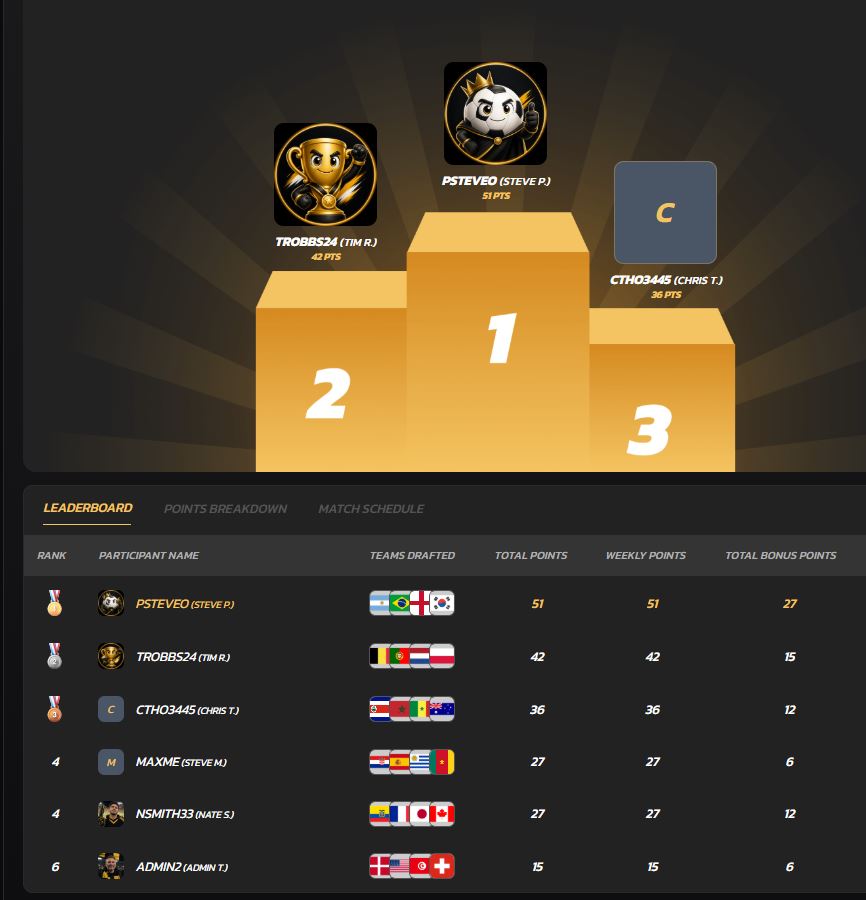
Draftwins lets you create a private pool in minutes, draft teams instead of individual players, and watch standings update automatically as games unfold. There is no lineup management, no injury stress, and no spreadsheet. Draftwins charges a platform hosting fee and does not collect entry fees, hold prize pools, or pay out winnings. The platform launches with World Cup pools, followed by NFL and College Football. If your group wants a cleaner, more social way to compete around the sports you already watch, Draftwins is worth a look.
FAQ
What is automated sports pool scoring?
Automated sports pool scoring is a system that pulls live game data from official league feeds and updates leaderboard standings without any manual input. Scores typically refresh every 10 minutes during live events.
How do automated scoring pools work for casual fans?
The platform connects to official data sources, applies your pool's scoring rules to incoming results, and updates standings in real time. Participants see live leaderboards without needing to contact the commissioner.
What is the best automated sports pool scoring setup for small groups?
Team draft pools and pick'em formats work best for small, casual groups because they require no lineup management and generate fewer disputes. Platforms with simple invite flows and pinned rule sets reduce friction further.
How do I prevent disputes in an automated sports pool?
Write your rules, payout splits, and tiebreaker logic before the pool opens and pin them in a shared location. Digital payment records with timestamps also eliminate the most common source of post-event arguments.
Do automated sports pool platforms handle payments?
Most modern platforms include integrated payment handling that holds entry fees in escrow and distributes payouts automatically after the event concludes. Automated payouts typically process within minutes of the final result.