
Team drafting is a format where every pick you make simultaneously builds your roster and removes options from your opponents. That dual dynamic is the core of what separates team drafting from every other selection format in sports pools and fantasy leagues. Understanding why drafting teams is unique means looking at three things: the competitive scarcity it creates, the psychological pressure it generates, and the structural fairness baked into formats like snake drafts. Platforms like Draftwins are built around exactly this kind of team-based competition, letting you draft entire teams rather than managing individual players week to week.
Why drafting teams is unique compared to other formats
The defining feature of team drafting is what game designers call the "take plus deny" mechanic. Every pick adds to your team and removes that option from everyone else. That is fundamentally different from a format where each participant selects independently from a fixed pool with no awareness of what others are doing.
The practical effect is that drafting becomes an interactive decision space. You are not just asking "who is best for my team?" You are also asking "who does my opponent need most?" Those two questions pull in different directions, and managing that tension is what makes team drafting genuinely strategic.

This mechanic also means the draft itself is a live event. Each round changes the available options, which forces every participant to adapt in real time. A player who planned to grab a particular team in round three may find that option gone by pick five, requiring a full pivot. That kind of dynamic pressure does not exist in formats where selections are made in isolation.
Here is what the take plus deny mechanic produces in practice:
- Scarcity pressure: The best options disappear fast, forcing tougher trade-offs with each passing pick.
- Opponent reading: You track what others are building and adjust your own strategy accordingly.
- Adaptive planning: Locking your team identity early based on real-time competitor selections is the core skill, not just picking the highest-ranked option.
- Denial decisions: Sometimes the right pick is not the best player for your roster. It is the one that hurts your closest rival the most.
Pro Tip: Before your draft starts, rank your targets in tiers rather than a single ordered list. When your top choice is gone, you can quickly pivot to the next tier without losing time or confidence.
What makes snake drafts so popular and fair?
The snake draft is the most widely used team drafting format in fantasy sports, and its design explains much of its appeal. Snake drafts reverse the pick order each round, so the team that picks first in round one picks last in round two. This alternating structure offsets the advantage of an early pick.
The logic is straightforward. The first overall pick gets the best available player, but then waits the longest before picking again. The team at the end of round one immediately turns around and picks first in round two, getting two consecutive selections. That back-to-back moment at the round turn is one of the most strategically critical spots in any snake draft.
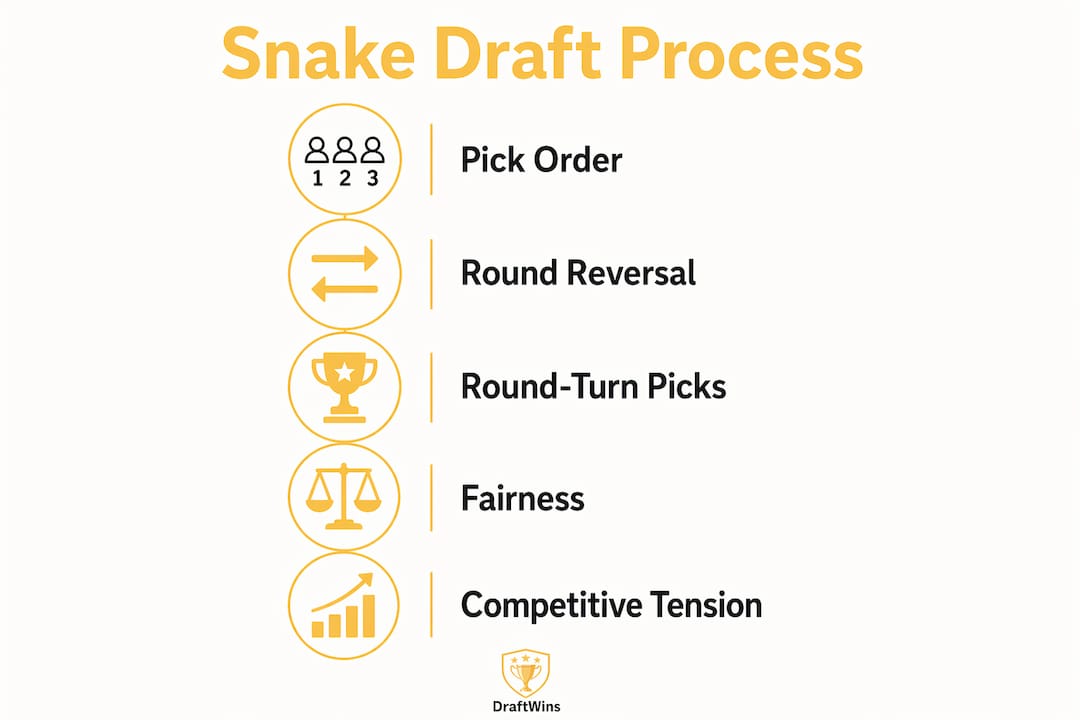
Teams picking at round turns can pair two complementary selections in a way that no other position in the draft can. A manager picking 8th and 9th overall, for example, can grab two strong options from the same tier before anyone else reacts. This creates a genuine strategic advantage that rewards planning, not just luck.
Snake drafts reduce friction while preserving competitive tension. That combination is why casual players find them approachable and experienced managers find them worth mastering.
Here is how snake draft rounds compare across different draft positions:
| Draft position | Round 1 advantage | Round 2 advantage | Round-turn benefit |
|---|---|---|---|
| Pick 1 (first overall) | Highest-ranked player | Picks last in round 2 | None |
| Pick 5 (middle) | Strong tier-one option | Mid-round pick again | Moderate |
| Pick 8 (last in 8-team) | Last pick in round 1 | First pick in round 2 | Back-to-back picks |
The middle positions get neither the top pick nor the round-turn pairing. That is why experienced drafters often prefer the last spot in a snake draft. The back-to-back picks can outperform a single top selection when managed well.
How does drafting under pressure create a unique experience?
Drafting compresses your decision space into a short window, and that compression is what makes it psychologically intense. Limited, curated choices under time pressure produce a level of emotional engagement that open-ended selection formats simply do not generate.
The reason is loss aversion. When you see a player or team you want disappear before your pick, it registers as a loss even though you never had it. That emotional response sharpens focus and raises the stakes of every decision. Drafting turns a selection process into an event people talk about afterward.
Reading opponents adds another layer. Players infer opponents' strategies as picks are made, building a mental model of what each rival is constructing. That social intelligence layer is absent from formats where everyone picks privately. In a live draft room, whether in person or on a platform, the social dynamic is part of the experience.
Here is what makes the psychological side of drafting distinct:
- Time pressure: Most draft formats impose a pick clock, forcing decisions before full analysis is possible.
- Visible information: You see what others pick, which creates both opportunity and anxiety.
- Irreversibility: Once a pick is made, it cannot be undone. That finality raises the emotional weight of each choice.
- Social stakes: Drafting with friends or league rivals adds reputation and bragging rights to every decision.
Pro Tip: Set a personal pick order before the draft starts and commit to it unless a clear opportunity appears. Hesitation under the clock leads to reactive picks that hurt your roster.
How do league-level draft formats promote fairness and engagement?
Draft systems in organized leagues are designed to prevent any single team from hoarding the best talent. Draft designs maintain competitive balance across the entire league, not just within a single game or round. That structural fairness is a deliberate feature, not a side effect.
The NFL, NBA, and MLB all use draft systems that give weaker teams earlier picks. Fantasy leagues borrow this logic with snake drafts and randomized pick orders. The goal in both cases is the same: spread talent across competitors so that no single team dominates by default.
Draft leagues shift skill emphasis from weekly lineup management to draft-time roster construction. That shift changes what kind of skill matters. In a weekly management format, you win by making better decisions every seven days. In a draft format, you win or lose largely based on what you do in a single session before the season starts. That concentrated skill moment is part of what makes drafting feel high-stakes.
Research also shows that draft order is less predictive for mid-round picks than most people assume. Trading down or picking later in a round often produces better outcomes than the pick position suggests. That finding reinforces why strategy and preparation matter more than raw draft position.
Different formats shape the experience in distinct ways. The table below compares the most common structures:
| Format | Skill focus | Fairness mechanism | Best for |
|---|---|---|---|
| Snake draft | Pre-draft research, tier planning | Alternating pick order | Casual and competitive leagues |
| Auction draft | Budget management, bidding strategy | Equal starting budget | Experienced players |
| Keeper league | Long-term roster building | Carry-over player limits | Committed, multi-season groups |
| Team pool draft | Team selection, denial strategy | Shared pool of available teams | Casual fans, World Cup pools |
Team pool drafts, like those offered by Draftwins, sit in a category of their own. You draft entire teams rather than individual players, which removes the weekly injury and lineup stress while keeping the core drafting dynamic intact. You can read more about how these formats compare to understand where each fits best.
The role of draft strategy in team pools is also worth understanding before you join one. Knowing how pick order, denial decisions, and tier planning interact will give you a real edge over participants who treat the draft as a random selection.
Draftwins makes team drafting accessible for every group
Draftwins is built for sports fans who want the excitement of a draft without the complexity of managing individual player rosters. The platform lets participants draft entire teams, so your score follows how those teams perform rather than tracking individual player stats across multiple positions.
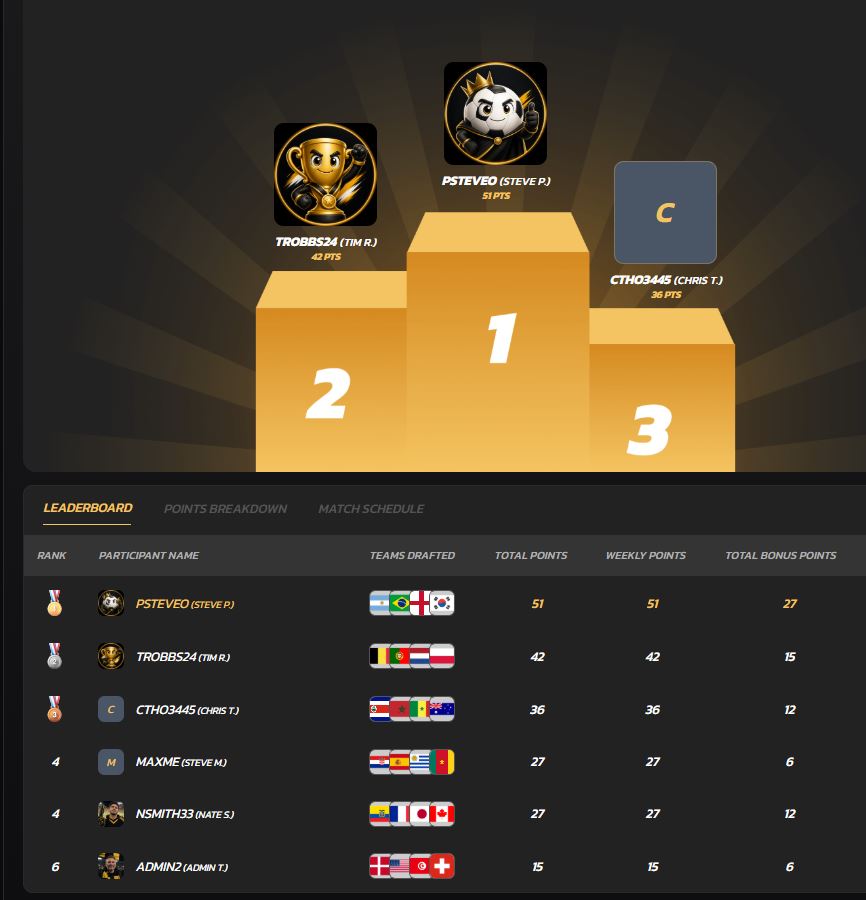
Draftwins launches with World Cup pools and follows with NFL and College Football pools. Commissioners set up private pools with custom scoring and rules, and the platform handles automated scoring and live leaderboards. Draftwins charges a platform hosting fee and does not collect entry fees or hold prize money. If you want to run a group contest built around the drafting dynamics covered here, visit Draftwins to set up your pool.
Key takeaways
Team drafting stands out from every other selection format because it forces simultaneous decisions about building your roster and limiting your opponents, creating a strategic and emotional experience no other format replicates.
| Point | Details |
|---|---|
| Take plus deny mechanic | Every pick builds your team and removes options for opponents, creating real strategic complexity. |
| Snake draft fairness | Alternating pick order balances early and late advantages, making competition feel genuinely fair. |
| Round-turn advantage | Back-to-back picks at round turns are the most valuable moments in any snake draft. |
| Psychological intensity | Time pressure and visible picks create emotional stakes that open-ended formats cannot match. |
| Draft-time skill focus | Draft leagues reward preparation and tier planning over weekly lineup adjustments. |
FAQ
What is the take plus deny mechanic in drafting?
The take plus deny mechanic means every pick you make adds a player or team to your roster and removes that option from all other participants. This creates an interactive decision space where denial is as important as selection.
Why are snake drafts considered fair?
Snake drafts reverse the pick order each round, so the team that picks first in one round picks last in the next. This structure offsets the advantage of early picks and gives every position a meaningful opportunity.
How does drafting teams differ from drafting individual players?
Drafting teams means your score follows entire team performance rather than individual player stats. This removes weekly lineup management and injury concerns while keeping the core drafting strategy intact.
What is the strategic value of round-turn picks in a snake draft?
Teams picking at the end and start of consecutive rounds get two picks in a row. That back-to-back opportunity lets managers pair complementary selections before rivals can react, making it one of the most valuable draft positions.
Why do draft leagues feel more competitive than weekly management formats?
Draft leagues concentrate skill expression into a single session rather than spreading decisions across an entire season. That concentrated moment raises the stakes and rewards preparation over reactive weekly adjustments.