
Your draft position is the single most important variable you control before a fantasy season begins. Every strong set of team draft order strategy tips starts with one truth: your draft slot is not a handicap or a gift. It is a set of structural advantages waiting to be used. Early picks give you elite stability. Middle picks give you value. Late picks give you the turn. Understanding which zone you occupy, and building a plan around it, separates winning rosters from reactive ones.
How do early, middle, and late draft positions shape strategy?
Draft positions group into three zones: early slots (picks 1–4), middle slots (picks 5–8), and late slots (picks 9–12 in a 12-team league). Each zone requires a completely different approach to roster construction. Treating all three the same is the most common mistake casual drafters make.
Early picks (1–4) are about locking in elite players before the tier drops. You get the safest, highest-ceiling options at the top of the board. The tradeoff is a long wait before your next pick. In a 12-team snake draft, the first overall pick does not pick again until 24th overall. That gap forces you to draft conservatively in round one and plan your round two pick well in advance.

Middle picks (5–8) are the most flexible zone. You miss the very top tier, but you catch falling players from the second tier at strong value. Middle managers benefit most from tier discipline. When a run on one position depletes a tier early, middle pickers can pivot to the next best available player without the same urgency that late pickers face.
Late picks (9–12) carry a unique weapon: the turn. In a snake draft, the pick order reverses each round, which means the last pick in one round becomes the first pick in the next. That creates back-to-back picks at the round boundary. A manager at pick 12 gets picks 12 and 13 consecutively. That pairing is a genuine competitive edge.
- Early zone priority: elite player stability and round two planning
- Middle zone priority: tier value and roster flexibility
- Late zone priority: turn control and positional pairing
Pro Tip: Before your draft, write down your round two pick before you make your round one selection. Early pickers who plan both picks together build more cohesive rosters than those who react round by round.
What are the best strategies for the draft turn and positional runs?
The turn is the most misunderstood concept in snake draft strategy. Most casual players see it as a consolation prize for picking late. The turn is better understood as a timing mechanism that enables a mini-auction for correlated positions. When you hold back-to-back picks, you can take two players from the same position tier before anyone else reacts.
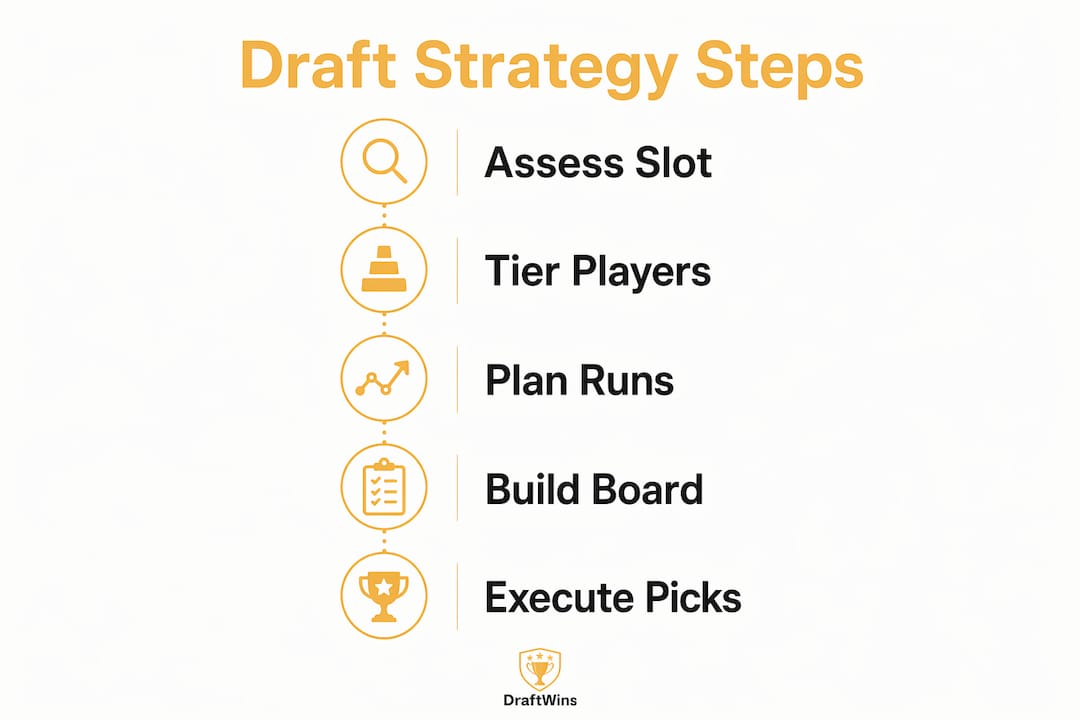
Positional runs are what make the turn so powerful. A positional run happens when multiple managers draft the same position in consecutive picks, collapsing a tier faster than expected. When a run starts, the managers who wait lose access to the top players in that tier. The managers who act before the run, or who use the turn to grab two players from a depleted tier, come out ahead.
Here is how to build a turn strategy that accounts for positional runs:
- Map your tier cliffs before the draft. Top-tier players cluster in identifiable tiers, with sharp value drop-offs between groups. Know exactly where each tier ends and the next begins. When the last player in a tier is gone, urgency spikes.
- Identify which positions are most likely to run in each round. Running backs typically run early. Wide receivers run in waves. Tight ends and quarterbacks often collapse in a single round. Know the pattern for your specific league format.
- Set trigger points, not just rankings. A trigger point is a specific player whose departure signals that a run has started. When that player goes, you act immediately on the next pick regardless of your original plan.
- Use back-to-back picks to grab two players from the same tier. Back-to-back picks at the turn let you lock two correlated positional players before the next manager picks. This is especially effective for running back and wide receiver pairings in the middle rounds.
- Balance acting before a run versus waiting for value. Acting too early costs you a pick on a player who would have been available anyway. Acting too late means you miss the tier entirely. The right call depends on how many picks remain before your next turn.
Pro Tip: Build a "run response plan" for the three positions most likely to collapse in your draft. Write down exactly which player you take if the run starts two picks before yours versus five picks before yours. That pre-built decision removes panic from the equation.
How do you build a draft board tailored to your draft slot?
A generic draft board ranks players by projected value. A slot-specific draft board ranks players by projected value relative to your pick timing. Pre-building a seat-specific roster plan that anticipates positional runs and pick wait times produces better results than any one-size-fits-all approach.
The table below shows how roster construction priorities shift by draft zone across the first four rounds.
| Draft Zone | Round 1 Priority | Round 2 Priority | Rounds 3–4 Priority |
|---|---|---|---|
| Early (picks 1–4) | Elite RB or WR | Best available opposite position | Depth at scarce positions |
| Middle (picks 5–8) | Best available by tier | Tier value, flexible position | Target positions before runs |
| Late (picks 9–12) | Best available, plan the turn | Use turn for positional pair | Fill gaps, exploit tier drops |
Positional scarcity mapping is the next step after tiering. Some positions have 10 viable starters. Others have 4. Knowing which positions are scarce in your specific league format tells you when to reach slightly and when to wait. In a 12-team league with two required running back starters, the running back position is almost always scarce. Waiting too long on a scarce position is the most common mistake across all draft zones.
Draft order distributions also vary by league. Some leagues use pure random assignment. Others use weighted lotteries based on prior season finish. When your draft slot is assigned by a weighted system, your strategic assumptions about seat advantages shift slightly. A slot you earned through a poor prior season finish carries different expectations than a randomly assigned slot. Understanding how your draft positions are assigned before the draft helps you calibrate your plan.
The most common board-building mistake is ignoring tier drops in favor of positional balance. If the last elite running back in a tier is available at your pick and you pass to balance your roster, you lose expected points that no later pick can recover. Tier discipline beats positional balance every time.
What mistakes should you avoid during the draft rounds?
Execution during the draft is where most strategies fall apart. You can build a perfect board and still lose the draft by making reactive decisions under time pressure.
- Do not chase hype. Staying disciplined within your planned tiers maximizes draft efficiency far more than chasing a breakout pick you heard about the night before. Hype picks almost always cost you a player who would have delivered more reliable value.
- Manage the wait between picks. Early pickers face the longest gaps between selections. Use that time to update your board based on what other managers are doing, not to second-guess your previous pick.
- Run mock drafts from your specific seat. Mock drafts that replicate your actual draft slot reveal timing and value nuances that general prep misses entirely. Seat-specific practice is the single most underused preparation tool in casual leagues.
- Do not overreact to positional runs. When a run starts, the instinct is to join it immediately. Sometimes the right move is to let the run finish and take the best player from the next tier. Evaluate the tier cliff before you react.
- Avoid reaching more than one round early. Reaching two or more rounds early to prevent a run almost always costs more value than the run itself would have. One round early is occasionally justified. Two rounds early is almost never correct.
For casual players who want to understand draft formats in depth before their first draft, reviewing how snake and linear formats differ changes how you read the board entirely.
Successful drafts revolve around a cohesive plan built around your league's scoring system and your specific draft order. Reactive, single-player hype decisions are the opposite of that plan.
Key takeaways
Your draft slot determines which advantages you have, and the best drafters build their entire plan around exploiting those structural advantages rather than fighting them.
| Point | Details |
|---|---|
| Draft zones require different plans | Early, middle, and late picks each optimize for different roster-building priorities. |
| The turn is a strategic weapon | Back-to-back picks at round boundaries let late managers grab two players from the same tier. |
| Tier cliffs drive urgency | When a tier depletes, value drops sharply. Act before the cliff, not after. |
| Slot-specific boards outperform generic ones | Pre-building a plan around your pick timing reduces reactive mistakes during the draft. |
| Mock drafts from your seat are non-negotiable | Practicing seat-specific decisions reveals timing nuances that general prep cannot replicate. |
Put your draft order strategy to work with Draftwins
Knowing the theory is step one. Practicing it from your actual draft seat is what converts strategy into a winning roster. Draftwins is built for exactly that. The platform lets you draft teams in group pools instead of managing individual player lineups, which removes the injury stress and lineup complexity that buries casual players every week. Automated scoring and live leaderboards keep the competition clear and the experience fun.
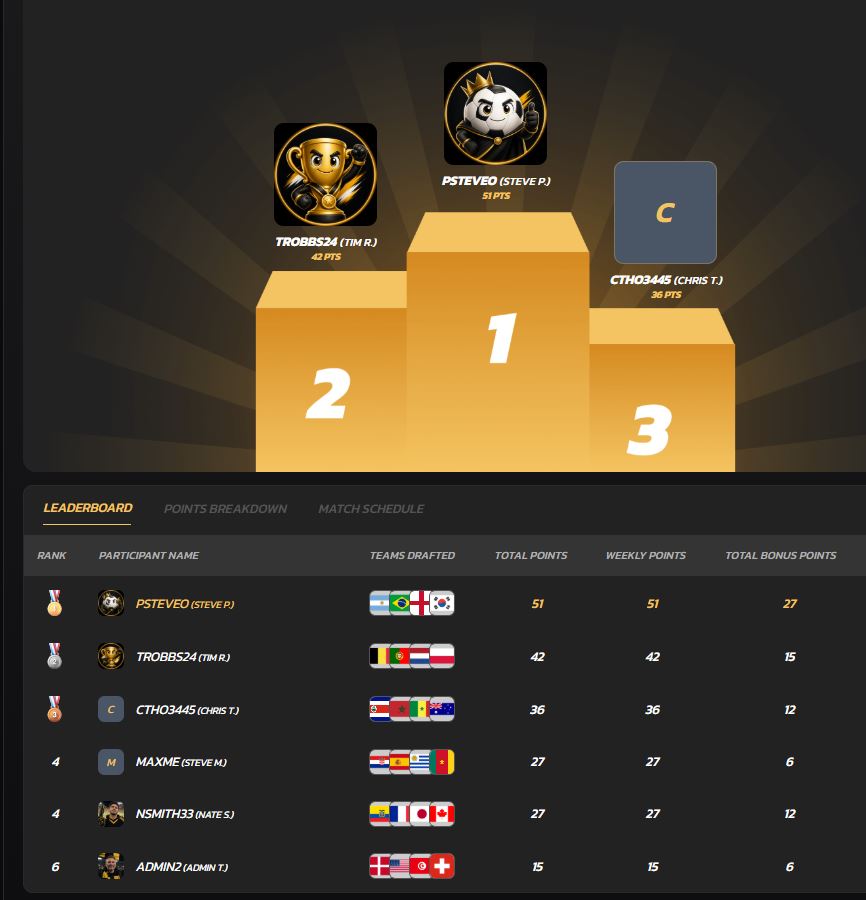
Draftwins launches with World Cup pools and follows with NFL and College Football pools, so you can apply these drafting strategies for teams across multiple sports formats. Commissioners set up private pools with custom scoring and rules in minutes. If you want a place to practice your draft order management and compete with friends without the overhead of a traditional fantasy league, Draftwins is the right next step.
FAQ
What is the "turn" in a snake draft?
The turn is the moment in a snake draft where the pick order reverses at a round boundary, giving the last-picking manager back-to-back consecutive picks. In a 12-team league, picks 12 and 13 belong to the same manager, creating a built-in pairing advantage.
Is an early or late draft pick better in fantasy sports?
Neither is objectively better. Each draft zone optimizes for different advantages: early picks lock elite players, middle picks capture tier value, and late picks leverage the turn. The best draft position is the one you have a specific plan for.
How do positional runs affect my draft strategy?
A positional run collapses a tier faster than expected, forcing managers without a pre-built response to reach or miss the tier entirely. Knowing your trigger points before the draft lets you act decisively instead of reacting under pressure.
How many mock drafts should i do before my real draft?
At least three to five mock drafts from your specific draft seat. Seat-specific mock drafts reveal pick timing and value patterns that general rankings cannot show you.
Does draft order assignment method change my strategy?
Yes. When leagues use weighted lottery systems rather than pure random assignment, the odds of landing certain slots shift. Your core tier and turn principles still apply, but your expectations about which slot you might land should factor in the distribution method.