
Team-based fantasy football means drafting whole teams, not individual players, and letting automated scoring track how those teams perform across the season. Instead of managing a roster of quarterbacks and running backs, each participant picks NFL, college, or national teams and earns points based on those teams' real-world results. A commissioner can set rules, run the draft, and invite everyone in a single afternoon using a platform like Draftwins, which handles automated scoring and live leaderboards automatically.
Here's what makes it different from traditional fantasy:
- What it is: You draft teams, not players. Your score follows the team's wins, points, or weekly results.
- Why it's simpler: No weekly lineup swaps, no scrambling after injuries, no waiver wire drama.
- First three moves: Pick your pool size, set a draft date, and create your private pool on Draftwins.
The format is sometimes called a "team-draft pool" in commissioner circles, and that's the more precise term. Both names refer to the same thing.
Key Takeaways
Team-based fantasy football is the lowest-maintenance format for casual groups: draft teams once, automate scoring, and let the leaderboard do the rest.
| Point | Details |
|---|---|
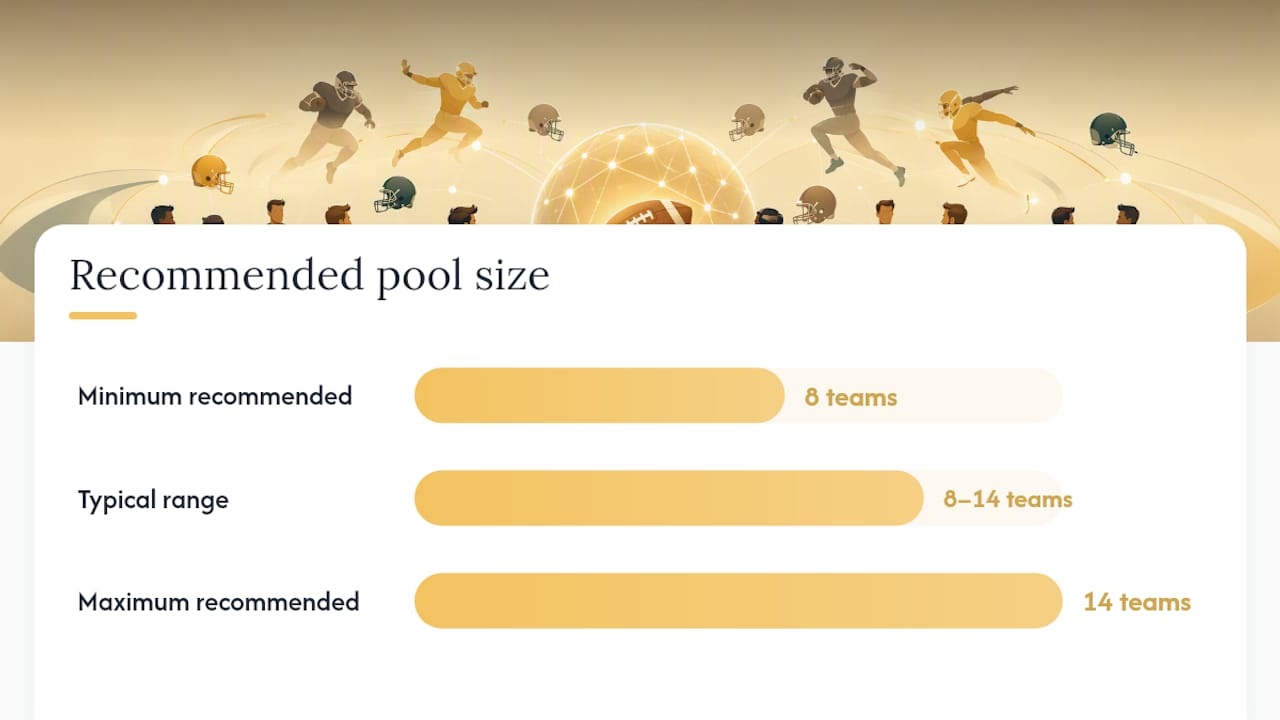
| Pool size sweet spot | Aim for 8–14 participants to keep variety high and scheduling manageable. |
| Scoring model first | Choose season record, points-for, or weekly head-to-head before the draft and write it down. |
| Publish rules upfront | A copy-paste ruleset in the pool description prevents most mid-season disputes. |
| Automate everything | Automated scoring and live leaderboards cut the commissioner's weekly workload to near zero. |
| Draftwins for setup | Draftwins handles private-pool creation, team drafts, and automated scoring with one hosting fee. |
Table of Contents
- Who benefits from team-draft pools?
- Commissioner checklist before you send the invite
- What scoring model should you use?
- How to run the draft itself
- Managing the season without the headaches
- A copy-paste ruleset for your pool
- Why a dedicated platform saves you real time
- Costs and legal notes for U.S. commissioners
- Draftwins makes team-draft pools easy to launch
- Sources
- FAQ
Who benefits from team-draft pools?
Team-draft pools are built for groups that want the fun of competition without the weekly upkeep. Office pools, family group chats, and friend circles planning around a tournament or NFL season are the natural fit. Participants check in once a week to see standings, not every Tuesday to set lineups.
Good fits:
- Casual friend or coworker groups with mixed sports knowledge
- One-off event pools (World Cup, College Football Playoff, bowl season)
- Groups where some members travel or have unpredictable schedules
- Anyone who's been burned by weekly lineup management in traditional leagues
Not the right format when:
- Your group wants deep roster strategy and player-level decisions
- Participants expect daily or weekly lineup engagement as part of the fun
- The pool is highly competitive with experienced fantasy managers who want granular control
League size matters more than most commissioners expect. A pool of 8–14 participants hits the sweet spot: enough variety that no two rosters look identical, but not so many teams that the draft runs thin or playoff scheduling gets complicated. Fewer than 8 can feel light; more than 14 tends to create roster crunches and fairness issues with scheduling.
Commissioner checklist before you send the invite
Decide these settings before you open the pool to participants. Changing rules mid-season is the fastest way to lose trust.
- Pool size: Aim for 8–14. Lock the number before inviting anyone.
- Duplicate teams: Decide whether two owners can draft the same pro team. Banning duplicates forces more variety and reduces disputes.
- Scoring model: Choose one (see Section 4 below). Don't mix models mid-season.
- Draft format: Snake, linear, or auction-style nomination. Set the draft date and how draft order is assigned (random draw, reverse standings, or commissioner's call).
- Tiebreakers: Name them now. Total points scored is the most common fallback.
- Hosting fee: The commissioner pays Draftwins' one-time platform fee. Participants join free. Prize collection and payout happen outside the platform, handled by whoever the group designates.
- Trade and veto rules: Set a trade deadline and a veto threshold (simple majority works for most groups) before the season starts.
Pro Tip: Copy the full ruleset into the pool description on day one. Participants who can read the rules themselves ask fewer questions and raise fewer disputes.
What scoring model should you use?
Three models cover most team-draft pools. Pick the one that matches how engaged your group wants to be.
| Scoring model | How it works | Best for |
|---|---|---|
| Season record | Points for each team win; final standings by total wins | Long seasons, casual groups, NFL or college football |
| Points-for | Accumulate the actual points your drafted teams score in real games | Groups that want a tighter spread and fewer ties |
| Weekly head-to-head | Your roster's combined results vs. one opponent each week | Groups that want weekly drama and a playoff bracket |
Sample default settings that minimize disputes for a casual group: 10 participants, no duplicate pro teams, points-for scoring with total season wins as the tiebreaker, top-6 advance to playoffs. These defaults keep the standings clear and give most participants a realistic shot at the postseason. Draftwins' commissioner templates include pre-built versions of each model so you're not starting from scratch.
Some pools go fully static, locking rosters after the draft with no trades at all, which works well for short tournaments. Others allow mid-season trades with a veto window. Both are valid; just write it down before the draft.
How to run the draft itself
Before the draft
Confirm every participant's spot, publish the draft order (random draw is fairest for casual groups), and share a one-page FAQ covering pick time limits and what happens if someone misses their turn. Draft order assignment is worth explaining in advance so no one feels the process was rigged.
During the draft
- Open the pool and confirm all participants are present or have set autopick preferences.
- The first owner picks a team; snake order reverses each round (1→10, then 10→1).
- If duplicates are banned, the platform flags any repeat pick automatically.
- If an owner misses their pick window, autopick selects the highest-ranked available team based on pre-set rankings.
- Continue until every owner has their full roster of teams.
Snake and auction-style draft formats are both supported on dedicated team-draft platforms, and autopick is a reliable fallback for groups that can't all be online at the same time. Auction-style nomination adds a bidding layer that some groups enjoy, though snake is simpler for first-timers.
After the draft
Publish the roster results immediately, enable automated scoring, and confirm who participants should contact for disputes. Send one message with the standings link so everyone bookmarks it.
Participant strategy tips:
- Spread picks across conferences or regions to reduce correlated losses.
- In a points-for pool, prioritize high-scoring offenses over teams with strong defenses.
- In a record-based pool, target teams with soft schedules in the first half of the season.
- For casual pool strategy, consistency beats upside: a team that wins 10 games beats a team that wins 13 but loses 6.
Managing the season without the headaches
Governance basics
- Veto policy: Simple majority (more than half the pool) to block a trade. Require veto requests within 48 hours of a trade being posted.
- Trade deadline: Set it at the halfway point of the regular season. No exceptions.
- Appeals: The commissioner decides, with a written explanation posted to the group. For disputes the commissioner is involved in, designate a neutral co-commissioner in advance.
Playoff formats
Top-6 single-elimination works well for pools of 10–14. Top-4 is cleaner for smaller groups. Playoff seeding by regular-season record, with total points as the tiebreaker, is the standard approach. Run playoffs over the final three weeks of the season.
Handling disputes
Most disputes come down to one of three things: a scoring error, a trade disagreement, or a rule that wasn't written down. Automated scoring eliminates the first category entirely. For the other two, a written ruleset and a 48-hour response window for the commissioner resolves most issues before they escalate.
A copy-paste ruleset for your pool
Drop this into your pool description or invite message. Edit the bracketed fields.
[Pool Name] Official Rules
Purpose: A private team-draft pool for [Group Name]. Each participant drafts [X] NFL/College/National teams and earns points based on those teams' real-game results.
Roster: Each owner drafts [X] teams. No duplicate teams allowed [or: duplicates permitted].
Draft: Snake format, [X] rounds, [Date/Time]. Draft order assigned by random draw. Pick time limit: [X] minutes. Missed picks go to autopick.
Scoring: Points-for model [or: season record / weekly head-to-head]. Tiebreaker: total season wins, then total points scored.
Trades: Trades open after Week 1. Trade deadline: [Date]. Veto requires simple majority within 48 hours.
Playoffs: Top [4 or 6] advance. Single-elimination. Weeks [X–X].
Prizes: Prizes collected and distributed by [Name]. Draftwins does not collect entry fees or hold prize money.
Contact: Questions to [Commissioner Name] at [Contact].
Three fields to paste into your platform settings:
- Pool title: [Pool Name] [Year]
- Short rules summary: Snake draft, points-for scoring, top-6 playoffs, no duplicate teams
- Full rules: Paste the block above
To allow duplicate teams, delete that line. To change playoff size, update the top-4/6 line and adjust the week numbers accordingly.
Why a dedicated platform saves you real time
Manual scoring in a spreadsheet takes 20–30 minutes per week. A dedicated team-draft platform cuts that to zero. Draftwins handles automated scoring, live leaderboards, private-pool creation, and rule templates, so the commissioner's weekly job shrinks to answering the occasional question.
The practical benefits:
- No manual scoring: Results update automatically after each game.
- Live leaderboards: Participants check standings themselves instead of texting the commissioner.
- Audit logs: Every scoring event is recorded, which shuts down most "my score is wrong" disputes before they start.
- Private pools: Only invited participants can see the pool, which matters for office groups.
- Rule templates: Pre-built settings mean you're not writing rules from scratch.
The commissioner's weekly time commitment drops from an hour of spreadsheet work to a few minutes of answering messages.
Costs and legal notes for U.S. commissioners
Draftwins charges the commissioner a one-time platform hosting fee to create and run the pool. Participants join free. The platform does not collect entry fees, hold prize money, accept wagers, or pay out winnings. Prize collection and distribution are handled entirely by whoever the group designates, outside the platform.
For prize handling, the clearest approach is to designate one person to collect and distribute funds, put that person's name in the written rules, and confirm the payout method before the draft. Written rules and transparent fee handling are standard best practice for small social pools. For pools with large prize amounts, consult a licensed attorney familiar with your state's laws before collecting money.
Draftwins makes team-draft pools easy to launch
Running a private team-draft pool used to mean spreadsheets, manual scoring, and a group chat full of complaints. Draftwins is built specifically for the format: quick private-pool creation, automated team drafts, and live leaderboards that update without any work from the commissioner.
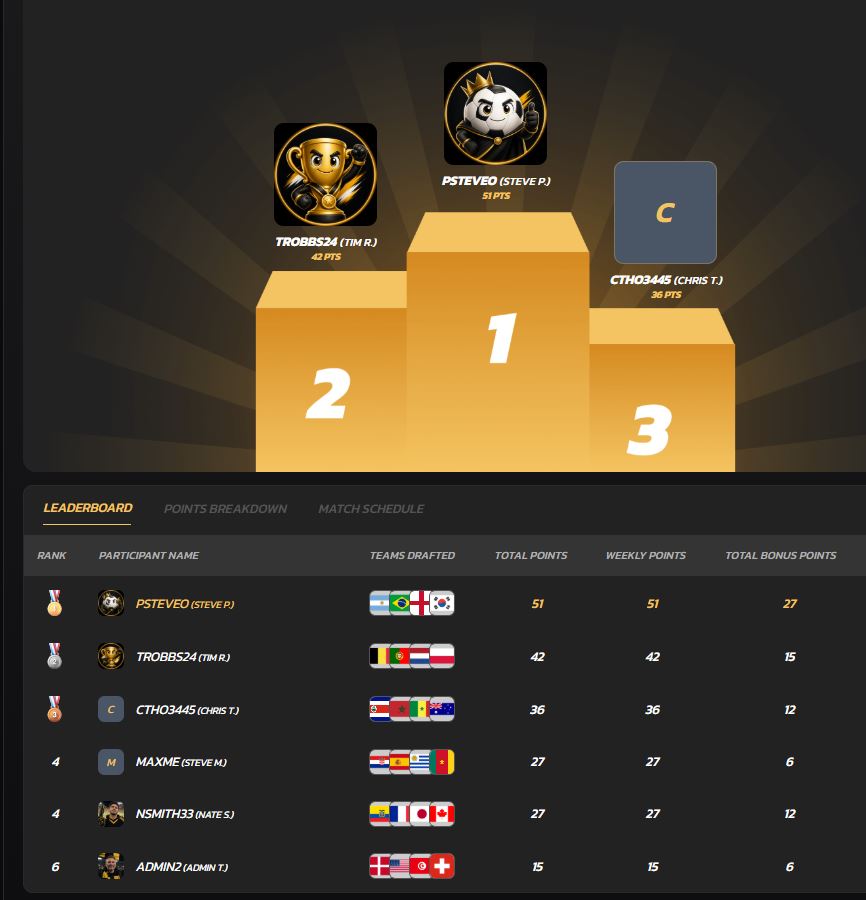
The commissioner pays one hosting fee, sets the rules, and invites the group. Participants join free, draft their teams, and check standings all season without ever texting you for a score update. Draftwins currently supports World Cup pools, with NFL and College Football pools launching next.
Create your team-draft pool on Draftwins and have everything ready before you send the first invite.
Sources
- How to Draft | NFL Fantasy
- Draft Fantasy
- How to play fantasy football: Guide from draft day to the championship - ESPN
FAQ
What is team-based fantasy football?
Team-based fantasy football (also called a team-draft pool) is a format where participants draft whole teams instead of individual players, earning points based on those teams' real-game results. Automated scoring and live leaderboards track standings throughout the season.
How many people should be in a team-draft pool?
8–14 participants is the recommended range. Fewer than 8 can feel light, and more than 14 tends to create scheduling and roster-depth problems.
Do participants need to manage lineups every week?
No. That's the main advantage of the format. Once the draft is done, rosters are set and scoring is automated, so participants just watch the standings update.
How does Draftwins handle prize money?
Draftwins does not collect entry fees, hold prize pools, or pay out winnings. The commissioner pays a one-time hosting fee; prize collection and distribution are handled by whoever the group designates outside the platform.
What scoring model works best for a casual group?
Points-for scoring with total season wins as the tiebreaker is the most common choice for casual pools. It produces a clear spread in the standings and rarely ends in ties.