
Fantasy playoff football rankings are defined by one factor above all others: projected games played, not just individual talent. A wide receiver averaging 20 points per game means little if his team exits in the wild card round. The best postseason rosters combine elite players with teams projected to advance deep into the bracket. This guide covers how to build those rosters, which players rank highest by position, and how to avoid the mistakes that knock most players out early.
1. What are the key factors in fantasy playoff football rankings?
Postseason rankings require a completely different lens than regular season rankings. The regular season rewards weekly ceiling. The playoffs reward survival and total accumulated points across multiple rounds.
The games played multiplier is the single most important variable. Players on teams projected to advance 3–4 rounds rank higher than top talent on teams likely to exit after one game. A player who scores 15 points across three games outscores a player who scores 25 points in one game and disappears.
Key ranking criteria to evaluate before your draft:
- Projected games played: Teams with strong Super Bowl odds provide the most scoring opportunities.
- Bracket position: Teams in weaker conference brackets face easier paths to the Super Bowl.
- Player role: High-volume targets and carries matter more than touchdown-dependent players.
- Team health: Injuries to key offensive linemen or coordinators affect player output significantly.
- Opponent overlap: Drafting players from teams that face each other early creates internal roster conflict.
Pro Tip: Before ranking any player, map out how many rounds you realistically expect their team to survive. A third-round receiver on a Super Bowl contender beats a first-round receiver on a one-and-done team.
2. Which strategies maximize success in playoff fantasy drafts?
The most effective playoff draft strategy centers on concentration, not diversification. Top competitive drafters focus their first 10 picks on 2–3 teams rather than spreading picks across 6–7 teams. Spreading thin dilutes the upside you need to win a postseason pool.

Stacking your anchor teams
Start by identifying 2–3 teams you believe will reach the conference championship or beyond. These become your anchor teams. Draft multiple players from each anchor team to maximize scoring when those teams win. A team that advances to the Super Bowl generates four games of scoring from every player you drafted from their roster.
The anchored drafting method
The anchored drafting approach works by crossing off opponents after you select a player from a given team. Once you draft a player from the Kansas City Chiefs, for example, you avoid drafting players from whoever the Chiefs face in round one. This prevents your roster from canceling itself out in early rounds.
Skinny stacks for risk management
A skinny stack pairs a QB with one skill position player from the same team. This captures the upside of a team's offensive explosion without putting your entire roster at risk if that team gets upset. Overstacking a single team creates an all-or-nothing scenario that rarely ends well.
Kickers and defenses
Drafting kickers and defenses early in playoff formats locks in scoring from teams projected to play the full postseason. This runs counter to regular season advice, where kickers and defenses go last. In a playoff pool, a kicker on a team that plays four games scores more total points than a backup running back who plays one.
Pro Tip: Draft your full bracket projection on paper before you make a single pick. Knowing which teams you expect to meet in each round prevents you from accidentally drafting opponents who will cancel each other out.
3. Who are the top fantasy playoff players by position?
Matthew Stafford, Puka Nacua, and Josh Allen rank among the highest-value players in playoff formats because of the combination of personal talent and projected team advancement. Their teams carry legitimate Super Bowl expectations, which means multiple rounds of scoring potential.
Jaxon Smith-Njigba and James Cook also rank highly because of volume. Cook handles a heavy workload for the Bills, and Smith-Njigba has emerged as a primary target in Seattle's offense. Christian McCaffrey, when healthy, remains one of the highest-floor running backs in any format because of his receiving role in addition to carries.
| Position | Player | Why They Rank High |
|---|---|---|
| QB | Josh Allen | Elite scoring upside with Bills projected deep run |
| QB | Matthew Stafford | Rams offense built for playoff volume |
| WR | Puka Nacua | High target share on a projected multi-round team |
| WR | Jaxon Smith-Njigba | Emerging as Seattle's top receiver with consistent volume |
| RB | James Cook | Heavy workload and receiving role for a Super Bowl contender |
| RB | Christian McCaffrey | Dual-threat value when healthy, maximizes points per game |
| TE | (Varies by bracket) | Target the TE on your anchor team for stacking synergy |
The tight end position is best filled by targeting the starter on whichever anchor team you build around. Tight end rankings shift significantly based on team advancement, so prioritize bracket fit over name recognition.
4. How bracket scenarios shape your playoff rankings
Postseason fantasy rankings are highly fluid and must update as brackets finalize and Super Bowl odds shift. A player who ranked fifth before the bracket was set might jump to second after a favorable draw is confirmed.
Drafting your full bracket projection before selecting players helps you identify anchor teams and avoid opponent overlap. This is the single most underused technique in playoff fantasy drafts.
Key matchup considerations when building your rankings:
- Favorable bracket paths: Teams in weaker conference brackets face fewer elite opponents and have higher survival odds.
- Opponent overlap risk: If two of your players face each other in round one, one of them stops scoring after that game.
- Bye week advantage: Teams with first-round byes start with a built-in games played advantage.
- Divisional familiarity: Teams playing division opponents in early rounds often have better preparation and tighter games, which can suppress individual scoring.
- Weather and venue: Cold-weather outdoor games in january tend to favor running backs and defenses over quarterbacks and receivers.
Adjust your fantasy football rankings for playoffs after each round ends. A team that wins a close game may have a tougher path ahead. A team that wins by 30 points signals offensive dominance worth doubling down on.
5. Common pitfalls to avoid in playoff fantasy drafts
Overvaluing regular season stars who play for one-and-done teams is the most expensive mistake in playoff fantasy. High weekly averages do not compensate for a single-game exit. Total postseason games played determines total scoring opportunity, and no amount of per-game talent overcomes a first-round loss.
Spreading picks too thin across many teams is the second most common error. Players who draft from 6–7 different teams end up with no concentrated upside. When none of your anchor teams advance, you have no fallback. Concentrated stacking on 2–3 teams gives you a real chance to win when those teams go on a run.
Ignoring opponent overlap is a structural mistake that quietly destroys rosters. Drafting players from teams scheduled to meet in round one guarantees that half your investment disappears after the first weekend. Map the bracket before you draft, not after.
Failing to acquire a kicker and defense from your anchor teams leaves points on the table across multiple rounds. Most players skip these positions or draft them as afterthoughts. In a playoff pool format, they accumulate real scoring over a full postseason run.
Pro Tip: Look for players on strong teams who are undervalued because their regular season stats were modest. A backup receiver who steps into a larger role during the playoffs on a Super Bowl contender is worth more than his name recognition suggests.
Key Takeaways
The best fantasy playoff football rankings combine projected games played with player talent, making team advancement the primary driver of postseason value.
| Point | Details |
|---|---|
| Games played is the top factor | Prioritize players on teams projected to advance multiple rounds over raw talent alone. |
| Stack 2–3 anchor teams | Concentrate your first 10 picks on teams with strong Super Bowl odds to maximize upside. |
| Use anchored drafting | Cross off opponents after selecting a player to prevent internal roster cancellation. |
| Update rankings after each round | Bracket outcomes shift player values significantly; adjust your roster projections in real time. |
| Draft kickers and defenses early | In playoff formats, these positions accumulate scoring across multiple games and should not be afterthoughts. |
Draftwins makes playoff pool drafts worth playing
Running a playoff pool with friends should be fun, not a spreadsheet exercise. Draftwins offers a team-based draft platform where you draft NFL teams instead of individual players, removing the stress of injury tracking and lineup management entirely. Automated scoring and live leaderboards mean you spend time watching football, not calculating points.
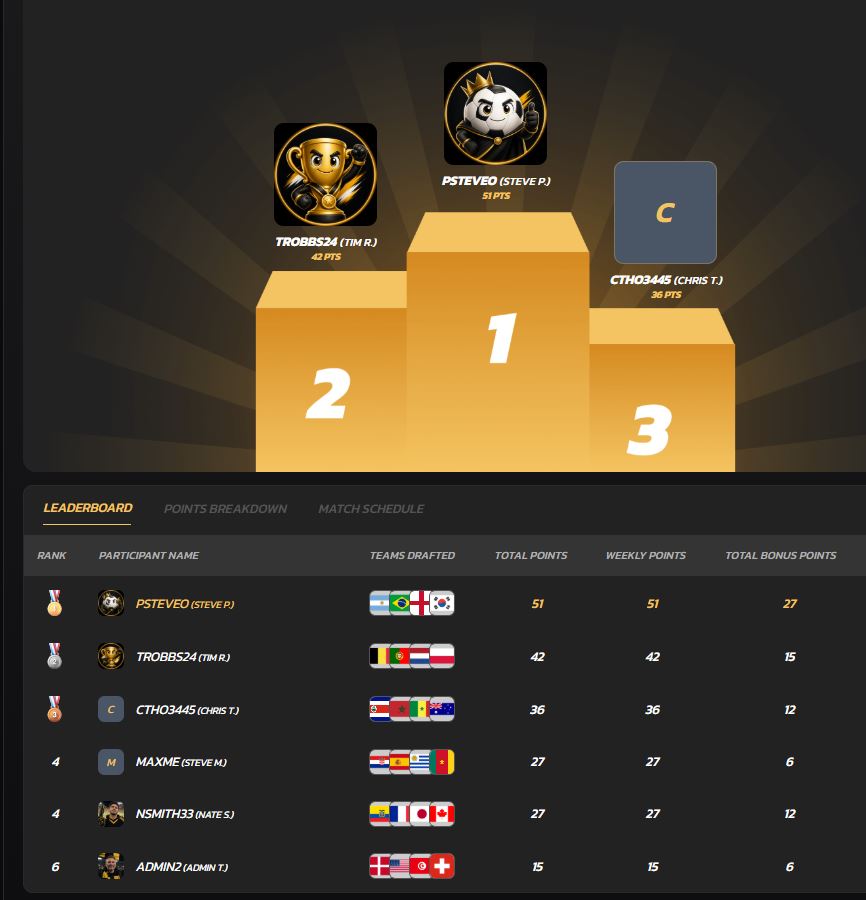
Commissioners can create private pools with custom scoring rules tailored to playoff formats. The setup takes minutes, and the competition runs itself through the postseason. If you want a format that captures the excitement of playoff football without the complexity of traditional fantasy leagues, Draftwins is built for exactly that. Check out the draft pick strategy guide to sharpen your approach before your pool draft begins.
FAQ
What is the most important factor in playoff fantasy rankings?
Projected games played outweighs individual talent in playoff fantasy rankings. A player on a team expected to reach the Super Bowl has four games to accumulate points, while a one-and-done player has only one.
How many teams should I stack in a playoff fantasy draft?
Top playoff drafters concentrate their first 10 picks on 2–3 teams. Spreading picks across 6–7 teams dilutes your upside and reduces your chances of winning a postseason pool.
What is anchored drafting in playoff fantasy football?
Anchored drafting means crossing off players from teams that face your selected players in opening rounds. This prevents your roster from containing opponents who cancel each other's scoring potential.
Should I draft a kicker in a playoff fantasy pool?
Yes. Drafting a kicker early from one of your anchor teams locks in scoring across multiple playoff rounds, which is a meaningful advantage in postseason pool formats.
How often should I update my playoff fantasy rankings?
Postseason rankings should update after every round as bracket results and Super Bowl odds change. Player values shift significantly based on which teams survive each weekend.