
Pick a simple format, set a hard deadline, and get money or team drafts locked in before Week 1 kicks off. The fastest path is a Pick'em pool or a team-draft pool run through a hosted tool like DraftWins, or a printable sheet if your group is small and casual. Then do three things immediately: choose your format, set the entry fee and deadline, and pick how you'll host and track scores.
TL;DR:
- Automated scoring platforms like DraftWins are essential for managing pools with more than 20 participants to prevent manual errors and save time.
- Collect entry fees upfront using secure third-party processors such as PayPal or LeagueSafe to avoid disputes and missing payments throughout the season.
- Clear, published rules covering deadlines, scoring, tiebreakers, and eligibility prevent disputes and ensure consistent enforcement across the pool.
- The most beginner-friendly format is Pick'em, which involves simply selecting the winner of each game without spreads or rankings, making it accessible for all skill levels.
- Team-draft pools eliminate weekly lineup management by drafting teams at the start of the season, ideal for groups seeking minimal admin and more focus on social interaction.
Table of Contents
- Quick-Start Checklist for Your College Football Office Pool
- Which College Football Pool Format Fits Your Group?
- Should You Use a Hosted Platform, a Spreadsheet, or a Printable Sheet?
- How Do You Collect Entry Fees Safely?
- What Rules and Tiebreakers Should You Set Before Week 1?
- How Do You Track Picks and Keep Standings Accurate?
- How Do You Keep Players Engaged All Season?
- Where Do You Get Printable Pool Templates?
- How Do You Handle Disputes Among Pool Participants?
- Why DraftWins Makes College Football Pools Easier to Run
- Sources
- FAQ
Quick-Start Checklist for Your College Football Office Pool
You can have a college football pick em pool live before lunch. Work through these steps in order:
- Pick a format (Pick'em, Survivor, Squares, Confidence, or team-draft) and decide how the prize splits.
- Set the entry fee and collect it before Week 1, not during the season.
- Lock deadlines and a tiebreaker so nobody can submit picks after games start.
- Choose a hosting method: a hosted platform, a shared spreadsheet, or printable sheets.
- Invite everyone and publish the rules in one place, before the first kickoff.
For a group of 10 or fewer, this takes about 10 minutes using a printable sheet or group text. A 15 to 30 person office pool needs 15 to 20 minutes to set up a hosted tracker and collect payments through something like PayPal. Larger leagues, 30 or more people, benefit most from an automated platform since manual spreadsheet errors multiply fast once you're chasing dozens of entries every Saturday. Bleacher Report's rundown on running a pool echoes the same order of operations: format first, then tracking, then rules, then payment.
Which College Football Pool Format Fits Your Group?
Format choice decides whether your pool feels fun or feels like a chore by October. Here's how the main options break down:
- Pick'em: Pick the straight-up winner of each game. Easiest to explain, works for any group size, and keeps casual fans in it all season.
- Survivor: Pick one winning team per week; lose once and you're out. Great drama for 20 plus players, but it thins the field fast and can kill engagement by midseason.
- Squares: Assign a grid of number combinations tied to game scores. Zero football knowledge required, ideal for large office groups who just want a chance to win.
- Confidence: Rank picks by confidence level, higher-confidence correct calls earn more points. Rewards real football knowledge, best for 10 to 25 committed players.
- Margin: Predict the point spread or exact margin of victory on select games. Adds nuance for sharper bettors but confuses newcomers.
- Team-draft: Instead of picking games, participants draft actual teams for the season, similar to a fantasy draft. This is where a platform like DraftWins sets itself apart, no weekly lineup decisions, no waiver wire, just draft your teams and watch them play.
Team-draft goes a step further by removing lineup management entirely, so the stress of setting a roster every week disappears.
Should You Use a Hosted Platform, a Spreadsheet, or a Printable Sheet?
Your hosting choice determines how much manual work falls on you every single week. A hosted platform automates scoring, updates leaderboards in real time, and enforces your rules automatically, which matters most once you cross 20 participants and can't afford to eyeball every pick by hand. A shared spreadsheet gives you full control and costs nothing, but you're the one writing formulas and fixing typos every Sunday night. A printable sheet is the lowest-friction option for a small group that meets in person and doesn't want to touch an app at all.
Before you commit to a host, run through this checklist:
- How long does setup actually take, 10 minutes or an hour?
- Does it support your format (Pick'em, Confidence, team-draft)?
- Are pools private, and who can see participant data?
- Is there a hosting fee, and does it cover the whole season?
- Can you customize scoring and tiebreaker rules yourself?
DraftWins is built specifically around the team-draft format, with automated scoring, live leaderboards, and private pools you configure yourself, an example of what a hosted tool should handle so you don't have to.
Pro Tip: If your group has never used a hosted tool before, run a printable sheet for Week 1 while you set up the platform in parallel. It keeps the pool moving even if setup takes longer than expected.
How Do You Collect Entry Fees Safely?
Collect every entry fee before the season's first kickoff, full stop. Waiting until Week 3 to chase down stragglers is how pools fall apart and how commissioners end up covering shortfalls out of pocket.
Use a secure third-party payment processor rather than cash or personal Venmo requests with no paper trail. PoolGenius's strategy guide specifically recommends tools like PayPal or LeagueSafe for pooled money, since both create a documented record of who paid and when.
- Send one payment request with a firm deadline, not a rolling "whenever you get to it."
- Keep a simple log of who's paid, even if your processor tracks it too.
- If you're funding the prize yourself instead of pooling entry fees, write down the payout amount and timing in the rules before anyone submits a pick.
- Consider non-cash prizes (gift cards, a trophy, bragging rights) for workplaces where cash pools raise compliance questions.
The single most common source of pool disputes isn't bad picks, it's confusion over who paid what and when. Solve that upfront and you've eliminated most of the drama before Week 1 even starts.
What Rules and Tiebreakers Should You Set Before Week 1?
Every college football office pool needs a one-page rules document published before anyone submits a single pick. CBS Sports' official pick'em contest rules show the level of detail worth copying: clear eligibility, weekly deadlines, a defined scoring method, and a mandatory tiebreaker procedure.
Your rules sheet should cover:
- Eligibility: who can join and whether there's a fee to enter.
- Deadlines: exact day and time picks lock, tied to kickoff of the first game that week.
- Submission method: hosted app, email, text, or paper sheet turned in by hand.
- Scoring method: one point per correct pick, confidence-weighted points, or margin-based scoring.
- Prize split: how weekly and season-long prizes get divided, and whether a weekly winner still qualifies for the season prize.
Common tiebreakers include total combined points in one designated game, "closest without going over" on a specific score, or fewest incorrect picks in the final weeks of the season. PoolGenius notes you have to specify whether "closest" means closest overall or closest without going over, that single word changes who wins. For Confidence pools, a typical scoring example ranks 10 games from 1 to 10 points; guess all 10 right and rank them correctly, and you'd score a maximum 55 points that week.
How Do You Track Picks and Keep Standings Accurate?
Accurate tracking is what keeps a pool credible past Week 4, once the games start blurring together and memory gets unreliable. A hosted platform updates scores automatically the moment games finish, which removes the manual entry errors that plague spreadsheet-run pools. If you're using a spreadsheet instead, build in formulas that pull results rather than typing scores in by hand every week.
Run through this checklist every Sunday or Monday:
- Update all game results and recalculate standings.
- Publish the updated leaderboard somewhere everyone can see it.
- Note any disputed picks and how you resolved them.
Your standings sheet, whether hosted or homemade, needs four core fields: entry name, weekly points, cumulative points, and tiebreaker value. A notes column for protested picks saves you from relitigating the same argument twice. Draftwins' guide on how football pools track standings walks through the technical setup if you're building this yourself, and its leaderboard guide for casual competitors is worth a look if you want standings that are easy for non-diehards to follow.
How Do You Keep Players Engaged All Season?
A pool that goes quiet by October is a pool people forget to pay next year. Send a weekly reminder before the deadline, not after games start, and keep a group chat or message board where people can trash-talk and compare picks. Small weekly prizes, a "lock of the week" side bet, or a midseason check-in email all keep casual players from mentally checking out.
- Send picks reminders 24 hours before each week's deadline.
- Run a lightweight side contest for weekly bragging rights.
- Do a midseason standings recap with a short, fun writeup.
- Avoid pure-elimination formats unless your group genuinely wants that pressure, they thin engagement fast.
For disputes, decide your policy before you need it: document the rule in writing, let the group vote on ambiguous calls, or set yourself as final judge and say so upfront. Bleacher Report's tips put a public rules document at the center of avoiding this problem entirely.
Where Do You Get Printable Pool Templates?
Printable pick'em sheets and squares grids remain the fastest way to launch a small, in-person pool with zero technology involved. PrintYourBrackets offers free downloadable templates for both college and NFL formats, plus a free online tournament manager if you decide to go digital later.
To run one, email the PDF or hand out printed copies, have people fill in picks by hand, and collect sheets before kickoff, then log the picks somewhere central (even a notebook works for a 10-person office). Once your group grows past 20 people or you're tired of manually entering scores every week, that's the moment to migrate to a hosted tracker instead.

How Do You Handle Disputes Among Pool Participants?
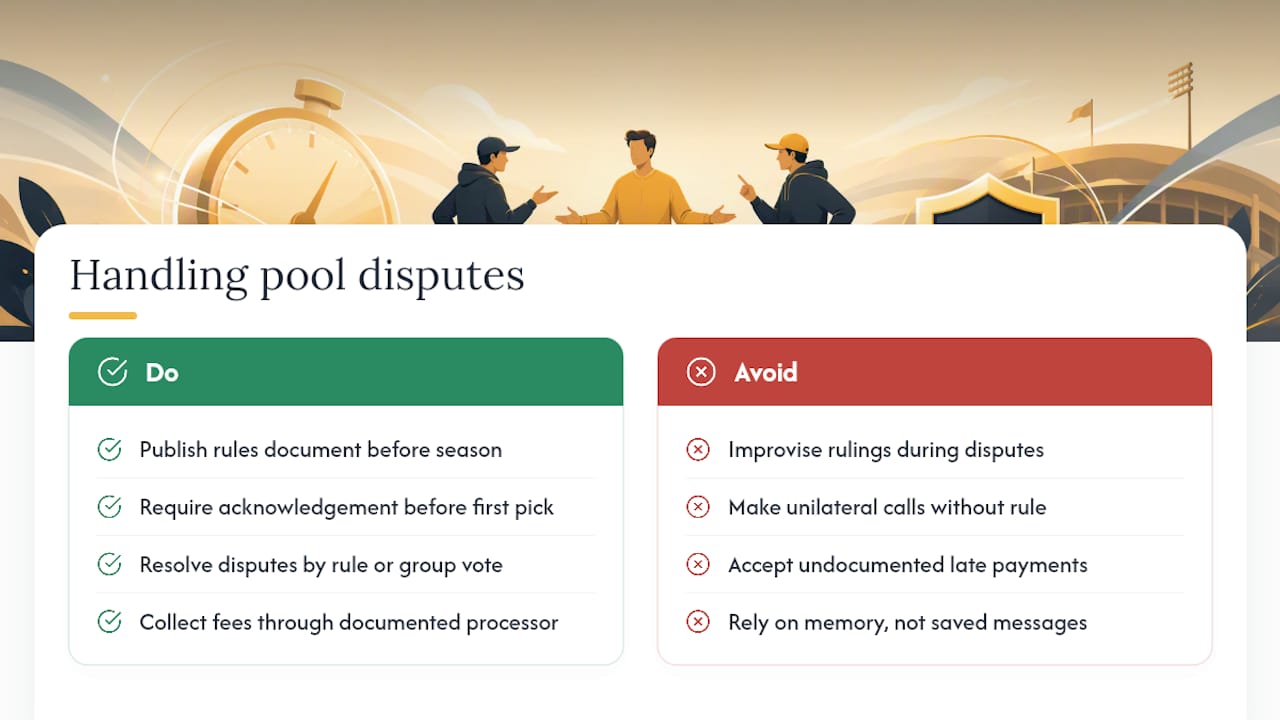
Most disputes trace back to one thing: a rule that wasn't written down clearly enough before the season started. The fix isn't complicated, but it has to happen in advance. Publish your rules document, including the tiebreaker method and scoring formula, and get every participant to acknowledge it before they submit a first pick.
When a dispute does happen, and eventually one will, resolve it the same way every time rather than improvising. If you built a rules document, point to the exact line that governs the situation. If the rule genuinely didn't anticipate the scenario, put it to a quick group vote rather than making a unilateral call that half the pool will resent. Some commissioners prefer to reserve final judgment for themselves, that's fine too, as long as you said so in the rules before anyone paid their entry fee.
The disputes that actually blow up pools usually involve money, a late payment, a payout that got delayed, or confusion over who owes what. That's exactly why collecting fees through a documented processor upfront matters so much: it removes ambiguity before it becomes an argument. Keep a written or digital paper trail for every payment and every rules clarification you issue during the season. When someone challenges a call in Week 9, you want to be able to point to a screenshot or a saved message, not rely on memory.
Why DraftWins Makes College Football Pools Easier to Run
If reading through formats, spreadsheets, and tiebreaker rules sounds like more admin than you signed up for, that's exactly the gap DraftWins fills. Instead of managing weekly picks, lineup swaps, and injury news, participants draft actual college football teams once and then just watch how they perform all season, no waiver wire, no lineup decisions, no Sunday scramble.
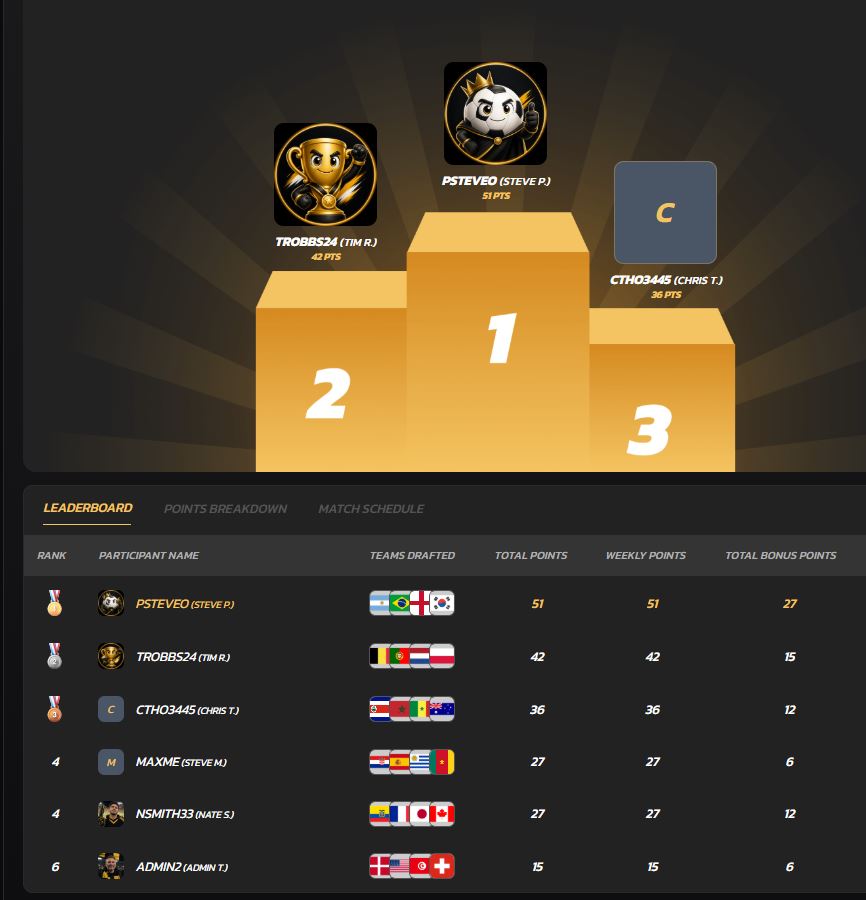
A platform that handles the parts that usually fall on the commissioner: automated scoring, a live leaderboard that updates as games finish, and private pools configurable with custom rules and scoring. The typical setup involves a hosting fee paid by the organizer, with participants joining for free and no entry fees collected or prize money held by the platform. This approach fits organizers who want minimal admin and more of the social side of the season, trash-talking a draft pick instead of tracking who submitted a spread bet on time.
If your group leans toward less spreadsheet babysitting and more actual football fun, start a private pool on DraftWins and walk through the 10-minute college football draft pool setup before your league's opening weekend.
Sources
- Pick'em Strategy Guide: How To Win Football Pick'em & Confidence Pools - PoolGenius
- 10 Tips For Running Your Football Office Pool - Bleacher Report
- Football Pools - Printable NFL & NCAA Office Pools - PrintYourBrackets
- Cbssports
FAQ
What's the easiest college football pool format for beginners?
Pick'em is the simplest format since it only requires picking the straight-up winner of each game, no spreads or confidence rankings to calculate.
How do I collect money without dealing with cash?
Use a secure third-party processor like PayPal or LeagueSafe, and collect all entry fees before the season starts to avoid chasing down late payments.
What if two participants tie for first place?
Set a tiebreaker before the season begins, common options include total points scored in one designated game or fewest incorrect picks late in the season, and specify whether "closest" means closest overall or closest without going over.
Do I need a hosted platform, or can I use a spreadsheet?
Spreadsheets work fine for small groups and cost nothing, but a hosted platform like DraftWins saves time once your pool grows past 20 people by automating scoring and leaderboards.
What makes a team-draft pool different from a pick'em pool?
Instead of picking game winners each week, participants draft actual college football teams once at the start of the season and score points based on how those teams perform, removing weekly lineup decisions entirely.