
The simplest fix for injury-wrecked fantasy results is a team-draft pool: participants draft whole professional teams instead of individual players, so no single injury can tank anyone's standings.
Three things make it work:
- Automated scoring and live leaderboards so nobody has to track points manually
- Private pool commissioner controls to keep the group tight and the rules clear
- Fixed team-based scoring that measures team wins, margins, and game-level results — never individual player availability
Pick a platform that supports team-draft private pools (Draftwins is built for exactly this), or use the scoring templates later in this guide to run one yourself.
Key Takeaways
A team-draft pool is the most reliable casual fantasy alternative where injuries can't derail results, because scoring measures franchise-level outcomes rather than individual player availability.
| Point | Details |
|---|---|
| Draft teams, not players | Participants pick franchises; no single injury can tank a participant's standings. |
| Use the Balanced template | 3 pts for a win, 1 for a tie, +1 bonus for a 7-point margin covers most casual groups. |
| Setup takes one evening | Draft night runs 30–60 minutes; weekly maintenance is near-zero with automated scoring. |
| Commissioner pays, participants join free | One-time platform hosting fee covers the pool; no wagering or prize-holding on the platform. |
| Draftwins is built for this | Team-draft pools, automated scoring, live leaderboards, and commissioner controls in one place. |
Table of Contents
- What is a team-draft pool and how does it differ from player fantasy?
- Why player injuries don't affect your results in a team-draft pool
- How to set up a low-maintenance, no-injury pool as a commissioner
- Scoring templates you can copy and use today
- How much time and money does running this format actually cost?
- Common concerns commissioners run into and how to fix them
- Draftwins makes team-draft pools easy to launch tonight
- Sources
- FAQ
What is a team-draft pool and how does it differ from player fantasy?
In a standard player-roster league, you draft quarterbacks, running backs, and wide receivers. When your star running back tears his ACL in Week 3, your season is effectively over. A team-draft pool works differently: each participant drafts franchises — the Kansas City Chiefs, the Michigan Wolverines, a World Cup national team — and scores points based on how those teams perform, not which individual players suit up.
No waiver wire. No injured reserve slots. No Sunday morning panic-checking beat reporters on X.
The format comes in a few flavors:
- Season-long team draft: each participant holds a fixed roster of teams for the full season
- Best-team bracket: participants draft teams seeded into a bracket; teams advance as they win
- Conference-only draft: participants draft only teams from one conference, keeping pools smaller and more competitive
For lowest maintenance, season-long team drafts win easily. Once the draft is done, the pool essentially runs itself.
Pro Tip: Use a randomized draft order or auto-draft feature to keep the setup social and fast. It levels the playing field for casual participants and cuts draft prep time to near zero.
As commentary in the Dallas Morning News points out, traditional fantasy also forces fans to root against their own favorite teams — a team-draft format removes that conflict entirely, since you're cheering for franchises you actually like.
Why player injuries don't affect your results in a team-draft pool
The core mechanic is simple: scoring aggregates team-level outcomes. A team win is worth points. A margin-of-victory bucket earns bonus points. Team total yards or points scored triggers a tier reward. None of those metrics care whether the starting quarterback or the backup plays.
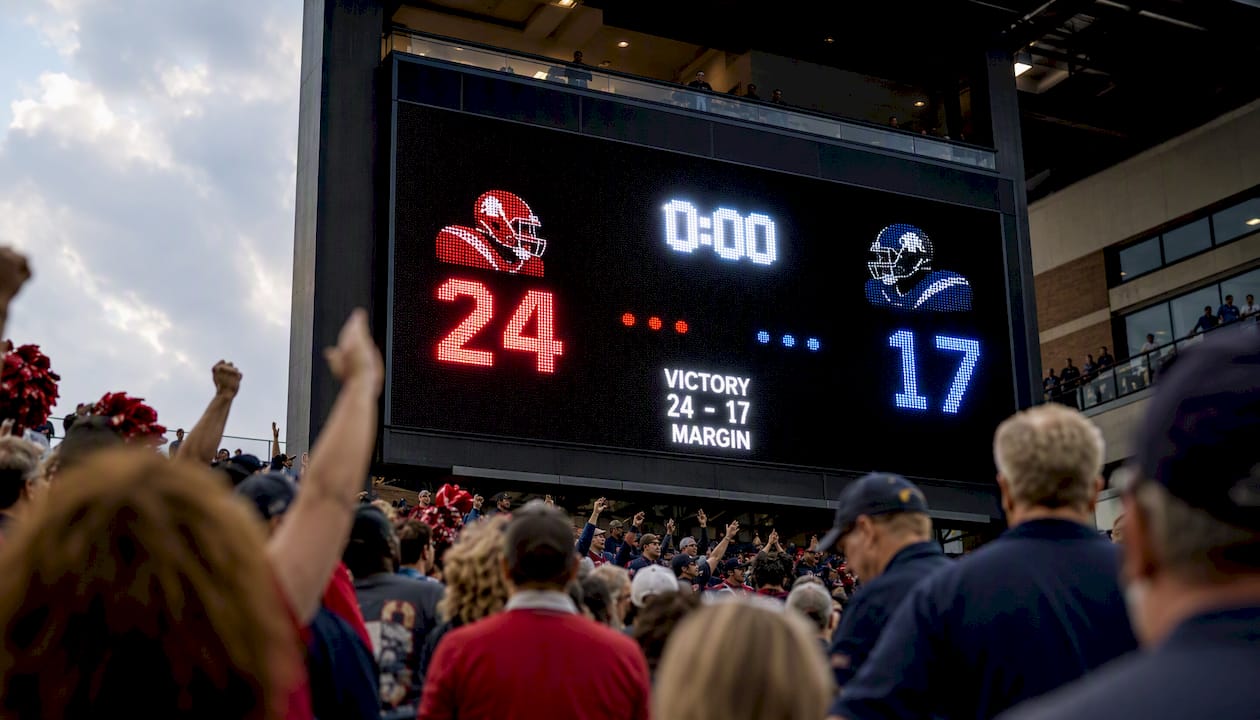
Consider a concrete example. Say you drafted the San Francisco 49ers and Brock Purdy goes down with a shoulder injury. In a player-roster league, your season takes a direct hit. In a team-draft pool, the 49ers still win or lose as a franchise. Their defense still generates yards allowed. Their offense still scores touchdowns. Your pool standing reflects the team's collective output, not one player's health status.
A few edge cases exist. A generational player like Patrick Mahomes missing multiple games genuinely moves team win probability. Two mitigation rules handle this cleanly:
- Minimum team count: draft at least 4–6 teams per participant so no single franchise dominates your score
- Reserve team slot: allow one reserve team swap per season for cases where a team's season collapses due to catastrophic injuries
The key insight: team-level scoring metrics — wins, point differentials, team stat buckets — are naturally distributed across a full roster of 53 players. One absence rarely shifts a team's aggregate output enough to change pool standings. That's the structural advantage low-maintenance formats have always had over player-roster leagues.
Research on pool strategy confirms that rule design materially affects fairness, which is exactly why locking in team-level metrics from the start protects every participant equally.
How to set up a low-maintenance, no-injury pool as a commissioner
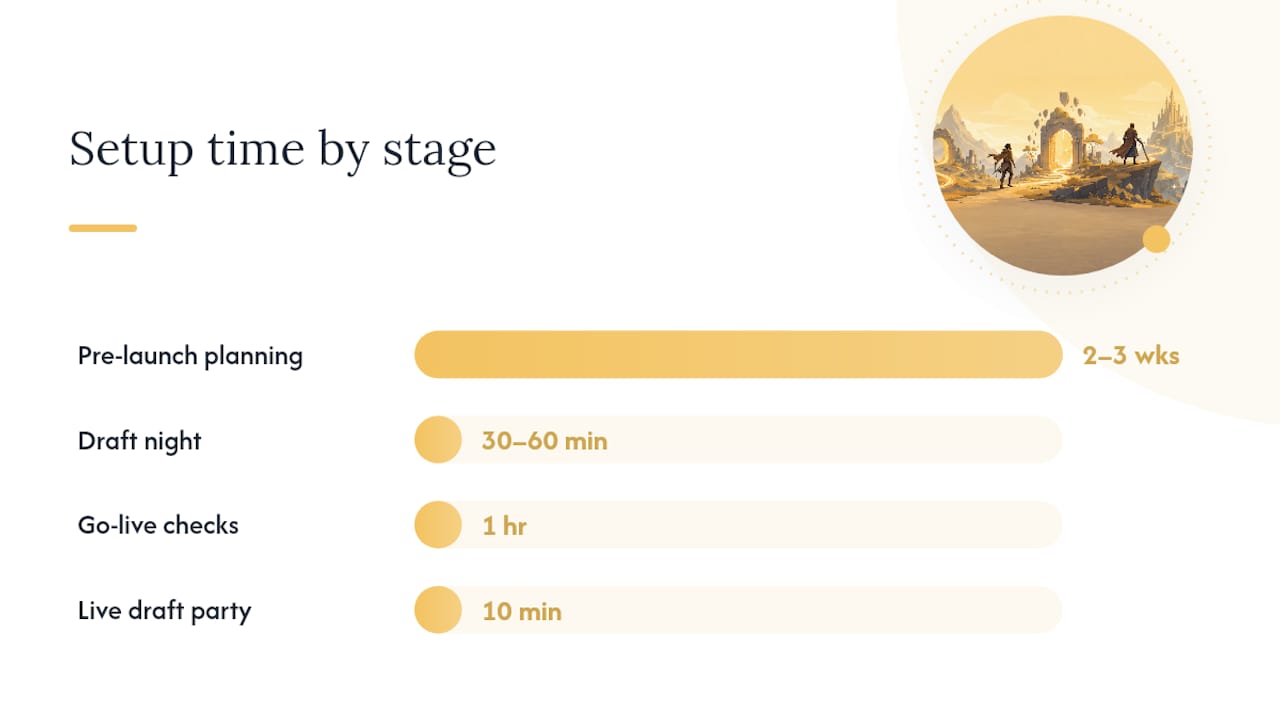
This checklist gets you from idea to live pool in roughly two weeks.
Two to three weeks before launch:
- Choose your sport and scope (NFL season, College Football bowl season, FIFA World Cup)
- Decide pool size — 8 to 16 participants is the sweet spot for casual groups
- Create your commissioner account on your chosen platform and set the pool to private
- Announce the draft date and send a one-paragraph invite explaining the format
Draft night (one evening, 30–60 minutes):
- Pick your draft method: snake draft of teams, auction-style bidding, or randomized assignment
- Set draft order (randomize it — see the pro tip above)
- Walk participants through the scoring template before picks begin (takes five minutes)
- Run the draft; auto-draft any absent participants
Go-live checks (one hour):
- Confirm automated scoring is active and leaderboard is visible to all participants
- Set tiebreaker rules in writing before the first game kicks off
- Send a short welcome message with the leaderboard link and a one-line explanation of how points work
For onboarding traditional fantasy players, keep the language familiar. Call it a "team roster" instead of a "team draft." Remind them there are no weekly lineup decisions — they set it once and watch. That single sentence converts most skeptics.
Pro Tip: Host a 10-minute live draft party — even a video call — instead of an async draft. The social energy of live picks is what gets casual players excited and keeps them engaged all season.
Running a team-draft pool follows the same social logic: the draft event itself is half the fun.
Scoring templates you can copy and use today
Three templates cover almost every casual pool scenario. Each uses only team-level metrics, so individual player injuries are structurally irrelevant.
Pair every template with these rules:
- Tiebreaker order: total margin of victory, then head-to-head team record, then coin flip
- Draft timing: complete draft at least 48 hours before the first game
- Trade window: one optional trade window at the season midpoint, commissioner-approved
- Prize distribution: handled outside the platform by the commissioner; the platform collects only a one-time hosting fee from the commissioner and does not hold prize money or accept wagers
Team pool format guides go deeper on scoring variations if you want to customize further. For most groups, the Balanced template is the right starting point.
Set automated scoring to pull team win/loss records and point differentials directly — this eliminates manual corrections entirely and is the single biggest time-saver for commissioners.
How much time and money does running this format actually cost?
Setup time: planning takes 1–2 weeks of light effort (mostly sending messages and picking a platform). The draft event itself runs 30–60 minutes. Go-live checks take about an hour.
Weekly maintenance: near-zero. Automated scoring handles point calculations. The leaderboard updates itself. A commissioner's typical weekly task is answering one or two questions in a group chat.
Occasional tasks that do come up:
- Clarifying a rule edge case (once or twice per season)
- Handling a dispute about a tiebreaker (rare with clear written rules)
- Replacing a participant who drops out early
Cost model: the commissioner pays a one-time platform hosting fee to create the pool. Participants join free. No entry fees flow through the platform, no prize pools are held by the platform, and no wagering is involved. Prize distribution, if the group chooses to do one, is handled directly between participants outside the platform.
Why casual sports fans are embracing new fantasy formats comes down to exactly this: formats like Best Ball and Pick 'Em removed the weekly management burden, and team-draft pools apply the same principle at the franchise level.
When choosing a platform, look for: automated scoring, live leaderboards, private pool settings, commissioner controls, and clear support documentation.
Common concerns commissioners run into and how to fix them
Fairness issues:
- Star-team imbalance: seed teams by prior-season strength before the draft, or use a snake draft so no participant gets all the top teams
- Uneven pool size: cap at 16 participants or adjust team counts so every participant drafts the same number of teams
Red flags and one-line fixes:
- Tie rules unclear: publish tiebreaker order in writing before the draft, not after a tie happens
- Draft collusion: randomize draft order publicly so no participant can coordinate picks with another
- Prize handling confusion: state explicitly that prize distribution is handled outside the platform, between participants directly
Converting traditional fantasy players:
The growth of data-driven pros has made player-roster fantasy genuinely harder for casual players to enjoy. That's your pitch: team-draft pools level the playing field because no amount of injury research or waiver-wire expertise gives anyone an edge. The teams are set. The season plays out.
Pro Tip: Schedule one optional mid-season "trade window" social event — a 20-minute video call where participants can swap one team. It creates a natural check-in moment and keeps casual players feeling involved without requiring weekly management.
Draftwins makes team-draft pools easy to launch tonight
Running a no-injury pool from scratch takes real setup work. Draftwins handles the infrastructure so you don't have to.
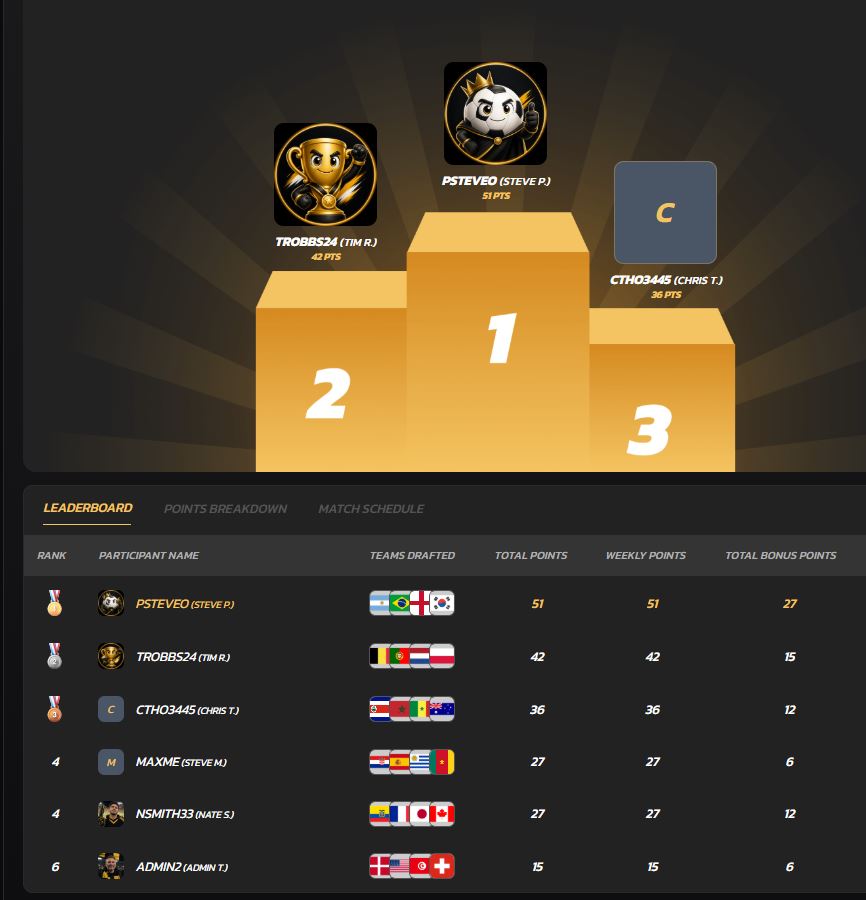
The platform is built around team-draft pools specifically: participants draft franchises, not players, and automated scoring tracks team-level results throughout the season. Live leaderboards update in real time. Commissioner controls let you set pool privacy, customize scoring rules, and manage participants from one dashboard. No app download required — everything runs in a browser.
The cost model matches what this guide recommends: the commissioner pays a one-time hosting fee, participants join free, and the platform does not hold prize money or accept wagers. Draftwins launches with World Cup pools, followed by NFL and College Football pools.
To launch tonight: create your commissioner account, set your pool to private, choose the Balanced scoring template, set draft order to randomized, and send your invite link. The whole process takes under an hour. Create your pool on Draftwins and have it live before your group's next game night.
Sources
- Why I Honestly Hate Fantasy Football (And You Might Too!)
- How the nerds killed Fantasy Football | British GQ
- Why Casual Sports Fans Are Embracing New Fantasy Formats - Surprise Sports
- Football Pool Strategy: 3 Factors The Pros Use To Win Notes from the Sports Nerds
FAQ
What is a casual fantasy alternative with no injuries?
A team-draft pool is a fantasy format where participants draft whole teams instead of individual players, so no single player injury affects anyone's results. Scoring is based on team wins, margins, and game-level stats.
How long does it take to set up a team-draft pool?
Planning takes 1–2 weeks of light effort, the draft event runs 30–60 minutes, and go-live checks take about an hour. Weekly maintenance is near-zero with automated scoring.
Does the commissioner have to pay for every participant?
No. The commissioner pays a one-time platform hosting fee to create the pool. Participants join for free, and the platform does not collect entry fees, hold prize money, or accept wagers.
Can I use these scoring templates on any platform?
The Balanced and Minimal templates use standard team win/loss and margin metrics that any platform supporting team-level scoring can handle. Draftwins supports all three templates with automated scoring built in.
How do I convince traditional fantasy players to try a team-draft pool?
Tell them there are no weekly lineup decisions — they draft once and watch the season play out. A short live draft event, even a 20-minute video call, is usually enough to get skeptics on board.