
The fastest, most engaging NFL playoff pool ideas are squares, brackets, confidence pools, survivor, playoff fantasy, and pick'em. Squares fit big, casual groups who just want a shot at cash without thinking too hard. Bracket pools suit fans who like predicting outcomes weeks in advance. Confidence and pick'em reward people who follow the games closely, survivor works for low-effort office pools with real stakes, and playoff fantasy is the pick for friend groups who want to draft and manage a roster through the postseason.
TL;DR:
- Confidence pools provide the highest value for serious fans who rank their picks by certainty, with a 13-point maximum for full playoff accuracy.
- Squares boards are ideal for casual groups, with entry fees scaled to the round, paying out differently at Wild Card, Divisional, Conference, and Super Bowl stages.
- Reseeding after Wild Card weekend encourages redrawing squares and updating scores each round, maintaining engagement and fairness.
- Draft-based platforms like DraftWins automate scoring and eliminate manual leaderboard management, making playoff pools less time-consuming to run.
- Larger groups of 15 or more tend to favor survivor pools, while small groups of 5 to 12 often prefer bracket challenges or playoff fantasy formats for simplicity.
Table of Contents
- NFL Playoff Pool Formats and How to Run Each One
- Which Playoff Pool Format Fits Your Group
- Setting Up Entry Fees, Deadlines, and Tiebreakers
- Keeping Players Engaged Through Every Round
- Why Commissioners Are Switching to DraftWins for Playoff Pools
- Templates and Tools Worth Bookmarking
- Sources
- FAQ
NFL Playoff Pool Formats and How to Run Each One
Every format below works across the four playoff rounds: Wild Card, Divisional, Conference Championships, and the Super Bowl. That's 13 games total in most years, which shapes how you'll want to structure points, boards, or picks.
-
Bracket challenge. Players pick winners for every game before Wild Card weekend, including the eventual Super Bowl champion. Score by round: 1 point per correct Wild Card pick, 2 for Divisional, 4 for Conference Championship, and 8 for the Super Bowl winner. Because the NFL playoff bracket reseeds after Wild Card weekend (no fixed rematches), locking picks before each round keeps things fair. Works best for groups of 10 to 50.
-
Confidence pool. Rank your picks each week by how sure you are, assigning point values like 13 down to 1 for a full slate, or lighter round-specific weights for smaller playoff slates. A correct pick on your "13" earns 13 points; a wrong one earns zero. Because playoff slates shrink to just a handful of games per round, confidence-pool strategy changes fast. Every pick carries outsized weight compared to the regular season.
-
Pick'em. Simpler than confidence pools: pick the straight-up or against-the-spread winner of each game, one point each, no ranking required. Lock picks 30 minutes before the first game of each round. Spread-based picks add strategy since favorites and underdogs cover at different rates depending on the round.
-
Survivor pool. Pick one team to win, straight up, each week. Lose and you're out. Most playoff versions ban reusing a team you've already picked, though shorter three or four week formats sometimes allow one repeat. Groups of 15 or more make survivor pools interesting since attrition thins the field naturally.
-
Playoff fantasy. Instead of drafting individual players, draft whole teams for the postseason and score based on team wins, points scored, or a hybrid formula. A team-draft format sidesteps injury news and bye-week roster juggling that plague standard fantasy football playoff ideas.
-
Squares. Assign a 10x10 grid of digits to each game's final score, last digit of each team. One board per game is common, but running a fresh board for every game in a round lets you charge escalating entry fees as stakes climb toward the Super Bowl. Redrawing numbers each round keeps players who got stuck with bad digits in Wild Card weekend engaged again in the Divisional round.
-
Takeover or redraft each round. Instead of locking your pick for the whole postseason, redraft or "take over" a new team heading into each round. This suits groups who want fresh stakes weekly without full elimination.
-
Props and bingo boards. Casual, low-stakes options: predict the coin toss, first score type, or number of overtime games. A playoff bingo card with squares like "commercial mentions a supply chain" adds a fun side game for Super Bowl parties without touching the main pool.
Which Playoff Pool Format Fits Your Group
Match the format to your group's size, patience for rules, and appetite for risk before you commit.
- Small friend groups (5 to 12 people): Bracket challenge or playoff fantasy, since fewer entries make long-term tracking manageable.
- Large office pools (25+): Squares or survivor. Both scale easily and need almost no explanation to new participants.
- Groups who want weekly engagement: Confidence pools or pick'em, since new picks every round keep people checking in.
- Risk-averse workplaces: Squares with low entry fees, or a no-money bragging-rights format if handling cash raises HR concerns.
- Superfans who like the numbers: Confidence pools, where ranking picks by certainty rewards real film study.
Run through this quick checklist before locking your format: How many people are joining? How much time will they spend each week? Is real money involved, and does your workplace allow it? How many separate payout or engagement moments do you want across four rounds?
Setting Up Entry Fees, Deadlines, and Tiebreakers
Collecting entry fees before Wild Card weekend keeps the pot stable and saves you from chasing stragglers for payment mid-tournament. Lock picks 30 minutes before kickoff for pick'em and confidence formats; for squares boards covering an entire weekend, lock the night before the first game so nobody buys squares after watching early scores.
- If a squares board doesn't sell out, either reduce the payout proportionally or fill remaining squares yourself before kickoff.
- Use a simple tiebreaker: combined final score of both teams, then earliest submitted pick as the backup.
- Redraw squares numbers each round rather than keeping the same grid, which keeps players stuck with weak digits from giving up early.
- For brackets, build in reseeding awareness. The NFL playoff bracket doesn't lock in rematches, so your scoring template needs to accommodate any matchup.
Pro Tip: A sample squares payout ladder that scales well: Wild Card weekend at $5 per square paying $50, Divisional at $10 paying $100, Conference Championship at $15 paying $150, and the Super Bowl at $20 to $25 per square paying out $200 to $250. Early rounds stay cheap and approachable while the finale carries real weight.
Keeping Players Engaged Through Every Round
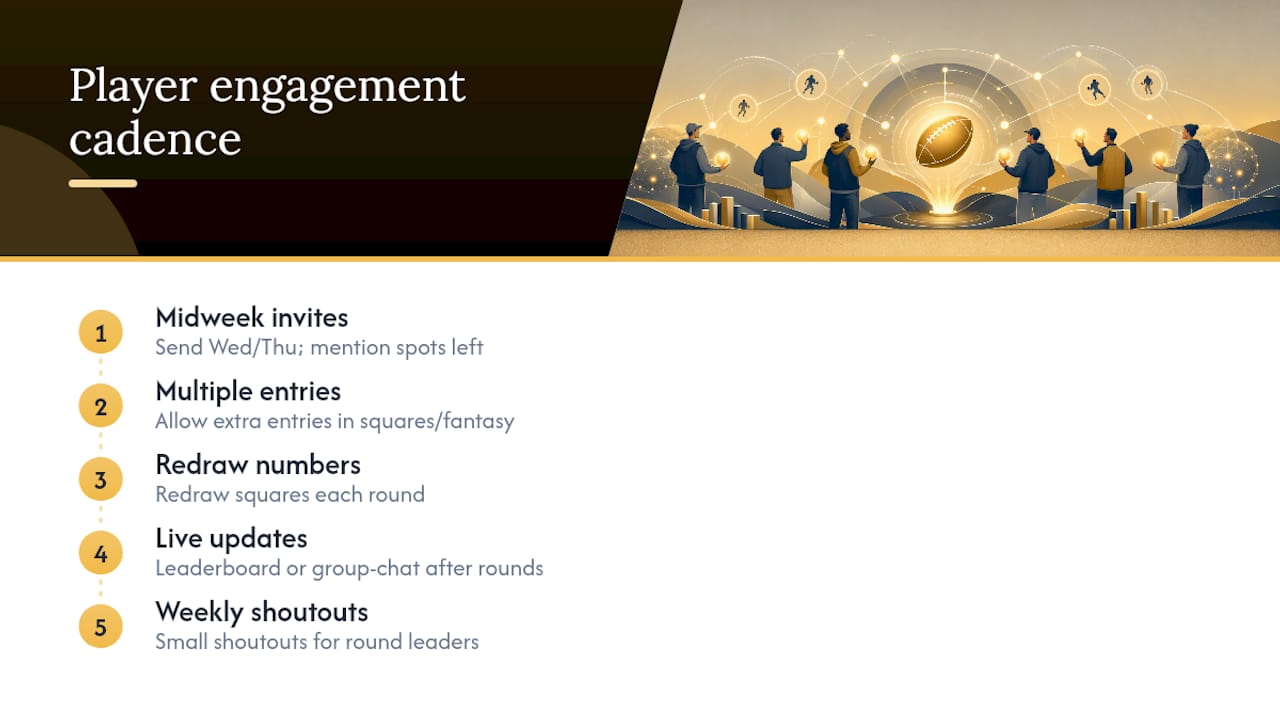
Send your invite link on a Wednesday or Thursday, when people are already thinking about the weekend slate, and mention how many spots are left to create gentle urgency. Letting people buy multiple entries in squares or fantasy formats raises the stakes without complicating the format itself.
For squares specifically, redrawing numbers each round gives everyone a fresh shot instead of watching the same unlucky digits sit dead for a month. A live leaderboard or a group chat update after each round does more to sustain interest than any single gimmick. Small weekly shoutouts for round leaders cost nothing and keep casual players checking in.
Why Commissioners Are Switching to DraftWins for Playoff Pools
Running any of the formats above by hand means building spreadsheets, chasing payments, and settling disputes when someone insists they picked the Chiefs before the deadline. DraftWins skips that entirely by having participants draft whole teams instead of individual players, which removes injury-report stress and lineup management from the equation.
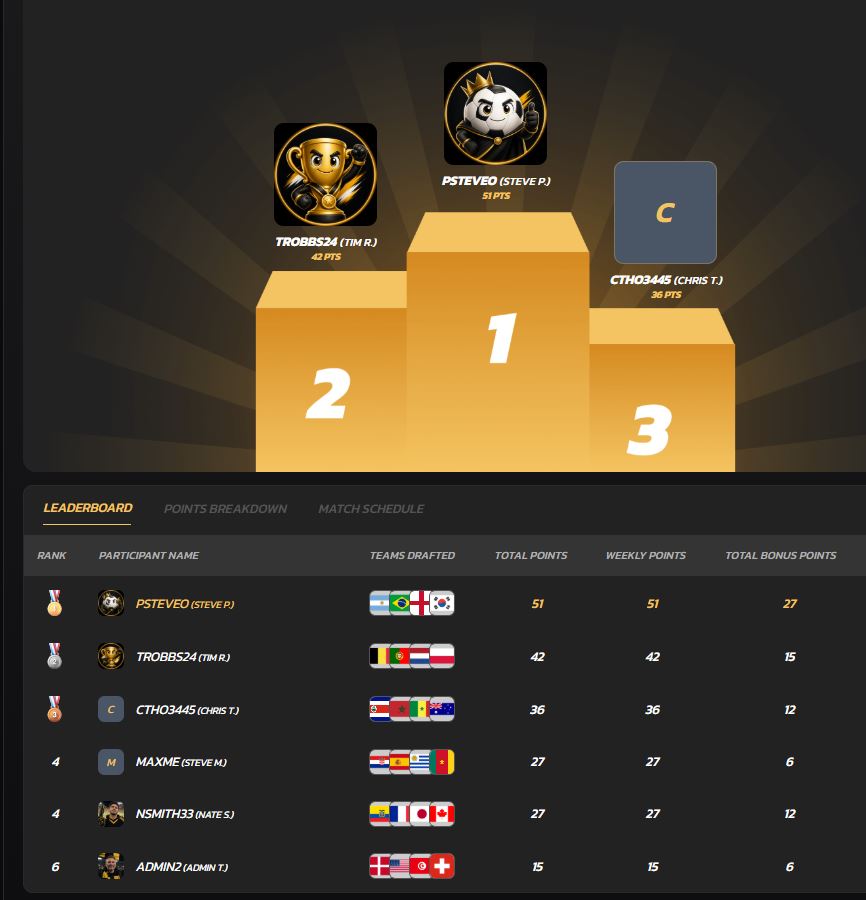
Scoring and leaderboards update automatically, so nobody's waiting on the commissioner to tally confidence points by hand after the Sunday night game. Commissioners set up a private, customizable pool with their own rules, pay a one-time hosting fee to launch it, and everyone else joins free. That structure sidesteps the entry-fee collection headache described earlier since DraftWins doesn't hold or distribute prize money itself. If your group has bounced between messy group texts and half-finished spreadsheets in past years, start a DraftWins pool before Wild Card weekend and let automated scoring handle the rest.
Templates and Tools Worth Bookmarking
Printable squares templates and payout ladder examples save you from building a grid from scratch every January. For rules on handling disputed finishes, a dedicated guide to tiebreaker setup covers templates that plug straight into squares, pick'em, or bracket formats.
Sources
- NFL Playoff Squares: Run a Board for Every Round - Pick My Square Blog
- How to Win NFL Playoffs Pick'em Pools - PoolGenius
FAQ
How Do I Create an NFL Playoff Bracket Challenge?
Pick winners for every game across all four rounds before Wild Card weekend starts, then assign increasing point values by round, such as 1 point for Wild Card and 8 for the Super Bowl. Lock in picks before each round begins since the bracket reseeds and doesn't guarantee fixed rematches.
What Are Some Fun Office Pool Themes?
Squares boards, playoff bingo cards, and prop bets on things like the coin toss or first score type work well for casual offices. Groups with strict policies on cash pools can run a no-money, bragging-rights format or direct the pot to charity instead.
What Is the Best Strategy for an NFL Survivor Pool?
Save strong favorites for later rounds when matchups get tougher, and avoid picking a popular team everyone else is choosing, since that only hurts you if that team loses. Most playoff survivor formats block reusing a team you've already picked once.
How Do I Run an NFL Pool Without a Ton of Manual Work?
Hosted platforms handle scoring, reseeding, and leaderboard updates automatically instead of requiring a spreadsheet, and options like DraftWins let you draft teams rather than track individual players. That removes most of the administrative burden that sinks manually run pools by the Divisional round.
How Many Games Are in the NFL Playoffs?
The postseason runs 13 games across four rounds: six in Wild Card weekend, four in the Divisional round, two Conference Championships, and one Super Bowl.