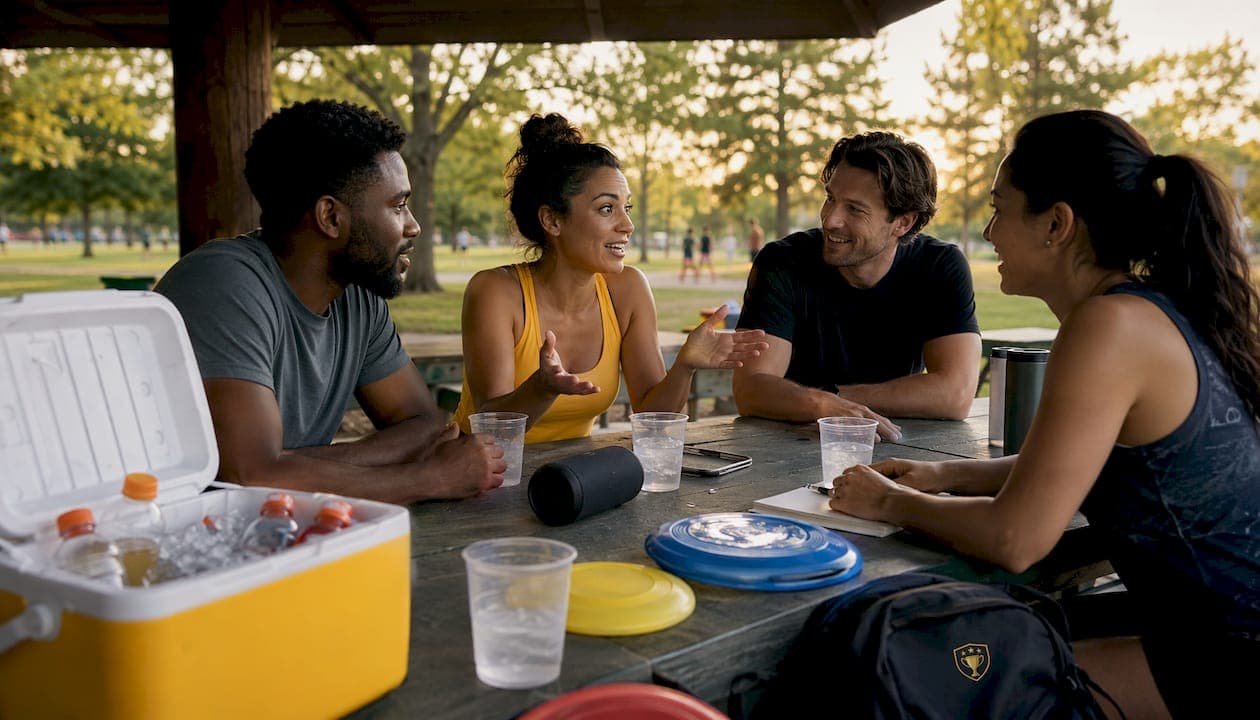
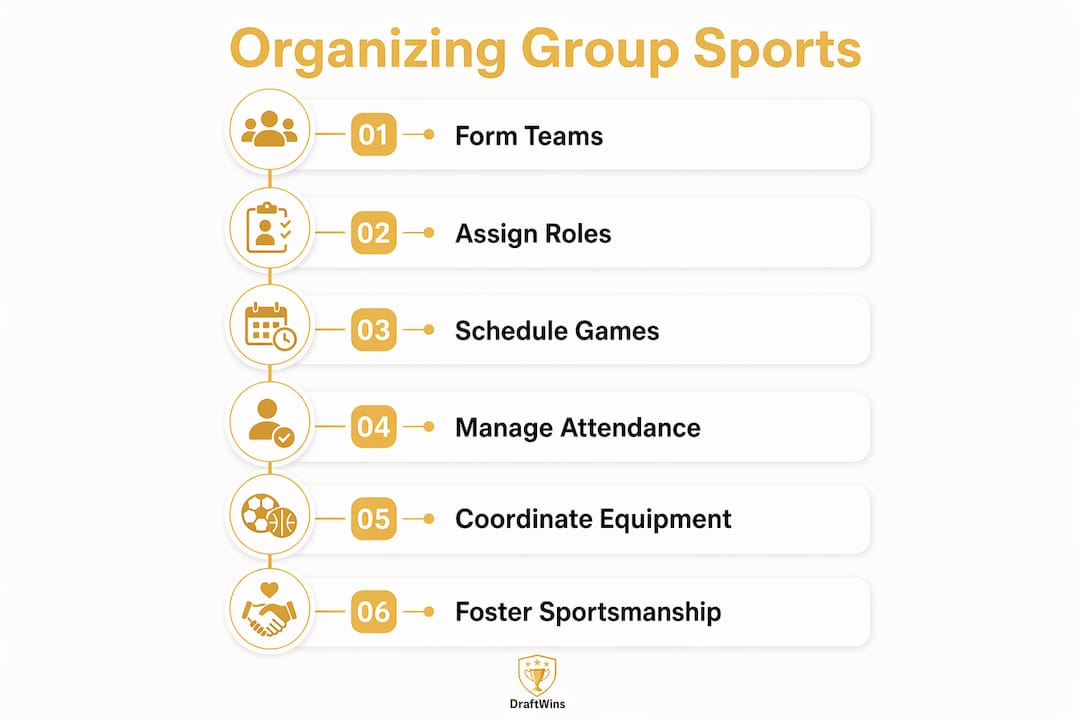
Group sports games are organized around five core actions: forming balanced teams, setting a reliable schedule, confirming attendance, assigning roles, and building in a social layer that keeps people coming back. Get those five right and the event mostly runs itself. Miss any one of them and you spend game day putting out fires instead of playing.
Here is what a solid organizational framework looks like in practice:
- Team formation: Assign players to teams using skill-based grouping, random draw, or captain selection, depending on your group's competitive level.
- Scheduling: Lock in a consistent day and time slot. Consistency drives attendance more than any reminder message.
- Attendance management: Set RSVP deadlines before game day, ideally by the day prior—organizers recommend RSVPs by Wednesday for Thursday games—and release unconfirmed spots to the waitlist automatically.
- Roles and coordination: Designate a captain, a scorekeeper, and a rules enforcer for each team so the organizer is not the only person managing chaos.
- Equipment and venue: Confirm field or court bookings, gather gear, and brief players on house rules before the first whistle.
- Communication: Use a dedicated tool for RSVPs and updates, separate from your group chat, which is better suited for banter than logistics.
- Social experience: Plan something after the game. A post-game gathering at a nearby bar or restaurant is often what turns a one-time participant into a regular.
The social piece is not optional. Organizers who treat their role as managing the social experience, not only logistics, see higher player retention.
How group sports games are organized: team formation techniques
The way you split players into teams shapes everything that follows. A lopsided draw produces blowouts; blowouts empty your roster within three weeks.
Three methods work consistently:
- Random assignment: Draw names from a hat or use a coin flip. Fast, drama-free, and surprisingly fair over a full season.
- Skill-based grouping: Rate players on a simple 1–3 scale, then distribute ratings evenly across teams. Captains who know the group can do this in five minutes.
- Captain selection (draft style): Two captains alternate picks. It works, but it bruises egos when someone is picked last. Reserve it for groups with thick skin.
Once teams are set, assign roles inside each team. Research on group structure in sport confirms that clear roles reduce conflict and build collective efficacy. You need at least a task leader (the captain), a social connector (the person who organizes the post-game), and a logistics point of contact (the one who texts the group when the field changes). Those three roles cover most of what can go wrong.
Group norms matter just as much as roles. Agree on house rules before the first game: whether headers count, how substitutions work, and what happens when someone shows up late. Written norms, even a short list in a group message, prevent 90% of disputes.
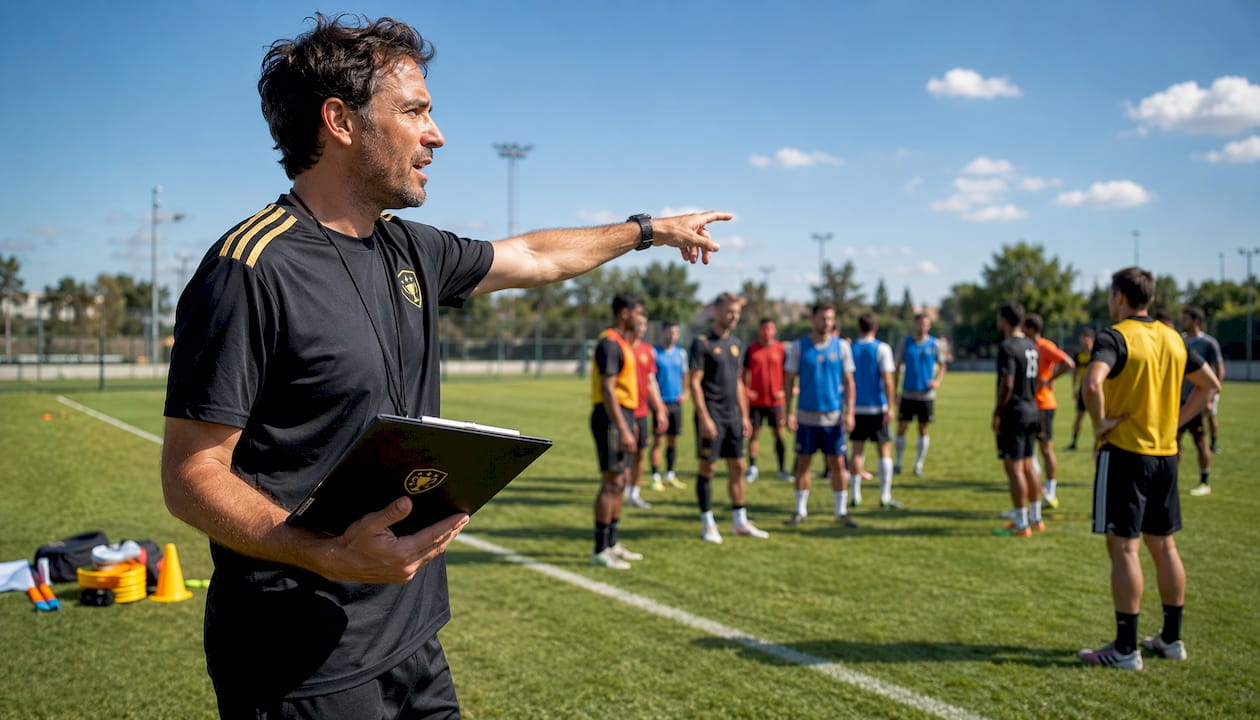
Pro Tip: Keep a two-tier roster: committed regulars who confirm by your RSVP deadline, and a fill-in list of players who are happy to step in on short notice. When a regular drops out at 5 PM, you call the fill-in list, not the whole group chat.
Scheduling games and managing player attendance
Consistent scheduling is the single biggest driver of adult league attendance. A Seattle league that experimented with rotating game times saw attendance drop compared to their fixed-time divisions. They returned to consistent scheduling immediately. Pick a day and time slot, then protect it every week.
Beyond consistency, attendance management needs a real system:
- Set RSVP deadlines: For a Thursday game, a Wednesday deadline gives you enough time to fill open spots. Organizers recommend RSVP by Wednesday for Thursday games, releasing unconfirmed spots to the waitlist automatically.
- Run a waitlist: A player on the waitlist who is eager to play is worth more than a "maybe" who drops out an hour before kickoff.
- Enforce consequences: If someone regularly confirms and then cancels, they lose priority on the next booking. Three late cancellations is a reasonable threshold before you move them down the list.
- Buffer your schedule: Add 10–20 minutes between sessions to prevent overlap, ease parking, and give teams time to warm up without rushing.
- Build a backup plan: Weather, venue conflicts, and low turnout happen. Know in advance whether you will reschedule, play a shorter format, or cancel, and communicate that policy before the season starts.
Automated reminders help, but they are not a substitute for a clear deadline. Tools like Google Forms, Eventbrite, or a purpose-built sports app handle RSVPs cleanly and show players exactly how many spots remain. That visibility alone pushes people to confirm faster than any follow-up message.
Practical group sports games and how to coordinate them
Choosing the right game for your group size and skill mix is half the battle. The other half is setting up the rules, equipment, and transitions so the day flows without constant intervention.
Games that work well for large groups (20+ players):
- Kickball: Minimal equipment, no prior skill required, and equally appealing across fitness levels. It is the most popular starting sport for adult rec leagues for good reason.
- Dodgeball: Works indoors or outdoors, fast to explain, and naturally self-regulating in terms of intensity.
- Flag football: Higher coordination demand, but co-ed formats with rules that encourage female participation (such as bonus points for female scores) keep engagement balanced.
- Volleyball: Ideal for groups that want moderate physical intensity. Rotating positions every few points keeps everyone active.
- Ultimate Frisbee: Self-refereed by design, which removes the need for an official and makes it easy to run with minimal staff.
- Capture the Flag: Excellent for large groups at parks or open fields. Scales from 10 to 60 players without much adjustment.
- Relay races: Perfect for events where you want structured competition without full team coordination. Works across age groups and fitness levels.
Rule customization for group play:
Adapt standard rules to your group's reality. Shorten game durations, reduce field size, or add co-ed participation requirements. For example, requiring at least three women on the field at all times in flag football or alternating batting orders in kickball keeps participation balanced rather than token. Write these adaptations down and share them before game day, not during it.
Equipment and venue logistics:
Confirm your booking in writing, arrive at least 30 minutes early to set up, and bring more equipment than you think you need. Flat balls, missing cones, and broken nets derail games faster than any scheduling error. For tournaments, schedule transition times of at least 15 minutes between games on each field so teams can warm up and officials can reset.
Conflict resolution and sportsmanship:
A spirit award system, where opposing captains rate each other's sportsmanship after each game, makes behavior expectations visible without requiring a referee to police every interaction. Post the ratings publicly. Most players self-correct quickly when they know their conduct is on record.
Safety protocols:
Designate a first-aid point of contact for every event. Know the location of the nearest urgent care facility. For outdoor events, set a heat or weather policy in advance and communicate it to all participants. Concussion protocols and injury response procedures belong in your rulebook, not improvised on the spot.
How group dynamics shape the social experience in sports
The research on team development is clear: groups do not arrive as cohesive units. They build cohesion through structured phases, and organizers who understand those phases can accelerate the process.
Tuckman's group development model describes four stages: forming, storming, norming, and performing. The storming phase, where interpersonal conflict surfaces as players challenge roles and norms, is not a sign of failure. It is how teams establish clarity. An organizer who panics at early friction and reshuffles teams loses the very process that produces cohesion.
Effective teams also cycle through four iterative phases during play: preparation, execution, evaluation, and adjustment. Research on group dynamics in sport shows that teams which build shared knowledge through communication and coordinated effort outperform those that rely on individual talent alone. Practically, this means your pre-game team huddle and post-game debrief are not optional extras. They are where collective identity forms.
Key factors that drive group cohesion in recreational sports:
- Role clarity: Every player knows their function, both on the field and off it. Ambiguity breeds resentment.
- Shared goals: Teams that set collective goals, even informal ones like "let's hold the other team under five points," show higher task cohesion than those that play without a stated aim.
- Communication norms: Teammates who communicate during play, calling for the ball, signaling switches, confirming positions, coordinate more effectively than those who assume shared understanding.
- Social anchors: Post-game gatherings at a consistent venue, whether a bar, restaurant, or park, create the recurring social context that turns a sports group into a community.
Group success is linked to ongoing interactions, clear role assignment, and developing a collective identity among players. Organizers who build those three elements into their event structure, rather than leaving them to chance, retain players across seasons rather than scrambling to refill rosters every few months.
Pro Tip: Schedule a mid-season mixer where players from different teams interact socially. Inter-team friendships are what convert one-season participants into multi-year members. A kickoff party before the first game and a championship celebration at the end of the season serve the same function at the season boundaries.
Take your group sports experience further with Draftwins
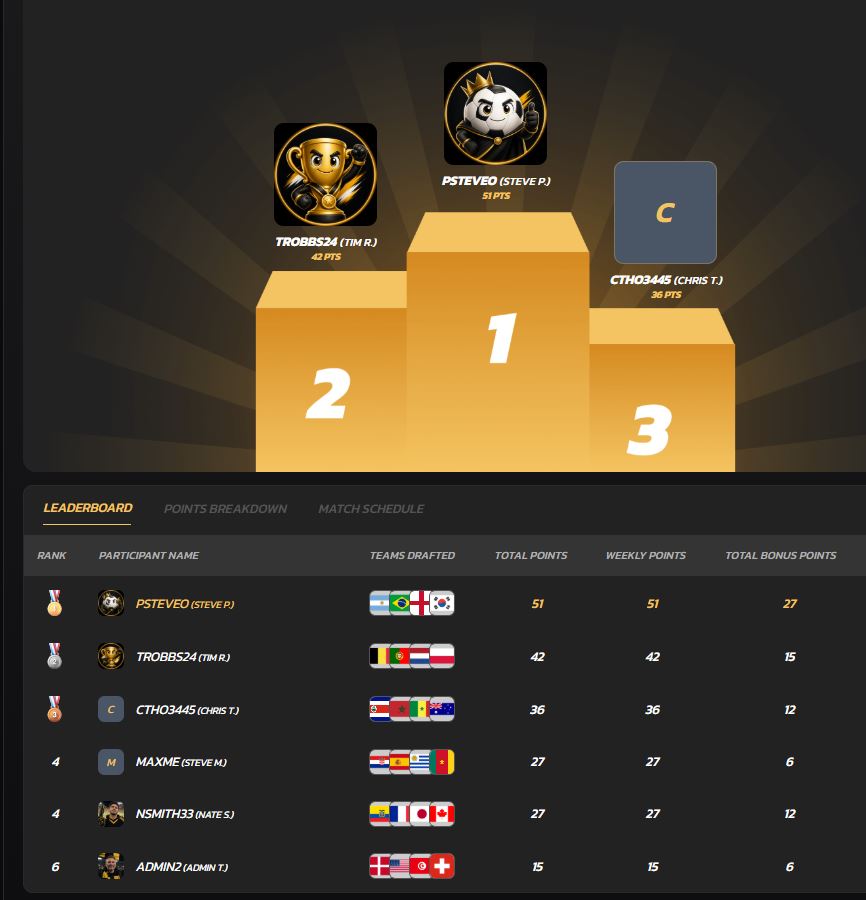
Once your group is organized and playing regularly, the next challenge is keeping competition fresh and engagement high between game days. That is where Draftwins comes in.
Draftwins is a sports pool platform built for groups who want the thrill of competition without the complexity of traditional fantasy leagues. Instead of managing individual player lineups, participants draft entire teams, which removes the stress of injury tracking and weekly roster decisions. Automated scoring and live leaderboards update in real time, so your group always knows where they stand. Commissioners set up private pools with custom scoring and rules in minutes.
Draftwins is launching with World Cup pools, with NFL and College Football pools to follow. It charges a platform fee and does not collect entry fees, hold prize pools, or pay out winnings, keeping the focus on the fun of the competition itself. If your group already loves team-based games, Draftwins gives you a structured, low-maintenance way to extend that competition across an entire tournament or season.
Key Takeaways
Organizing group sports games successfully requires consistent scheduling, clear team roles, active attendance management, and a deliberate social layer that builds community beyond the game itself.
| Point | Details |
|---|---|
| Consistent scheduling | Fixing the same day and time every week is the single biggest driver of adult league attendance. |
| Two-tier roster | Maintain committed regulars and a fill-in list to handle cancellations without scrambling. |
| RSVP deadlines | Set deadlines by the day prior—such as RSVP by Wednesday for Thursday games—and release unconfirmed spots to the waitlist automatically. |
| Role clarity | Assigning clear roles within teams reduces conflict and builds collective efficacy on the field. |
| Social anchors | Post-game gatherings at a consistent venue turn one-time participants into long-term community members. |
FAQ
What are the key steps for organizing a group sports game?
The core steps are team formation, scheduling, attendance management, role assignment, equipment setup, and post-game social planning. Skipping any one of them creates predictable problems on game day.
How are sports teams organized within a group?
Teams are typically formed through random assignment, skill-based grouping, or captain selection. Once formed, each team benefits from clear role assignments covering task leadership, social coordination, and logistics, since role clarity directly improves team cohesion and performance.
What are group processes in sports?
Group processes are the actions members take when working together toward shared goals, including planning, communication, coordination, and adjustment. Research on team performance regulation identifies four iterative phases: preparation, execution, evaluation, and adjustment.
What games can you play with 20 people?
Kickball, dodgeball, flag football, volleyball, Ultimate Frisbee, Capture the Flag, and relay races all work well for groups of 20 or more. Kickball and dodgeball require the least equipment and skill, making them the easiest to run for mixed-ability groups.
How do you handle no-shows in group sports?
Set a firm RSVP deadline, maintain an active waitlist, and enforce a consequence for repeated late cancellations, such as losing booking priority. Keeping a fill-in player list of people willing to step in on short notice solves most last-minute dropout problems without disrupting the whole group.