
Draft-based scoring is defined as a fantasy sports system where each player can be owned by only one manager, and points are awarded based on that player's real-life athletic performance. Understanding how draft-based scoring works is the foundation for competing in any group pool or fantasy league. Every team is built through a live draft, so no two rosters look alike. That uniqueness is what makes the competition feel personal and genuinely competitive from week one.
How does draft-based scoring work?
Draft-based scoring converts real athlete stats into fantasy points using a fixed set of rules agreed upon before the season starts. A running back gains 100 rushing yards and scores a touchdown. The scoring system translates that performance into a specific point total for the manager who drafted him. No other manager in the league benefits from that same player's performance. That exclusivity is the defining feature of the draft-based scoring system.
The system removes guesswork about who scores what. Every action on the field maps to a point value. Goals, assists, touchdowns, receptions, and yards all carry pre-set values. Managers compete by assembling the best possible roster before the season, then watching their point totals grow as their players perform.

Draft leagues also appeal to casual players because they require less in-season management after the draft is complete. You set your roster through the draft and mostly let the season play out. That simplicity makes draft formats one of the most accessible entry points into fantasy sports.
How are players selected and teams formed?
The most common selection method in draft leagues is the snake draft format. Understanding how this process works explains why the draft is the single most important event of your season.
The snake draft format
The snake draft runs in rounds, with pick order reversing at the start of each new round. If you pick first in round one, you pick last in round two. This alternating structure balances the advantage of early picks across all managers. Snake drafts typically run 15 rounds, giving each manager a full roster of players before the season begins.
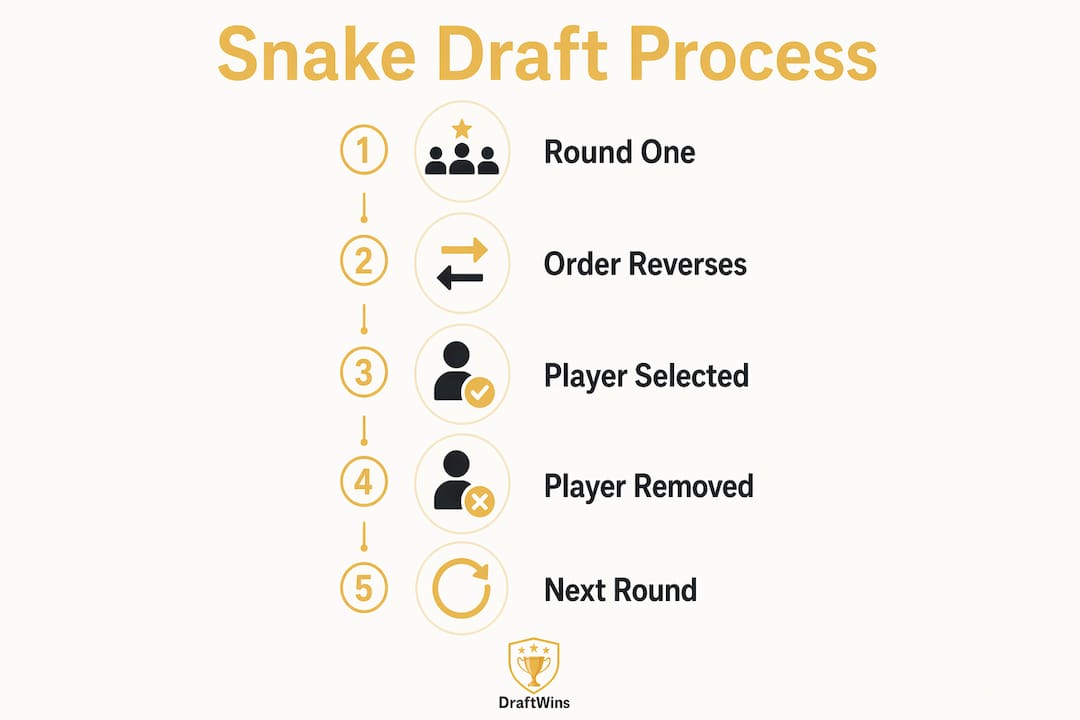
Once a manager selects a player, that player is removed from the available pool. No other manager can draft him. This unique ownership rule is what separates draft leagues from salary-cap formats, where multiple managers can roster the same player at the same time. In a draft league, your roster is yours alone.
Live draft mechanics
Most platforms set a time limit per pick, typically 60 to 90 seconds. If a manager fails to pick within the window, an auto-pick function selects the highest-ranked available player based on pre-set rankings. This keeps the draft moving and prevents delays from disrupting the experience for everyone else.
- Managers receive a randomized draft order before the event.
- Each manager picks one player per round within the time limit.
- The order reverses each round in the snake format.
- Auto-pick activates if the timer expires.
- The draft ends when all roster slots are filled.
Because no salary cap or chips exist in draft leagues, a poor draft cannot be corrected by spending more. The draft session determines your season ceiling. That pressure makes preparation critical.
Pro Tip: Research consensus rankings for your specific league's scoring format before draft day. A player ranked fifth in standard scoring may rank second in a PPR league, and knowing that difference before you pick can shift your entire draft strategy.
How does draft scoring assign points for player performance?
Point assignment in draft scoring follows a straightforward rule: specific in-game actions earn specific point values. The exact values depend on the league's scoring format, which is set before the draft.
Common NFL fantasy scoring values
- Passing touchdown: 4 points
- Rushing or receiving touchdown: 6 points
- Every 10 rushing or receiving yards: 1 point
- Every 25 passing yards: 1 point
- Reception (PPR format only): 1 point per catch
- Interception thrown: minus 2 points
- Fumble lost: minus 2 points
Passing touchdowns score 4 points in standard NFL fantasy formats, while rushing and receiving touchdowns score 6. That gap reflects the higher physical risk and direct scoring contribution of ball carriers compared to quarterbacks.
PPR vs. standard scoring
Point-per-reception (PPR) scoring adds 1 point for every catch a player makes, regardless of yardage. Standard scoring ignores receptions entirely and only counts yards and touchdowns. PPR formats significantly raise the value of slot receivers and pass-catching running backs. A receiver with 8 catches for 60 yards scores 14 points in PPR but only 6 points in standard. That difference reshapes which players you target in the draft.
| Scoring type | Reception value | Best for |
|---|---|---|
| Standard | 0 points | Run-heavy offenses |
| PPR | 1 point per catch | Pass-catching backs, slot receivers |
| Half-PPR | 0.5 points per catch | Balanced rosters |
No captain multipliers in draft scoring
Draft formats remove the captain mechanic found in daily fantasy and some classic formats. Every player's score counts as-is, with no multipliers applied. This simplifies weekly scoring considerably. You do not need to predict which player will have a breakout game and assign them a bonus multiplier. Every starter contributes their raw point total to your weekly score.
Pro Tip: In PPR leagues, target running backs with high target shares in the passing game during the middle rounds of your draft. They often outscore higher-ranked standard-scoring backs by a significant margin over a full season.
What are the main draft scoring formats?
Two primary formats govern draft leagues: Head-to-Head (H2H) and Classic cumulative scoring. Each format changes how you approach weekly lineup decisions and long-term strategy.
Head-to-Head format
In H2H leagues, your roster is matched against one opponent's roster each week. The manager with the higher point total wins the matchup. H2H leagues award 3 points for a weekly win, 1 point for a draw, and 0 for a loss. Season standings are based on these matchup points, not total fantasy points scored. A manager who scores 180 points in a week but loses to an opponent who scored 185 still earns zero matchup points.
This format rewards consistency. A manager who scores 120 points every week will likely finish higher than one who alternates between 80 and 160. Variance hurts you in H2H because a big week means nothing if your opponent also has a big week.
Classic cumulative format
Classic scoring ranks all managers by their total points accumulated across the entire season. There are no weekly matchups and no win/loss record. Every point your players score adds directly to your season total. The manager with the most points at the end of the season wins the league.
Classic format rewards volume. You want players who produce consistently high point totals week after week, not just players who occasionally explode for a massive game.
| Format | How standings work | Key strategy |
|---|---|---|
| Head-to-Head | Weekly matchup wins (3/1/0) | Consistency beats variance |
| Classic | Total season points | Volume and reliability |
The format your league uses should directly influence your draft priorities. In H2H, a reliable player who scores 15 points every week is more valuable than a boom-or-bust player who averages the same total with wild swings.
How can you use draft scoring knowledge to win?
Knowing the rules is one thing. Using them to build a better roster is where most casual players fall short. Understanding your league's scoring rules before drafting is the single most important preparation step you can take.
Here is how to apply that knowledge practically:
- Know your format first. PPR, standard, and H2H all change player values. Print or bookmark your league's scoring sheet before draft day.
- Target positional scarcity early. Tight ends and elite running backs are scarce in draft leagues. Missing the top tier at these positions is hard to recover from.
- Map bye weeks after the draft. Veteran managers analyze bye-week clustering immediately after drafting to avoid weeks where multiple starters sit out simultaneously.
- Run a post-draft analysis. Compare your picks to consensus Average Draft Position (ADP). A pick made 15 or more spots ahead of consensus ADP suggests you found value. A pick made 15 spots behind suggests you overpaid.
- Align picks with scoring values. In a PPR league, a receiver who catches 100 passes is worth more than one who catches 60 for the same yardage. Let the math guide your rankings.
The post-draft analysis step separates managers who got lucky from those who built sound rosters. Reviewing your picks against consensus rankings tells you where your strategy worked and where it did not. That feedback loop makes you a better drafter every season.
Pro Tip: Before your draft, build a tiered ranking list organized by position. When the top tier at a position is gone, drop to the next tier rather than reaching for a player ranked lower than his consensus value.
For a deeper look at how scoring translates into pool strategy, the NFL draft pool scoring guide breaks down the mechanics in practical terms.
Key Takeaways
Draft-based scoring works by converting real athlete performance into fantasy points within a system where each player belongs exclusively to one manager, making the draft the most critical event of the season.
| Point | Details |
|---|---|
| Unique player ownership | Each player can only be drafted by one manager, making every roster distinct. |
| Scoring converts real stats | Goals, touchdowns, yards, and receptions translate into pre-set point values. |
| Format shapes strategy | H2H rewards consistency; Classic format rewards total season volume. |
| No captain multipliers | Draft scoring counts every player's raw points without bonus multipliers. |
| Draft day is decisive | No salary cap exists to fix a poor draft, so preparation before draft day determines your ceiling. |
Draftwins makes draft pool scoring simple
Draftwins is built for sports fans who want the excitement of a draft competition without the complexity of traditional fantasy management. The platform lets you draft teams instead of individual players, which removes the weekly stress of lineup changes and injury monitoring.

Draftwins automates scoring and updates live leaderboards in real time, so you always know exactly where you stand in your pool. Commissioners can create private pools with custom scoring rules tailored to their group. Draftwins launches with World Cup pools, with NFL and College Football pools to follow. If you want a group competition that is easy to set up and genuinely fun to follow, start your pool at Draftwins today. The platform charges a hosting fee and does not collect entry fees or hold prize money.
FAQ
What is draft-based scoring in fantasy sports?
Draft-based scoring is a system where managers build rosters through a live draft and earn points based on their players' real-life performance stats. Each player can only be owned by one manager, making every team unique.
How does the snake draft format work?
The snake draft reverses pick order each round, so the manager who picks first in round one picks last in round two. Most snake drafts run 15 rounds to fill complete rosters.
What is the difference between PPR and standard scoring?
PPR scoring awards 1 point per reception in addition to yardage and touchdowns, while standard scoring only counts yards and touchdowns. PPR significantly increases the value of pass-catching players.
How do Head-to-Head and Classic formats differ?
Head-to-Head leagues award 3 points for a weekly matchup win and rank managers by those win points. Classic leagues rank managers by total fantasy points scored across the entire season.
Why is the draft the most important event in draft leagues?
Draft leagues have no salary cap or in-season spending tools, so a poor draft cannot be corrected later. The players you select on draft day largely determine your season outcome.