
Football team drafts are structured selection events where professional and amateur teams choose eligible players in a predetermined order based primarily on their previous season's records. The NFL draft is the most recognized version of this process, and understanding how it works reveals why teams win or lose for years after a single weekend in April. Whether you follow the NFL closely or just started watching, the football draft process shapes every roster you see on the field. This guide breaks down the mechanics, strategies, and comparisons that make drafts one of the most analyzed events in sports.
How do NFL football team drafts work?
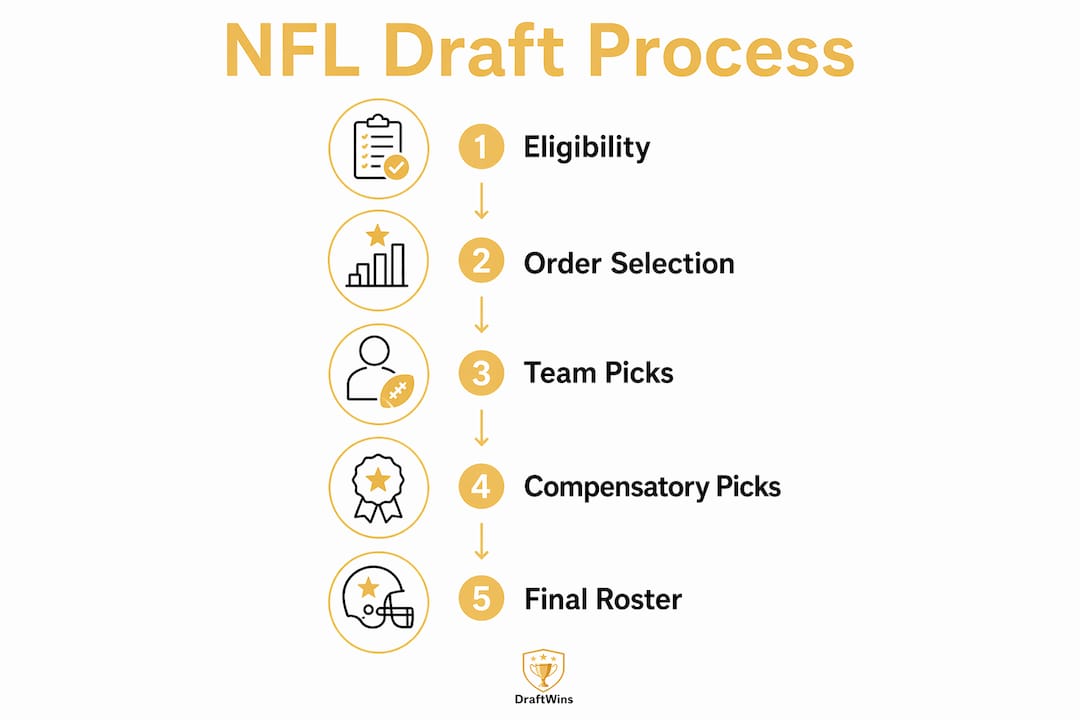
The NFL draft operates on a reverse-order system. The team with the worst record from the prior season picks first, and the Super Bowl champion picks last. This structure exists to promote competitive balance, giving struggling franchises first access to the best incoming talent. In 2026, the Las Vegas Raiders earned the first pick after finishing with the worst record, with a strength-of-schedule tiebreaker settling the exact order.
The scale of the event is significant. The 2026 NFL Draft produced 257 total selections across seven rounds over three days, with each of the 32 teams starting with one pick per round. That number shifts constantly because teams trade picks before and during the event. A team might enter with 8 picks and leave having made 11, or trade two future picks to move up for one player they covet.
Time limits add real pressure to every selection. In 2026, teams had 10 minutes for first-round picks, 7 minutes in the second round, 5 minutes in the third, and 4 to 5 minutes for rounds four through seven. Missing the clock means another team can jump in and steal your spot. This is why NFL war rooms are staffed with dozens of scouts, analysts, and coaches working through contingency plans in real time.
Here is a quick breakdown of the 2026 NFL Draft structure:
| Round | Time per pick | Total rounds |
|---|---|---|
| Round 1 | 10 minutes | 1 |
| Round 2 | 7 minutes | 1 |
| Round 3 | 5 minutes | 1 |
| Rounds 4 to 7 | 4 to 5 minutes | 4 |
Beyond the base picks, compensatory picks are awarded to teams that lost more free agents than they gained in the prior year. These extra selections appear at the end of certain rounds and give well-managed franchises additional chances to add talent without spending money in free agency.
Pro Tip: Watch the first round live if you want to understand draft strategy. The trades, trades-back, and surprise selections in rounds one and two reveal more about a team's philosophy than any press conference.
What strategies do teams use to build a competitive roster?
The honest answer from NFL front offices is that no bulletproof system guarantees draft success. Teams blend production data, projection models, and roster needs to make picks. A player who dominated in college might struggle against NFL speed. A prospect who looked average at a mid-major program might become a Pro Bowler. This uncertainty is why strategy matters as much as talent evaluation.
The two dominant approaches teams debate every year are "best player available" versus "fill the need." Best player available means you take the highest-rated prospect on your board regardless of position. Fill the need means you prioritize positions where your roster is weakest. Most teams use a hybrid. If the top-rated player on your board plays a position you already have covered, you might trade down and collect extra picks rather than draft a redundant piece.
Position stacking is a direct response to the high failure rate of individual picks. Instead of betting everything on one wide receiver in round two, a team might take three receivers across rounds two, four, and six. If one breaks out, the strategy pays off. This approach treats the draft more like a portfolio than a single investment.
Trading up versus trading down is the most visible strategic tension in any draft. Moving up costs future picks, which is expensive. Trading down accumulates picks and lowers risk, but you might miss the exact player you wanted. Teams that consistently trade up for quarterbacks often mortgage two or three years of draft capital on a single bet.
Key factors teams weigh before every pick:
- Production: What did the player actually accomplish in college or their prior league?
- Projection: Does their physical profile and skill set translate to the NFL level?
- Roster fit: Does the team already have depth at this position?
- Character and interviews: Did the player impress in pre-draft meetings?
- Medical history: Are there injury concerns that could shorten a career?
Pro Tip: If you want to understand fantasy draft strategy at a deeper level, the same principles apply. Identifying value in later rounds and avoiding overpaying for obvious picks separates good drafters from great ones.
How does the NFL draft compare to other football and sports leagues?
The NFL uses a straight reverse-order system with no randomization. Every team knows exactly where they pick before the season ends. The NBA takes a different approach. The NBA uses a lottery for the top four picks, involving 14 ping-pong balls and 1,000 possible combinations to determine which teams select first. The purpose is to reduce tanking, the practice of intentionally losing games to secure a better draft position. The NFL has not adopted a lottery because the league's structure and salary cap already create enough competitive balance through other mechanisms.
Amateur and collegiate football drafts operate on much simpler frameworks. Most high school and youth leagues run a snake draft format, where the team picking last in round one picks first in round two. College football does not have a formal draft in the same sense. Instead, players declare for the NFL draft after meeting eligibility requirements. College underclassmen must declare by a mid-January deadline, after which they permanently lose NCAA eligibility. This deadline creates enormous pressure on 20-year-olds and their families.
The NFL also runs the International Player Pathway program, which places international players on practice squads outside the standard draft. This expands the talent pool beyond the traditional college football pipeline and reflects the league's push into global markets.
Here is a direct comparison of the NFL and NBA draft systems:
| Feature | NFL Draft | NBA Draft |
|---|---|---|
| Pick order method | Reverse season record | Lottery for top 4 picks |
| Number of rounds | 7 | 2 |
| Tanking deterrent | None (relies on parity rules) | Lottery system |
| Pick trading | Yes, current and future | Yes, current and future |
| International pathway | Yes (separate program) | Yes (global scouting) |
For a broader look at how different draft formats compare across sports, the structural differences reveal a lot about each league's priorities.
What role does the NFL Combine play in the draft process?
The NFL Combine is a multi-day evaluation event held in Indianapolis each February, roughly two months before the draft. Teams use it to assess prospects in ways that game film alone cannot capture. The Combine tests physical, medical, and mental attributes in a controlled environment, giving every team access to the same data points on every prospect.
The evaluation process follows a clear sequence:
- Medical examinations: Team doctors review injury history, imaging, and physical structure. A player with a history of knee injuries might drop significantly based on medical findings alone.
- Athletic testing: The 40-yard dash, vertical jump, bench press, and position-specific drills measure raw physical ability. A wide receiver who runs a 4.3-second 40-yard dash moves up boards fast.
- Position drills: Coaches watch how prospects move, catch, block, and react in structured football drills. This separates athletes from football players.
- Interviews: Each team gets 15-minute interview slots with prospects. These conversations test communication, football IQ, and character.
- Psychological assessments: Teams administer standardized tests to evaluate decision-making, coachability, and mental toughness.
The mental component is underrated by casual fans. A prospect who performs brilliantly in drills but gives evasive answers in interviews will see their stock fall. NFL GMs consistently say that character assessment carries as much weight as physical testing in final decisions. Teams invest tens of millions of dollars in drafted players, so they want to know who they are getting beyond the highlight reel.
Pro Days and private workouts supplement the Combine. A player who had a poor Combine performance gets another chance to impress at their college's Pro Day, where conditions are more familiar and comfortable. Some teams fly prospects in for private workouts at their facilities, which signals serious interest and allows for deeper evaluation.
Pro Tip: Pay attention to Combine interview reports, not just the 40-yard dash times. The players who impress coaches in the meeting room often outperform their athletic rankings once they reach the NFL.
Put your draft knowledge to work with Draftwins
Understanding how football team drafts work is the foundation of enjoying the sport at a deeper level. Draftwins takes that knowledge and turns it into a social competition you can run with friends.
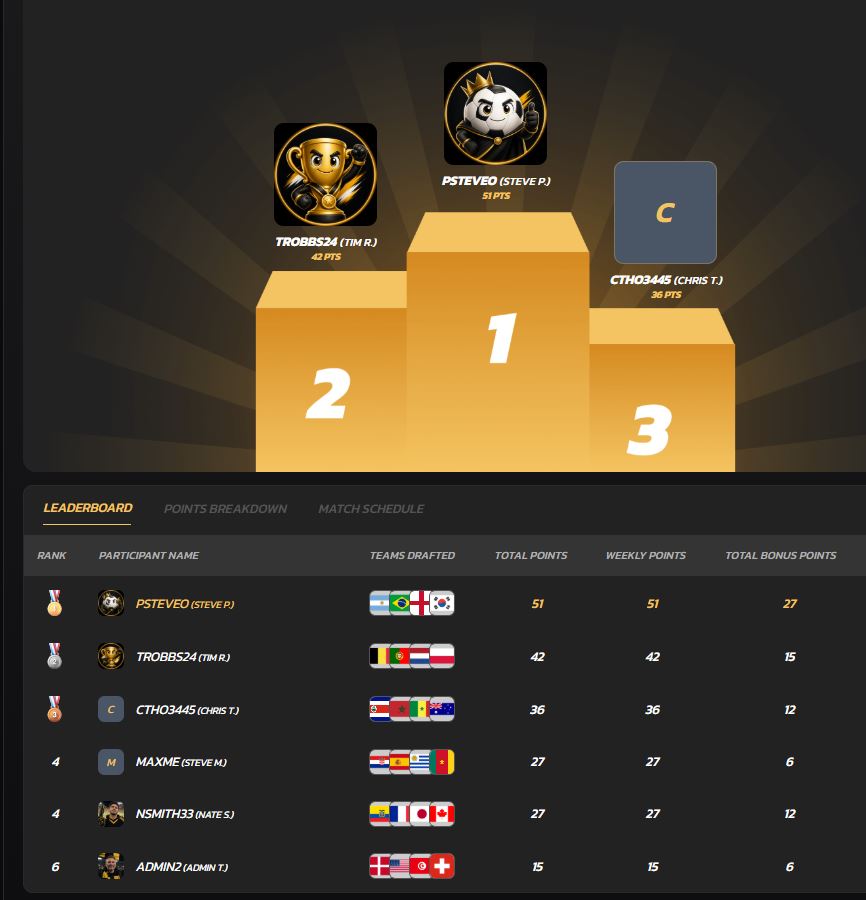
Draftwins lets your group draft entire teams instead of individual players, which removes the lineup stress and injury anxiety that makes traditional fantasy leagues exhausting. Automated scoring and live leaderboards track everything in real time. Commissioners set their own rules and scoring, so the experience fits your group's preferences. Draftwins launches with World Cup pools and follows with NFL and College Football pools, making it the right platform for fans who want the thrill of drafting without the complexity. Draftwins charges a platform fee and does not collect entry fees or hold prize pools.
FAQ
How are draft picks ordered in the NFL?
Draft pick order is determined by the reverse order of the previous season's standings, with the worst team selecting first. Ties are broken by strength of schedule, as seen in the 2026 draft where the Las Vegas Raiders earned the first overall pick.
How many picks are in the NFL draft?
The 2026 NFL Draft included 257 total picks across seven rounds and 32 teams. That number changes each year based on compensatory picks awarded and picks forfeited due to rule violations.
Can teams trade draft picks?
Teams can trade both current and future draft picks, as well as rights to players under contract. This makes draft picks liquid assets that are actively bought and sold before and during the draft itself.
What is the NFL Combine?
The NFL Combine is a multi-day evaluation event where prospects undergo physical testing, medical exams, position drills, interviews, and psychological assessments. Teams use the results to finalize their draft boards before selections begin.
How is the NFL draft different from the NBA draft?
The NFL draft uses a straight reverse-order system across seven rounds, while the NBA uses a lottery for the top four picks to reduce tanking incentives. The NFL draft also has significantly more rounds and picks than the NBA's two-round format.
Key takeaways
Football team drafts work by combining reverse-order selection, multi-round structure, timed picks, and pre-draft evaluation to give every team a fair path to acquiring new talent.
| Point | Details |
|---|---|
| Reverse-order selection | The worst team from the prior season picks first, promoting competitive balance across the league. |
| Seven rounds, 257 picks | The 2026 NFL Draft produced 257 selections, with each team starting with one pick per round. |
| Trades reshape every draft | Teams buy and sell picks before and during the draft, making pick order fluid and strategic. |
| Combine shapes draft boards | Physical tests, medical exams, and interviews at the NFL Combine directly influence where players are selected. |
| No formula guarantees success | Teams blend production data, projection, and roster needs because no single system reliably predicts NFL performance. |